Buy This 1 ETF ASAP If You Think Higher Oil Prices are Here to Stay
WTI crude is still near $90, up from $57 at the start of the year. That move did not happen in a vacuum. On February 28, 2026, the 2026 Iran war began, with immediate consequences for global energy markets. Oil…

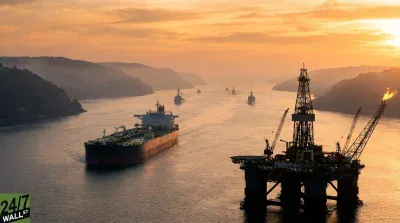
WTI crude is still near $90, up from $57 at the start of the year. That move did not happen in a vacuum. On February 28, 2026, the 2026 Iran war began, with immediate consequences for global energy markets. Oil prices have risen over 40% since the war’s start, and the IEA head described the situation as “the greatest global energy security challenge in history.”
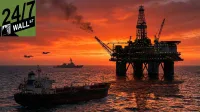
The core supply problem is the Strait of Hormuz. One-fifth of global petroleum liquids consumption and one-quarter of global seaborne oil trade flows through that chokepoint, and Iran forced its closure after the war began. Iran’s new Supreme Leader has stated the Strait will remain closed as a pressure tool on the United States. Strikes have already hit Kharg Island (which handles 90% of Iran’s oil exports), the South Pars natural gas field, Qatar’s Ras Laffan gas facility, and Aramco’s Ras Tanura refinery. These are not peripheral targets. They are the physical infrastructure that keeps the global energy supply intact.
The escalation scenarios are not abstract. If the Houthis in Yemen extend operations to close the Red Sea as well, two of the world’s most critical shipping corridors would be simultaneously disrupted. Oxford Economics has modeled scenarios involving a brief Hormuz closure pushing oil prices significantly higher. The supply disruption has drawn significant attention from energy investors tracking the Hormuz closure.
Why XLE is the right vehicle for chasing higher oil prices
Energy Select Sector SPDR Fund (NYSEARCA:XLE) has already reflected the early stages of this repricing. The fund is up 33% year-to-date, with the pace of gains accelerating sharply as the Iran conflict escalated. The past month alone added over 10%. That momentum signals the market is treating the Hormuz disruption as a sustained supply shock rather than a short-lived event, with shares now trading at nearly $61.
XLE is a tightly focused fund, holding 25 positions drawn entirely from the S&P 500’s energy sector, which means nearly every dollar is working directly on the oil and gas thesis, with 99% of assets in energy. That purity of exposure is paired with a very low cost of ownership — the expense ratio is just 0.08% and a 2.45% dividend yield that generates income while the geopolitical situation plays out. If you want clean, low-cost energy sector exposure without picking individual stocks, the structure is hard to beat.
XLE’s portfolio spans the entire value chain
Each layer of this ETF responds differently to the current supply shock. Exxon Mobil (NYSE:XOM | XOM Price Prediction) and Chevron (NYSE:CVX) together represent about 40% of the fund, giving XLE a stable core of integrated majors whose earnings scale directly with oil prices. Below them sit independent producers, led by ConocoPhillips (NYSE:COP) and EOG Resources (NYSE:EOG), which are pure upstream plays that tend to amplify crude price moves more aggressively than the majors. Midstream operators like Williams Companies (NYSE:WMB) and Kinder Morgan (NYSE:KMI) round out the fund with infrastructure revenue that is less sensitive to commodity price swings, providing a degree of stability if oil prices eventually pull back.
The exploration and production names within XLE carry a specific relevance beyond simply benefiting from high prices. Oil exploration companies are also the long-term remedy to supply disruption. The U.S. could drill more in the Western Hemisphere, including Venezuela, alongside easing sanctions on Russia to alleviate supply constraints.
Drilling more is where the long-term fix lies, and it can lift exploration stocks even if oil prices eventually start coming down. That dynamic gives E&P stocks within XLE a two-sided argument: they profit from high prices now and become more valuable as the solution to the supply problem later.
If the Strait of Hormuz remains closed through the second quarter, the supply math alone supports prices staying elevated.
Contact [email protected] for any questions or corrections.
Omor Ibne Ehsan is a writer at 24/7 Wall St. He is a self-taught investor with a focus on growth, cyclical, and dividend equities that have strong fundamentals, value, and long-term potential. He also has an interest in high-risk, high-reward investments such as penny stocks.