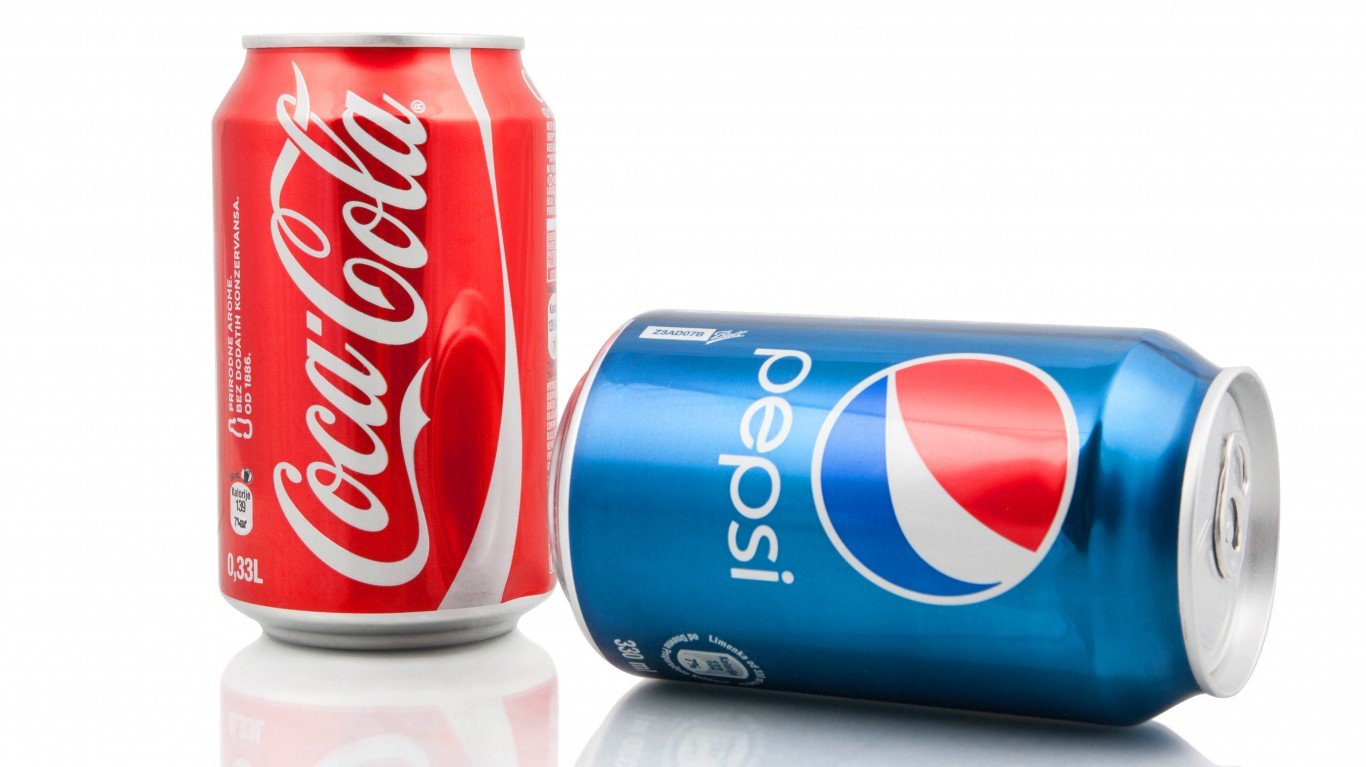
Coca-Cola or Philip Morris: Which Is the Better Short Bet Right Now?
Coca-Cola (NYSE: KO | KO Price Prediction) and Philip Morris International (NYSE: PM) both posted Q1 2026 beats within a week of each other. Each stock now trades near its 52-week high after sharp rallies. That tension between cautious fundamentals…


Coca-Cola (NYSE: KO | KO Price Prediction) and Philip Morris International (NYSE: PM) both posted Q1 2026 beats within a week of each other. Each stock now trades near its 52-week high after sharp rallies. That tension between cautious fundamentals and aggressive price action makes them interesting short candidates to compare.
Peak Elasticity Meets a 25x Multiple at Coke
Coca-Cola posted EPS of $0.86 on revenue of $12.47 billion, with organic growth of 10%. Looking under the hood, the picture softens. Six extra calendar days contributed 5 points to concentrate sales growth, and global unit case volume rose just 3%. For most of 2025, organic growth came almost entirely from price/mix (6% in both Q2 and Q3 2025), while volumes were flat or negative.

That is the peak elasticity problem. The pricing lever has carried the growth, and the consumer is showing fatigue in Mexico, India, and Thailand. Zero Sugar grew volume 13%, but juice, dairy, and plant-based declined 1%, and BODYARMOR took a $960 million impairment in Q4 2025. Coke trades at a trailing P/E of 26 on guided organic revenue growth of just 4% to 5%. After a 16.1% year-to-date run, that is a rich price for a business leaning on a depleted lever.
Philip Morris Looks Cheap Until You Read the Fine Print
The classic value trap pitch on Philip Morris assumes regulators eventually catch up to IQOS and ZYN. Q1 muddies that thesis. International Smoke-Free revenue jumped 24.7% to $3.84 billion, with gross margins at 70.0%. ZYN U.S. shipments fell 23.5%, but underlying consumer demand still grew roughly 10%. That reflects inventory destocking as wholesalers reduce their stock levels.

Regulatory risk remains genuine. The flavor ban in Poland, the complex U.S. regulatory environment for nicotine products, and negative shareholders’ equity of $7.3 billion are all genuine overhangs. CEO Jacek Olczak framed Q1 as “outstanding delivery from IQOS” and reaffirmed 2026 EPS guidance of $8.36 to $8.51, implying 10.9% to 12.9% growth.
The Next Catalyst
| Lens | Coca-Cola | Philip Morris |
| Forward PE | 25x | 23x |
| 2026 EPS growth | 8% to 9% | 11% to 13% |
| YTD price | +16.1% | +17.5% |
For Coke, the question is whether price/mix can sustain the model once currency tailwinds of roughly 3% on EPS fade. For Philip Morris, the ZYN ULTRA U.S. launch under FDA review and Japan competitive intensity matter more than headline EPS.


Why Coca-Cola Screens as the More Vulnerable Name
While both are considered strong defensive stocks, between the two, Coca-Cola screens as the more vulnerable name on a relative basis. Paying 25 times earnings for a business guided to 4% to 5% organic growth, after consumers have absorbed multiple years of pricing, looks like the cleaner asymmetry. Philip Morris carries greater risks, but IQOS momentum, 7.5% to 9.5% currency-neutral EPS growth, and an intact ZYN demand signal make it the harder borrow. The value trap exists on paper, but the cash flow trajectory keeps bailing out the bears. Coke’s pricing story offers no such escape hatch.
Contact [email protected] for any questions or corrections.
Trey has been an editor and author at 24/7 Wall St. for more than a decade, where he has published thousands of articles analyzing corporate earnings, dividend stocks, short interest, insider buying, private equity, and market trends. His comprehensive coverage spans the full spectrum of financial markets, from blue-chip stalwarts to emerging growth companies.
Beyond 24/7 Wall St., Trey has created and edited financial content for Benzinga and AOL's BloggingStocks, contributing additional hundreds of articles to the investment community.
Trey's editorial expertise extends across multiple publishing environments. He served as production editor at Dearborn Financial Publishing and development editor at Kaplan, where he helped shape financial education materials. Earlier in his career, he worked as a writer-producer at SVE. His freelance editing portfolio includes work for prestigious clients such as Sage Publications, Rand McNally, the Institute for Supply Management, the American Library Association, Eggplant Literary Productions, and Spiegel.
Outside of financial journalism, Trey writes fiction and has been an active member of the writing community for years, moderating workshop sessions at regional conventions.