The AI Data Center Buildout Is Accelerating, and Nuclear Could Be the Most Underowned Piece of the Puzzle
The data center buildout doesn’t seem like it’s about to slow down. As more firms look to step up and supply AI compute, some of which (unlike the cash-rich hyperscalers) are risking their shirts by going into debt, it feels…


The data center buildout doesn’t seem like it’s about to slow down. As more firms look to step up and supply AI compute, some of which (unlike the cash-rich hyperscalers) are risking their shirts by going into debt, it feels like timing the peak in the AI boom or the beginning of an AI bubble (if there really is one) will get harder to do. In any case, I think the semiconductor names warrant extra caution on the part of investors, especially for those who arrived a bit later, without the significant gains to show quite yet.
Indeed, buying into parabolic movers might guarantee nothing more than volatility. In any case, the foot remains on the AI gas, and as token consumption moves along a parabolic curve as well, the bull case suggests that the latest upswing in semiconductor stocks isn’t a sign of a bubbly move that requires a vicious burst.
When you consider the Alphabet (NASDAQ:GOOG | GOOG Price Prediction) Google I/O presentation and all of the mind-blowing applications that are just around the corner from hitting prime time, from Google Omni to Genie and Generative UI, which could forever change the business of Search, it’s hard not to think that compute demands are just going to keep moving along that exponential curve, rather than a linear one, as inference demand soars.
More AI, agents, and world models are coming — that’s a lot of token consumption
In short, the big takeaway from this year’s I/O event, at least in my view, is that the AI features, platforms, and agentic applications to come could be transformative and very heavy on the tokens.
If Google is going to move its userbase from serving up a page of blue links to generating widgets, so-called “mini-apps,” interactive UI with AI on the spot, whilst running AI agents in the background, there’s going to have to be a lot more compute. And the jarring thing is that much of the stuff that’s generated might not even be used by whoever entered the prompt.
Sure, it’s nice to have all of these cool AI-generated widgets and stuff that Google might think we want. And while I’m sure Google’s predictive power will only improve over time, I can’t help but imagine how many tokens will be wasted powering something like Generative UI when someone might just want an old-fashioned list of links.
Of course, Google TPUs are making ground-breaking efficiency gains on the regular. But, at the end of the day, I think token efficiency at the application layer also matters. And as AI becomes cheaper to use, usage stands to skyrocket, at least according to Jevons’ paradox.
In any case, time will tell if AI is moving too fast and what users will actually want. At the end of the day, something as transformative as Generative UI may very well be the next big shift for Google as Search gets its biggest facelift ever.
Once the energy bottleneck is solved, the big question is how much more explosive the AI boom could get. Could a real intelligence explosion happen? I guess time will tell.
Nuclear energy remains the way to go
Add world models, which are incredibly compute-intensive, the Gemini Spark agent, and all the other AI applications to come, and it feels like a real paradigm shift that more than justifies all the hype riding behind the semiconductor stocks. What’s more, though, is that energy and the grid might still be some of the more underrated ways to play the boom.
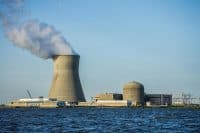
Indeed, it feels like nuclear energy is the only thing that can serve up enough energy to power all these data centers to come, as they transform power into tokens to fuel the massive surge in demand that might just be around the corner.
Vistra (NYSE:VST) continues to stand out as a nuclear play that looks compelling now that shares have entered a year-long cooling-off period after the meteoric rise since 2023.
The stock’s down more than 31% and might be a prudent pick-up as investors focus more on the semiconductors and less on the power side of the equation. At 24.0 times trailing price-to-earnings (P/E), the name looks like an underowned deal, especially as the firm delivers energy to help fuel the boom.
Contact [email protected] for any questions or corrections.
Joey is a 24/7 Wall St. contributor and seasoned investment writer whose work can also be found in publications such as The Motley Fool and TipRanks. Holding a B.A.Sc in Computer Engineering from the University of British Columbia (UBC), Joey has leveraged his technical background to provide insightful stock analyses to readers.
Joey's investment philosophy is heavily influenced by Warren Buffett's value investing principles. As a dedicated Buffett disciple, Joey is committed to unearthing value in the tech sector and beyond.