Which Bitcoin (BTC) ETF Is Best for Investors?
Bitcoin (CRYPTO: BTC) ETFs have changed how investors get exposure to crypto without holding the coin directly. Instead of dealing with wallets or exchanges, you can now tap into Bitcoin’s price through a regular brokerage account. The problem is that…

This post may contain links from our sponsors and affiliates, and Flywheel Publishing may receive compensation for actions taken through them.

Bitcoin (CRYPTO: BTC) ETFs have changed how investors get exposure to crypto without holding the coin directly. Instead of dealing with wallets or exchanges, you can now tap into Bitcoin’s price through a regular brokerage account. The problem is that not all Bitcoin ETFs are built the same. Some track the spot price, others rely on futures contracts, and their performance, fees, and liquidity vary widely.
As demand grows in 2026, investors are paying closer attention to which funds actually deliver direct exposure and which ones lag the market. So it’s worth working out which one deserves your money right now.
Why Bitcoin ETFs Matter in Today’s Crypto Market
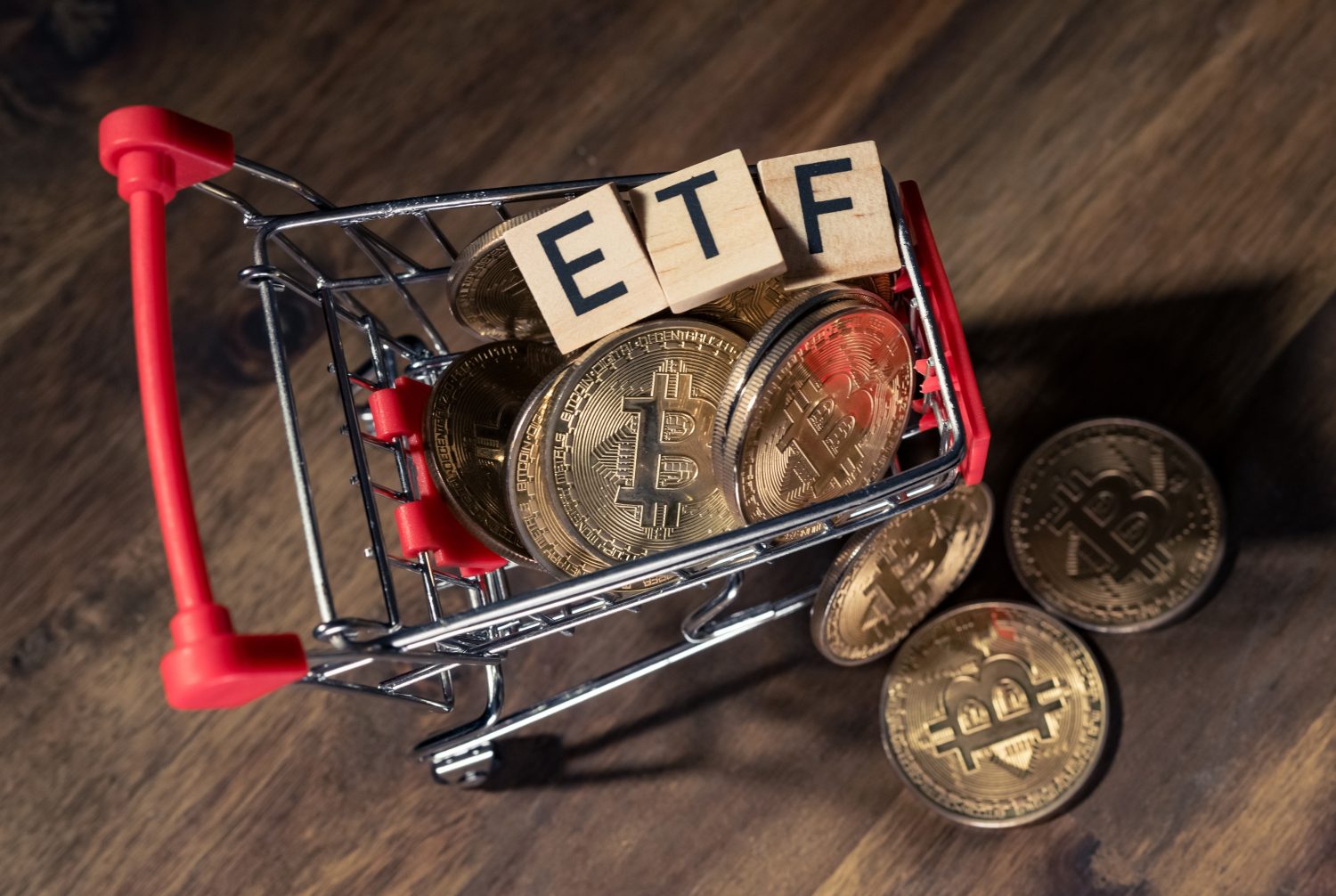
A few years ago, buying Bitcoin meant setting up a crypto wallet, memorizing a seed phrase, and hoping you never lost access to your funds. For institutions, that was too much to deal with. But Bitcoin ETFs have changed all of that.
Now your Bitcoin exposure can live inside a standard investment account, with no wallet or seed phrase, and no exchange risk. You buy it the same way you’d buy shares of Apple or Tesla. According to SoSoValue, spot Bitcoin ETFs now manage over $102 billion in total assets and hold more than 1.3 million BTC. They pulled in more cumulative net flows in under two years than gold ETFs managed in their first 15.
These funds also changed how Bitcoin trades. ETF inflows and outflows now feed into short-term price moves, because large amounts of capital run through these regulated products instead of spot exchanges alone.
So why go through an ETF instead of buying Bitcoin directly? For a lot of investors, it comes down to simplicity: exposure through a professionally managed fund they can reach in a regular brokerage account.
Spot Bitcoin ETFs vs Futures ETFs

Before you pick any Bitcoin ETF, it helps to know what you’re actually buying, because the two main types work very differently.
A spot Bitcoin ETF holds real Bitcoin. When you buy a share, the fund goes out and buys actual BTC on your behalf. If BTC rises 10%, the fund rises 10%, minus management fees. It’s as direct as it gets without holding the coin yourself.
A futures Bitcoin ETF owns Bitcoin futures contracts instead. A futures contract is an agreement to buy or sell Bitcoin at a set price on a future date, which means the fund never actually holds any BTC. Because of that, a futures ETF’s performance often doesn’t track Bitcoin’s real price closely. That is called tracking error, and it costs investors money over time.
Moreover, Futures ETFs also carry roll costs: the fees a fund pays when contracts expire and it has to replace them. That’s a structural drag spot ETFs don’t have. The verdict among most investors is that spot ETFs dominate in assets, performance, and investor flows, and for anyone who just wants straightforward Bitcoin exposure, they’re the more direct choice.
Top Bitcoin ETFs Competing for Market Dominance Right Now

The Bitcoin ETF space is no longer a two-horse race. Since the SEC approved the first batch of spot Bitcoin ETFs in January 2024, the field has grown fast, and the gap between the leaders and everyone else is wide.
BlackRock’s iShares Bitcoin Trust (IBIT) has led since launch, with roughly $67 billion in AUM as of early May 2026. Its closest competitor, Fidelity’s FBTC, holds about $17 billion. Then in April 2026, Morgan Stanley entered with MSBT, the first spot Bitcoin ETF from a major U.S. bank, pulling in over $100 million in its first eight days, entirely from self-directed clients.
Here’s how the major players stack up right now:
| ETF | Ticker | AUM | Expense Ratio |
| iShares Bitcoin Trust | IBIT | $55B | 0.25% |
| Fidelity Wise Origin Bitcoin Fund | FBTC | $13B | 0.25% |
| Grayscale Bitcoin Trust | GBTC | $14.9 | 1.50% |
| Grayscale Bitcoin Mini Trust | BTC | $4.4B | 0.15% |
| ARK 21Shares Bitcoin ETF | ARKB | $3.6B | 0.21% |
| Bitwise Bitcoin ETF | BITB | $3.5B | 0.20% |
| VanEck Bitcoin Trust | HODL | $1.4B | 0.20% |
| Morgan Stanley Bitcoin Trust | MSBT | $233M | 0.14% |
In Q1 2026 alone, combined net inflows across all spot Bitcoin ETFs hit $18.7 billion, pushing cumulative inflows since launch past the $65 billion mark. IBIT led with $8.4 billion of that, roughly 45% of the total, followed by FBTC.
What Separates the Best Bitcoin (BTC) ETFs?

Not all Bitcoin ETFs are built the same, even the ones holding similar assets. Three things separate the best from the rest: fees, liquidity, and who’s actually buying in.
Fees: The difference between a 0.14% and a 1.50% expense ratio sounds small, but it compounds over years of holding. Expense ratios across the space run from 0.15% to 1.50%, a 10x gap that grows every year you stay in. GBTC sits at the expensive end, MSBT at the cheapest, and the rest fight over the middle.
Liquidity: By dollar trading volume, IBIT trades nearly three times as much as all other spot Bitcoin ETFs combined, which keeps spreads tight and saves you money on every trade. Its options market alone holds 6.5 million contracts in open interest, roughly 61 times FBTC’s and 150 times GBTC’s. That depth matters most for institutions that need to hedge.
Institutional interest: IBIT now commands around half the U.S. spot Bitcoin ETF market by AUM, and that share has been climbing toward two-thirds as it outgrows rivals. Goldman Sachs holds over $1 billion in Bitcoin through spot ETFs, CalPERS allocated $500 million to Bitcoin in Q1 2026, and hedge funds like Millennium Management have pushed crypto up to 8% of AUM.
What’s the Best Bitcoin ETF for Investors?
If you want pure, long-term Bitcoin exposure with maximum liquidity, IBIT is still the clear winner. The AUM lead, the trading depth, and the options ecosystem make it the most complete product on the market, especially for institutional allocators who need more than just price exposure.
For cost-conscious retail investors holding for years, the Grayscale Bitcoin Mini Trust (BTC) at 0.15% or MSBT at 0.14% make a stronger case. Every basis point you save compounds quietly in the background.
And if you already operate inside Fidelity’s ecosystem, FBTC is the natural pick. The in-house custody through Fidelity Digital Assets is a genuine differentiator, and the liquidity is deep enough for most investors.
Contact [email protected] for any questions or corrections.
Sam Daodu is a crypto analyst who's spent nearly a decade making blockchain understandable—no easy task when most whitepapers read like fever dreams. He writes for 24/7 Wall St., covering Bitcoin, altcoins, and crypto market analysis for investors. Before crypto, he was a tech writer (back when explaining "the cloud" was peak innovation). Since 2018, he's written for CoinTelegraph, Yahoo Finance, The Block, Cryptonews, Zypto, Rain, and more—basically anywhere people want crypto news without the headache. Sam runs MacLabs Marketing, a content agency for crypto brands tired of sounding like AI wrote their website. He also publishes free crypto education on his site for Web3 enthusiasts who think "gas fees" is a typo. When he's not writing or staring at charts, Sam's either: - Watching anime (currently convinced One Piece has better tokenomics than most altcoins) - At the gym sculpting himself into a Greek god - Listening to the music your mum warned you only bad boys listen to Connect: LinkedIn | Email | MacLabs Marketing