




The AI boom was supposed to slow down by now. At least that was the theory. Data centers are straining electric grids, utilities are warning about power shortages, copper supplies are tightening, and semiconductor packaging capacity remains constrained. Yet demand for AI infrastructure keeps accelerating anyway.
That’s because the AI race has shifted from experimentation to deployment — and increasingly toward inference and agentic AI systems that need to run constantly, not just train occasionally. That’s also where Micron Technology (NASDAQ:MU | MU Price Prediction) enters the picture.
Surprisingly, the biggest constraint in AI today may not be GPUs at all. It may be memory.
Micron Can’t Supply Enough HBM — and That’s the Bull Case
Speaking recently about AI demand trends, CEO Sanjay Mehrotra said Micron can currently satisfy only about 50% to 66% of customer demand for high-bandwidth memory (HBM). That’s a remarkable statement. Most semiconductor companies would love to have excess inventory right now. Micron instead has customers asking for nearly twice as much product as it can deliver.
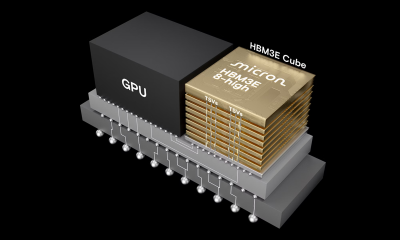
HBM is the specialized memory used alongside AI accelerators from companies like Nvidia (NASDAQ:NVDA) and Advanced Micro Devices (NASDAQ:AMD). It dramatically improves how quickly AI chips can access data, which is essential for training and inference workloads.
The economics are powerful:
| Company | AI Memory Position | HBM Market Share Estimate | Key Advantage |
| SK Hynix | Market leader | 57% | Early Nvidia supplier |
| Samsung Electronics | No. 2 player | 22% | Manufacturing scale |
| Micron Technology | Fast-growing challenger | 21% | Higher-margin HBM3E |
Data source: Counterpoint Research.
Micron has already sold out its HBM production through much of 2026, yet Mehrotra also noted the company plans to add new capacity every quarter to keep pace with AI demand growth.
That matters because HBM sells at a large premium to traditional DRAM. Industry estimates from TrendForce and Counterpoint Research suggest HBM pricing can run several times higher per bit than conventional memory. In plain English, Micron is shifting from commodity memory into premium AI infrastructure.
And that changes the earnings equation fast.
AI Memory Growth Could Create Shortages Everywhere Else
There’s another side to this story investors should watch carefully, too. Memory fabs are not infinitely flexible. If Micron prioritizes HBM production because margins are higher, less manufacturing capacity remains for conventional DRAM used in PCs, smartphones, and consumer electronics. AI may end up tightening memory supply across the entire tech industry.
Granted, Micron isn’t abandoning traditional DRAM. But capital follows profits. And right now, HBM profits are where the action is. That could create ripple effects similar to what happened during past semiconductor shortages — except this time the demand driver is structural AI growth rather than temporary pandemic demand spikes.
The numbers already show the shift underway. Micron’s second-quarter earnings showed data center revenue more than tripled year over year with gross margins expanding 54 percentage points as richer AI product mix replaced lower-margin commodity memory sales. Sales also more than doubled sequentially as HBM revenue climbed sharply higher.
This no longer resembles the old memory industry.
Why a $1,000 Stock May Just Be the Starting Point
Micron stock has already surged 163% year to date to $751. Normally, that kind of move would suggest a stock is overheated. Yet Micron’s valuation still looks surprisingly reasonable relative to its growth trajectory.
Let’s look at what the numbers tell us:
- AI memory demand still exceeds supply
- Micron continues expanding capacity quarterly
- HBM carries higher margins than standard DRAM
- AI inference demand is only beginning
- Robotics and physical AI have barely entered the equation
That last point may be the most important. Today’s AI cycle revolves around training models and deploying inference workloads in data centers. Tomorrow’s cycle could involve millions of autonomous robots, AI-enabled vehicles, industrial systems, and edge devices constantly processing data in real time. All of that requires memory. Massive amounts of it.
Historically, memory stocks were cyclical because PCs and smartphones followed replacement cycles. AI changes that dynamic because each new layer of AI infrastructure creates another memory-intensive workload. Training led to inference. Inference is leading to agentic AI. Agentic AI could lead to robotics at scale.
Each step expands memory demand further.
Key Takeaway
In short, Micron may no longer be a traditional memory stock at all. It is becoming an AI infrastructure company hiding inside the semiconductor sector.
That distinction matters for investors because infrastructure companies with persistent shortages and pricing power rarely stay cheap for long. If Micron reaches $1,000, it would simply reflect today’s AI demand trajectory. If robotics and agentic AI scale the way many technology companies expect, even that target could eventually look conservative.
That said, risks remain. Semiconductor cycles never disappear entirely, and aggressive capacity expansion from rivals like SK Hynix and Samsung could pressure pricing later in the decade.
Still, when a CEO openly says customers want far more product than the company can supply — and demand keeps growing every quarter — smart investors should pay attention.
Contact [email protected] for any questions or corrections.












 Top Gaining Stocks
 Top Losing Stocks