This Proves The AI Boom Will Last Through 2027
On a recent episode of the Earn Your Leisure podcast titled “The AI Boom Isn’t Over! Micron Technology Just Proved It!“, co-hosts Rashad Bilal and Troy Millings laid out a two-part thesis that the AI buildout has real runway through…

This post may contain links from our sponsors and affiliates, and Flywheel Publishing may receive compensation for actions taken through them.

On a recent episode of the Earn Your Leisure podcast titled “The AI Boom Isn’t Over! Micron Technology Just Proved It!“, co-hosts Rashad Bilal and Troy Millings laid out a two-part thesis that the AI buildout has real runway through 2027. They also shared that Taiwan Semiconductor’s monthly demand commentary may serve as the single clearest signal of whether that thesis stays intact. Everything else, they argued, is noise.
Elite Companies Will Stay Elite
Bilal’s framing on the podcast was direct: returns may moderate from here, but “the elite companies are going to remain elite.” He drew a historical parallel between the current OpenAI-Anthropic rivalry and the Apple-Microsoft battle of 30 years ago, describing the dynamic as “the capitalist versus the creative.” Both Alphabet (NASDAQ:GOOGL | GOOGL Price Prediction) and Microsoft (NASDAQ:MSFT) not only survived that fight but went on to become two of the most valuable companies in the world. The implication for today’s AI leaders is that the names with real staying power compound, while the companies that attached themselves to the narrative without much substance behind it face a rougher road.
That view is backed up by what the hyperscalers are actually spending. Alphabet guided 2026 CapEx to a range that, alongside Meta Platforms (NASDAQ:META) raising its 2026 CapEx to $125 to $145 billion, will lead to years of committed AI infrastructure spending. Alphabet’s Q1 2026 cloud backlog of roughly $460 billion nearly doubled quarter over quarter, and almost all of this spending flows through one place.
Why TSM Is the Only Data Point That Really Matters
Earn Your Leisure discussed it plainly: “I think the keyword you said there was, uh, Shadi, was demand. I think that that’s the word that I’m always looking for in every report.” On Taiwan Semiconductor (NYSE:TSM) specifically, he added: “Once TSM tells us that the demand has tripled or it’s doubled or it’s quadrupled, then I know the AI story’s still very much intact.”
The reason TSM carries so much weight is straightforward. “It doesn’t matter if it’s NVIDIA, if it’s Google, if it’s Meta, or if it’s XAI, the manufacturing capacity still comes through TSM.” The April TSM report was the most recent confirmation that demand remains robust, and the stock has reflected that. TSM shares are up 33.48% year to date and 108.67% over the past year, trading at $404.52.
The capital commitments back up the demand picture. TSM recently disclosed board approval of about $31.28 billion in capital appropriations for advanced technology capacity and fab construction, plus up to $20 billion of additional capital injection into TSMC Arizona. The company explicitly tied that spend to “long-term capacity plans based on market demand forecasts.”
NVIDIA’s Numbers Confirm What TSM Is Building For
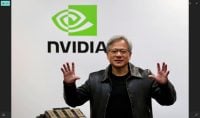
NVIDIA (NASDAQ:NVDA) posted Q1 FY27 revenue of $81.615 billion, up 85.23% year over year, with Data Center revenue at $75.246 billion and Data Center Networking growing 199% year over year. CEO Jensen Huang described “the buildout of AI factories, the largest infrastructure expansion in human history, accelerating at extraordinary speed.” Total supply-related commitments reached $119.0 billion, an explicit multi-year bet on demand continuity, with much of that production running through TSM.
The Late-2027 Shakeout
The risk side of the thesis is just as concrete. Bilal predicted “restructuring will come in late 2027” for lower-quality AI companies that have attached themselves to the narrative without anything real behind it. The names with genuine revenue, real margins, and direct exposure to foundry capacity at TSM are in a different position from those simply renting the AI label.
For long-horizon portfolios, the framework the EYL panel laid out comes down to two things. Own quality across the AI stack, and treat TSM’s monthly revenue disclosures as the most important data point in the sector. When the demand commentary shows doubling, tripling, or quadrupling, the thesis may remain intact across NVIDIA, Alphabet, Meta, and the rest of the customer base.
Contact [email protected] for any questions or corrections.
Thomas Richmond is a financial writer and content strategist with 5+ years of experience covering stocks and financial markets. He has published over 500 articles focused on individual stock analysis, helping investors better understand business fundamentals, stock valuations, and long-term opportunities.
Thomas previously served as a Content Lead at TIKR, a stock research platform, where he helped scale the company’s blog to hundreds of articles per month and contributed to a weekly newsletter reaching more than 100,000 investors.
Outside of work, Thomas enjoys weight lifting and soccer.