As Kevin Warsh Signals a Tough New Inflation Fight, This Under-the-Radar Monopoly Is a No-Brainer Buy
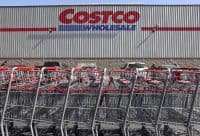
Every retirement portfolio screen this spring keeps surfacing the same name: Costco Wholesale (NASDAQ:COST | COST Price Prediction), the membership warehouse darling whose stock is up 16.72% year to date on the strength of 82.1 million paid members and a…


Every retirement portfolio screen this spring keeps surfacing the same name: Costco Wholesale (NASDAQ:COST | COST Price Prediction), the membership warehouse darling whose stock is up 16.72% year to date on the strength of 82.1 million paid members and a 89.7% worldwide renewal rate. But the setup underneath that headline number deserves a closer look.
The Costco Trade Is a Crowded Defensive Bet at a Tech Multiple
Costco is a phenomenal operator. It is also priced like a hyper-growth software company. Shares trade at a trailing P/E of 52 and a forward P/E of 47, with a PEG ratio of 5.22 and a price-to-book of 14. That premium sits on top of a 2.99% profit margin and a 3.67% operating margin, the thinnest margins in big-box retail.
With former Fed governor Kevin Warsh signaling a tougher new inflation fight, and Core PCE running at the 90.9th percentile of its trailing 12-month range after a +0.7% monthly print in March 2026, that math gets uncomfortable. Retail-sector corporate profits have already rolled over from a 2024 Q4 peak of $422.6 billion to $415.8 billion in 2025 Q4, confirming margin compression in consumer-facing names. Costco itself flags tariff uncertainty, rising employee costs, and LIFO charges as live risks. A priced-for-perfection giant with razor-thin margins is the wrong vehicle for a structurally higher cost-of-capital regime.
The Better Idea: A Toll Booth You Can’t Build Around
Waste Management (NYSE:WM) is the under-the-radar monopoly worth a closer look for income-focused portfolios. Three points carry the case.
1. An unreplicable network with real pricing power. CEO Jim Fish calls it the company’s “unreplicable solid waste network”, and the numbers back it. In Q1 2026, core pricing in the Collection and Disposal segment ran at 6.3% while segment EBITDA margin expanded 110 basis points to 38.5%, even with volumes down 1.5% on weather and contract shedding. Landfill permitting moats mean customers have nowhere else to go. That is monopoly-grade pass-through pricing.
2. A cash machine that is accelerating, not decelerating. Q1 2026 free cash flow nearly doubled to $920 million, up 144% year over year, on operating cash flow of $1.501 billion (+24.25%). Management reaffirmed full-year free cash flow guidance of $3.75 to $3.85 billion, implying nearly 30% growth at the midpoint. That is essential-service revenue, insulated from the discretionary spending risk now haunting Costco.
3. A retirement-friendly capital return profile. WM plans to return roughly $3.5 billion to shareholders in 2026, including $1.5 billion in dividends and $2.0 billion in buybacks, after raising the annual dividend $0.48 to $3.78 per share. Compare that with Costco’s 0.51% dividend yield and its reliance on irregular special dividends.
The Setup Is Already in Your Favor
WM trades at a trailing P/E of 31 and a forward P/E of 26, with a beta of 0.495 and an analyst target of $256.04 versus today’s price. The stock is down 1.49% year to date while Costco has run hot. That is the opportunity.
For investors weighing the consensus defensive trade against essential-service compounders, the contrast is between paying roughly 50 times earnings for Costco and roughly 26 times forward earnings for an entrenched landfill operator with accelerating free cash flow.
Contact [email protected] for any questions or corrections.
Alex Sirois is a financial writer with experience spanning both retail and institutional investing. He has written for InvestorPlace and held roles at BNY Mellon and Bernstein, giving him a perspective that bridges Main Street portfolios and Wall Street analysis.
Alex holds an MBA from George Washington University and has built his career across multiple industries, including e-commerce, education, and translation — a breadth of experience that informs how he breaks down complex financial topics for everyday investors. His writing is conversational, actionable, and grounded in long-term, buy-and-hold investing principles.
At 247 Wall St., Alex focuses on delivering analysis that is both accessible and useful, with a clear emphasis on helping readers make more informed decisions with their money.