‘Automation Is a Lie,’ Says AI Founder Whose Company Doubled Headcount Despite Heavy AI Use
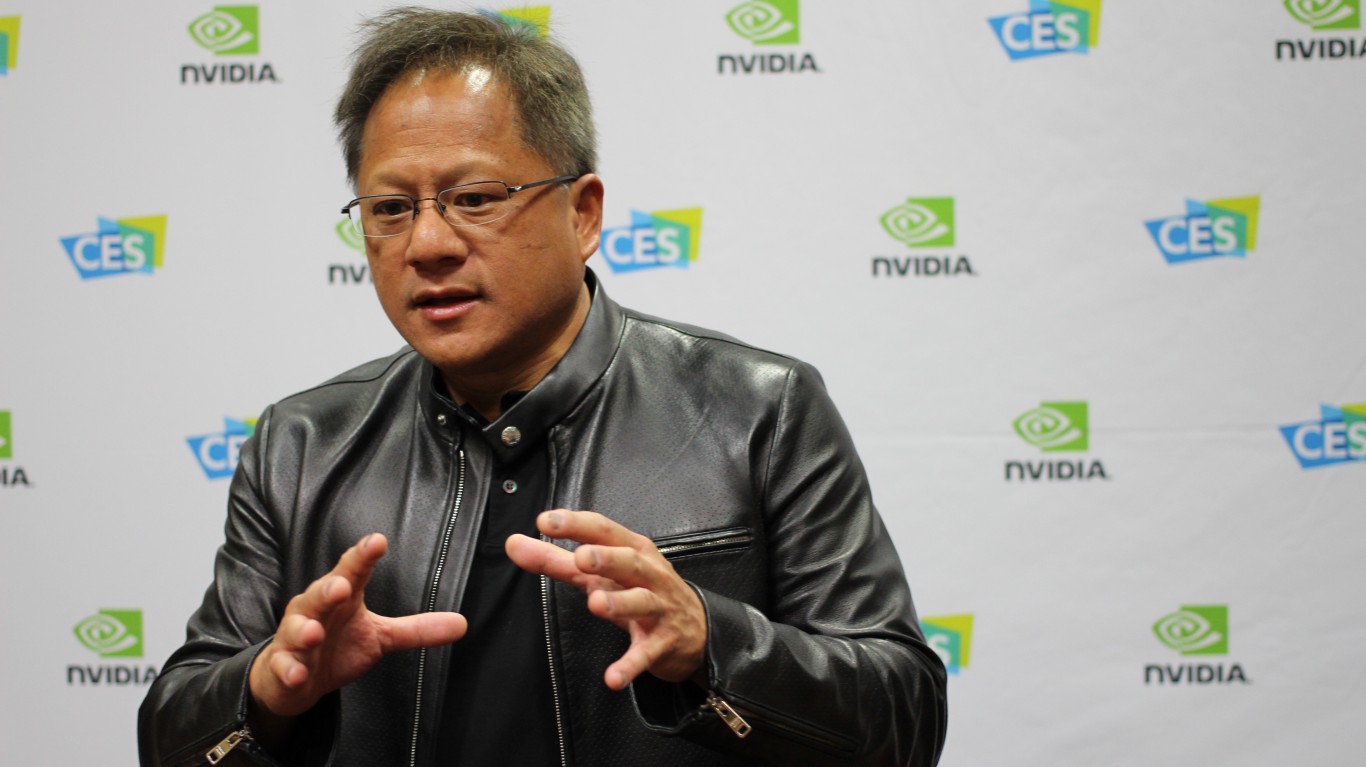
Dan Shipper, founder of the AI-forward media and software company Every, is pushing back on the conventional Wall Street narrative that companies can simply replace headcount with AI to raise margins. Dan explained why he doubled his headcount in the…


Dan Shipper, founder of the AI-forward media and software company Every, is pushing back on the conventional Wall Street narrative that companies can simply replace headcount with AI to raise margins. Dan explained why he doubled his headcount in the past year on a recent episode of Lenny’s Podcast.
The Headcount Paradox
Shipper described a result that surprised even his host: Every doubled its headcount over the past year while running heavily on AI tooling internally. The host called the move “quite contrarian” and noted that hiring at that pace “is not what people would’ve expected from a company that is so AI forward.”
Shipper’s own experience shows that even with AI, he’s working more: “We have so much automation, so much AI, and I also work way more,” he said. The macro labor data tells a similar story. Total nonfarm payrolls climbed to 158,736 thousand in April 2026, the highest level in the BLS dataset, even as enterprise AI adoption accelerated across the same period.
Why Shipper Calls Automation a Lie
Shipper didn’t mince words on this. “Automation is a lie. In the sense that every time you automate something in order to make sure the automation is working well, you need a human on top of it,” he said. His analogy is the modern manager. “Managers actually spend a lot of time working. Most managers are not like on the beach,” he said. Supervising AI workflows, in his view, is the same job.
The numbers behind his Senior Engineer Benchmark make the point concrete. GPT-5.5 scored 62 out of 100, while human engineers scored in the high 80s to low 90s. Shipper described it as “race a human in a car versus another human in a car,” meaning the human engineers were also using AI tools. This is AI going head-to-head with AI-augmented humans and losing by a significant margin.
The gap, in Shipper’s reading, comes down to judgment rather than raw capability. “Every coding model on the market will take that instruction seriously,” when asked to fix a reported bug, he said. A senior human engineer, by contrast, will “go look at the codebase and they’re like, this is a piece of shit” and push back on the premise entirely. Knowing when not to follow an instruction is something the models haven’t figured out yet.
Bank of America recently downgraded Salesforce (NYSE:CRM | CRM Price Prediction) to Underperform on what it called an “AI-driven structural reset” tied to potential seat-model compression, while consensus analysts kept a mean Street target of $263 on Agentforce growth. Shipper’s thesis lands on the bull side: automation expands the surface area of work that needs supervising rather than shrinking it.
The App That Crashed and the Bursitis
Shipper’s most personal proof of concept is also his most uncomfortable one. He built an app called Proof on the side using AI-assisted coding, and it crashed repeatedly after launch, leaving him with what he described as “a lot of egg on my face.” The coding sprints were intense enough that he developed bursitis in his elbow. An AI-forward founder with every modern tool at his disposal still shipped a broken product, because the AI didn’t catch what a human reviewer would have.
The conclusion he draws is practical. “In any real use case, there’s always a human, like pretty close to it, making sure that it’s working,” he said. “Even though the models are getting better at automation, I still hire engineers.” When the host floated the idea that “SaaS is the future of AI. This B2B SaaS,” Shipper’s reply was immediate: “Hashtag send tweet.”
For investors weighing the labor-replacement narrative, Shipper’s experience is the counterargument in a debate that is far from settled. Business models built around assumed headcount reduction may be overpromising. Companies designed around human judgment supervising automation, including the B2B software vendors selling that supervision layer, may turn out to be more durable than the pure-automation pitches suggest. Readers can find the full conversation on Lenny’s Podcast.
Contact [email protected] for any questions or corrections.
Thomas Richmond is a financial writer and content strategist with 5+ years of experience covering stocks and financial markets. He has published over 500 articles focused on individual stock analysis, helping investors better understand business fundamentals, stock valuations, and long-term opportunities.
Thomas previously served as a Content Lead at TIKR, a stock research platform, where he helped scale the company’s blog to hundreds of articles per month and contributed to a weekly newsletter reaching more than 100,000 investors.
Outside of work, Thomas enjoys weight lifting and soccer.