NVIDIA’s CEO Says the Jobs Doomsayers Have It Backwards. Here’s Why
Jensen Huang is taking a hard stance. At GTC 2026 and on the All-In Podcast on March 16, the CEO of NVIDIA (NASDAQ:NVDA | NVDA Price Prediction) took direct aim at the loudest narrative in technology: that AI will gut…

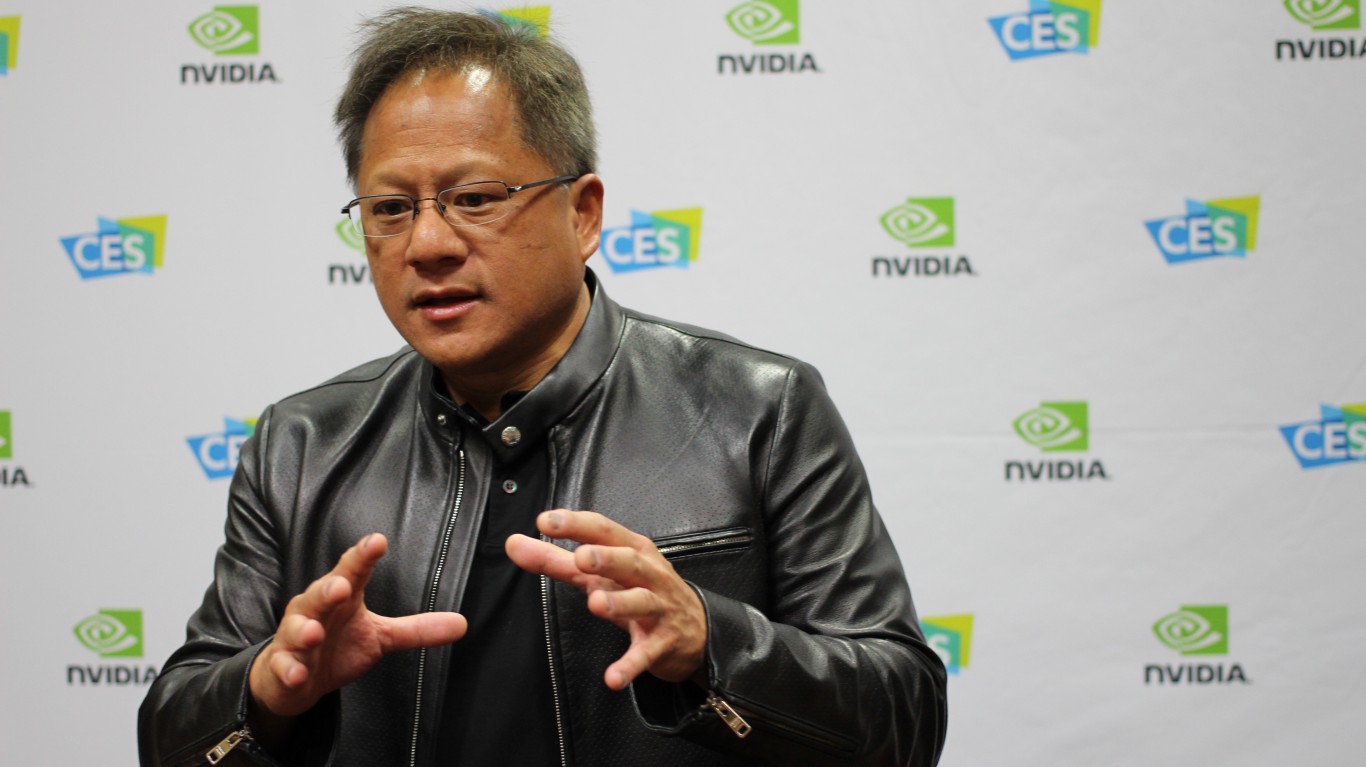
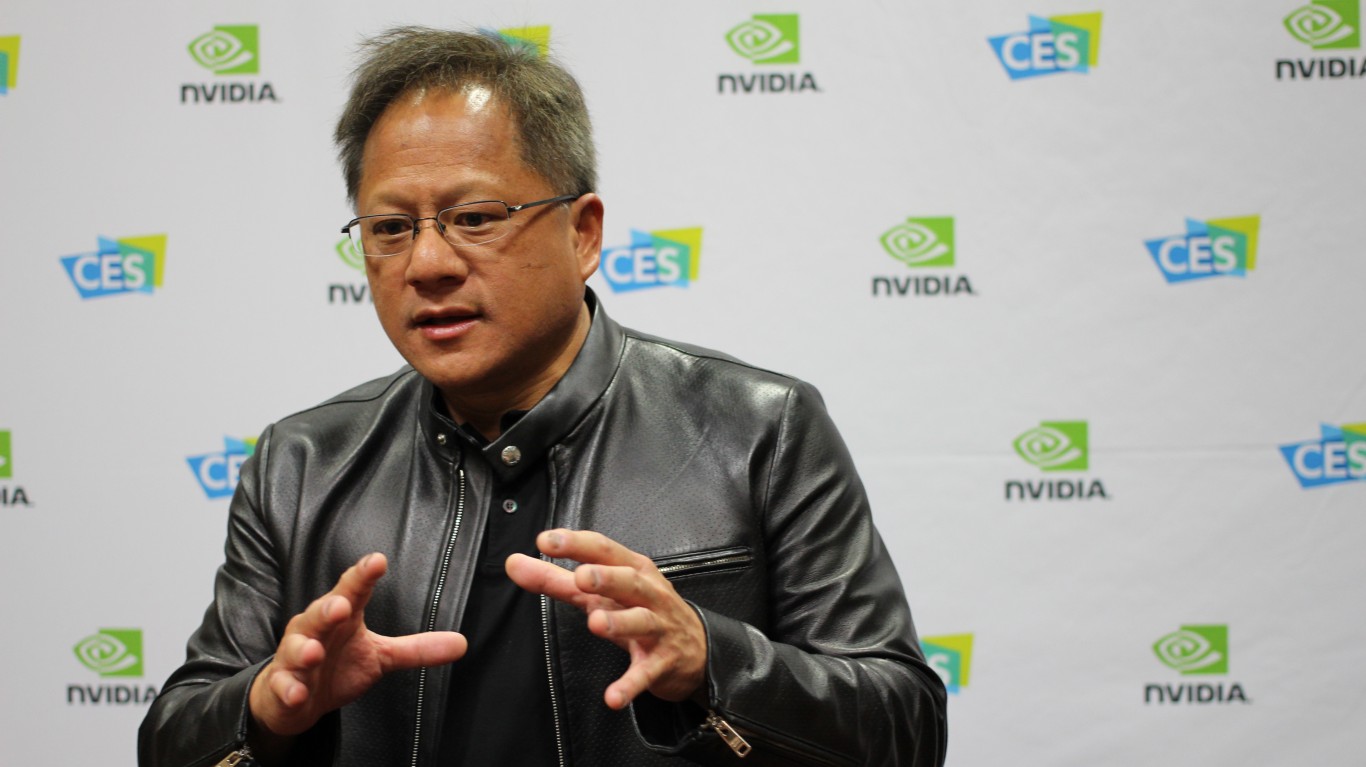
Jensen Huang is taking a hard stance. At GTC 2026 and on the All-In Podcast on March 16, the CEO of NVIDIA (NASDAQ:NVDA | NVDA Price Prediction) took direct aim at the loudest narrative in technology: that AI will gut the labor force. His framing was blunt.
“People talk about AI reducing jobs, complete nonsense. If each developer can now generate $9 trillion worth of productive work for $3 trillion in salary, why wouldn’t you want to hire more software engineers,” Jensen Huang asked.
The contrarian math behind the claim
Huang’s argument rests on a productivity multiplier. He cited GitHub data showing code commits tripled from 2023 to 2026 while developer headcount stayed roughly flat, and framed AI as delivering at least a 3x output gain per engineer, which he called conservative. His thesis: When each worker generates more value than they cost by a wide margin, rational employers buy more labor. He extended the same logic to radiologists and nurses, arguing AI automates tasks, not professions, with humans moving up the stack into supervision, judgment, and creative work.
What the macro data shows
The labor figures line up with his frame. Unemployment sat at 4% in May 2026, broadly stable through the steepest AI capex cycle ever recorded. JOLTS openings hit 7.62 million in April 2026, in the historically strong 7-to-9 million band. Average hourly earnings rose to $37.53 in May 2026 from $36.28 a year earlier. Wage growth, elevated openings, and no spike in joblessness point away from mass displacement.
And the source of the multiplier
The argument is self-interested. NVIDIA is the company most directly monetizing the buildout Huang describes. Q1 FY2027 revenue hit $81.61 billion, up 85% YoY, with Data Center revenue of $75.25 billion, up 92%, and Data Center networking up 199% to $14.8 billion. On the call, Huang described “the buildout of AI factories, the largest infrastructure expansion in human history” and said “agentic AI has arrived, doing productive work, generating real value and scaling rapidly.” Guidance points to $91.0 billion in Q2, with total supply commitments of $119.0 billion. The CEO selling shovels is unlikely to predict the gold runs out.
Where his thesis gets tested
Aggregate stability hides churn. Customer-service, entry-level coding, copywriting, and back-office roles have absorbed measurable cuts at firms aggressively deploying generative tools, even where total payrolls are growing. Huang’s task-not-profession framing is defensible, but the transition cost lands on specific workers, not averages. On the Dwarkesh Podcast, researchers noted “there might be some kind of displacement” and a transition required to find work that fits, even in scenarios where wages stay high.
Investors get the cleanest read on his conviction through capital allocation. NVIDIA raised its dividend from $0.01 to $0.25 and authorized $80 billion in buybacks. Shares are up 42% over the past year. Huang is paying out, buying back, and building supply. The labor data, for now, has not contradicted him.
Contact [email protected] for any questions or corrections.
Joel South covers large-cap stocks, dividend investing, and major market trends, with a focus on earnings analysis, valuation, and turning complex data into actionable insights for investors.
He brings more than 15 years of experience as an investor and financial journalist, including 12 years at The Motley Fool, where he served as an investment analyst, Bureau Chief, and later led the Fool.com investing news desk. He has also co-hosted an investing podcast and appeared across TV and radio discussing market trends.