Beyond Micron. Why TSMC Might Be the Bigger Value Play in Semis as the Cycle Broadens
It feels like there’s nothing more than extreme overvaluation across the semiconductor names these days. Indeed, sometimes, it just makes more sense to tell yourself you missed a move rather than looking to chase an overheated sector or industry after…

It feels like there’s nothing more than extreme overvaluation across the semiconductor names these days. Indeed, sometimes, it just makes more sense to tell yourself you missed a move rather than looking to chase an overheated sector or industry after a parabolic move.
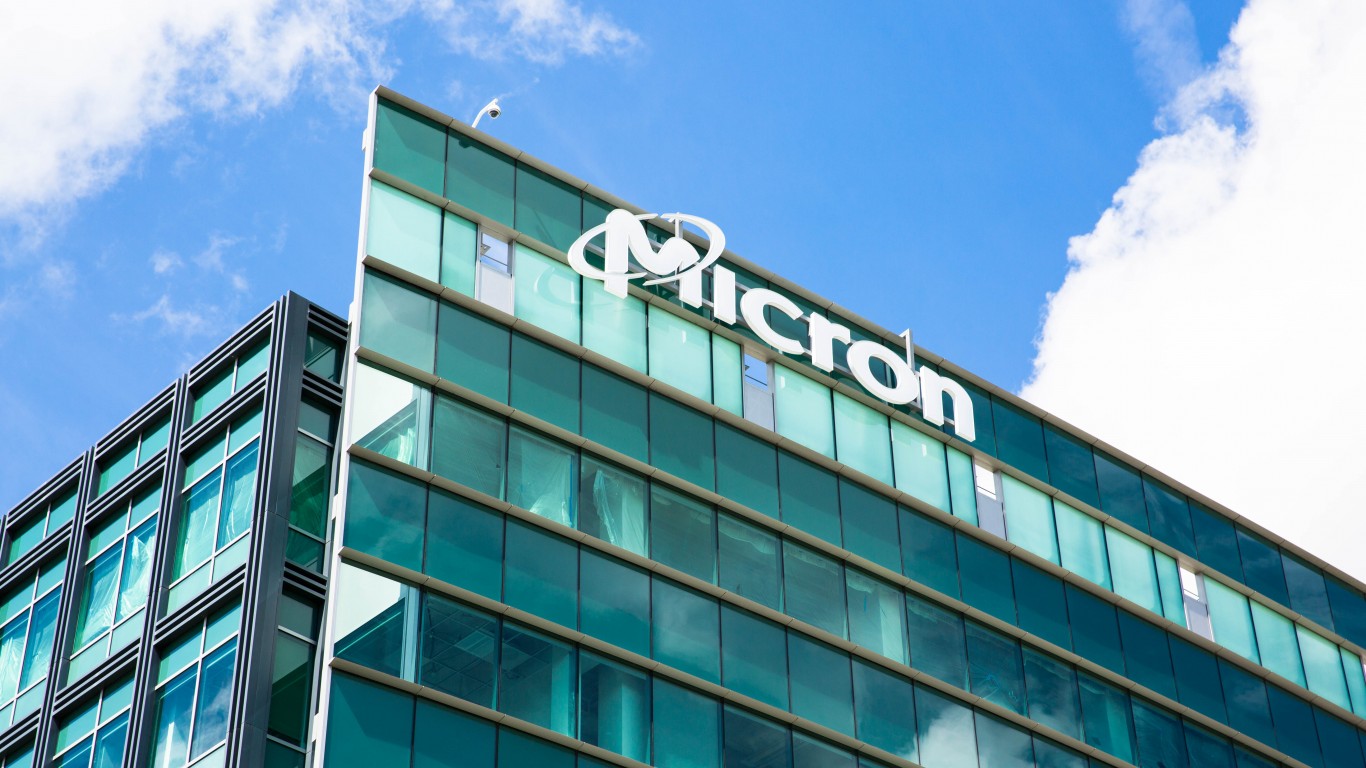
With Micron (NASDAQ:MU | MU Price Prediction) up 865% in the past year, surging into the $1 trillion club, and Sandisk (NASDAQ:SNDK) gaining more than 4,000% in the past year, it feels like it’s just a matter of time before the meteoric rise comes falling back to earth. At the end of the day, aren’t semiconductors just commodities that are prone to booming and busting? Why buy the names now that much of the boom is already in the rearview mirror?
While I understand the “value” argument, even for a name like Micron, which trades at a ridiculous 9.0 times forward price-to-earnings (P/E), it is worth noting that cyclical stocks tend to appear the cheapest in the latter stages. The price-to-sales (P/S) multiple might be a fairer gauge for a booming DRAM play like Micron. Today, shares go for 9.11 times P/S.
That’s not obscenely expensive, but it’s not cheap, either. It all comes down to whether the AI-driven memory boom is actually a cycle or something more. Only time will tell. But given the bullish analysts who expect more big things from the name, I do understand why one would perceive Micron as still a value play and a winner poised to keep on winning.
As firms continue hoarding DRAM like it’s toilet paper during the start of the pandemic, questions linger as to whether there’s concern of front-loading that might lead to a demand drop-off at some point down the road. In other words, it’s hard to tell if the single-digit forward P/E is a real value or a value trap.
Why Taiwan Semiconductor might be the moatier value play
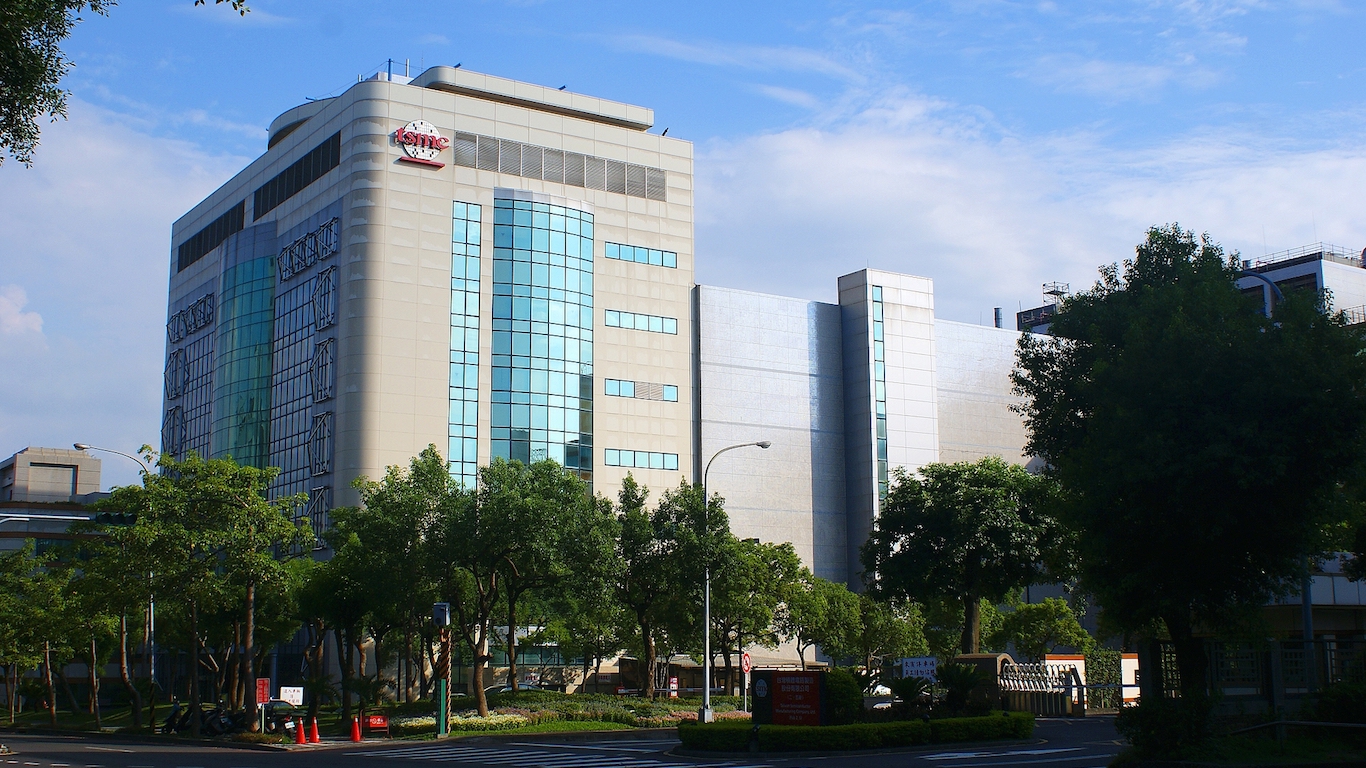
If I were to bet on the semis with value in mind, I’d much rather go for the likes of a Taiwan Semiconductor (NYSE:TSM), even at a slight premium to historical averages. For a fab giant like Taiwan Semiconductor or TSMC, as it’s often referred to, it matters less which firms dominate the AI chip race at any given time. It could be Nvidia (NASDAQ:NVDA) today and someone else tomorrow, but a vast majority of firms move through Taiwan Semiconductor.
Unlike Micron, which has a too-good-to-be-true kind of P/E multiple, shares of Taiwan Semiconductor do look quite fully valued at just north of 36.0 times trailing P/E or just over 26.0 times forward P/E.
In my view, that’s a fair price to pay for a monopolistic company that commands close to three-quarters of the global foundry market. It’s leading the manufacturing charge into the Angstrom era, and its operating efficiencies set a high bar for its rivals.
Fab challengers are coming, but Taiwan Semiconductor is still the top dog
Of course, Intel (NASDAQ:INTC) is rising up as a credible challenger, and Elon Musk’s Terafab could cause Taiwan Semiconductor to lose a bit of share. That said, in terms of high yield in the latest process, I think it’s going to be tough to top the firm, which is a best-in-class operator that can stand taller than any new rivals that look to enter a market that has sky-high barriers to entry.
Sure, Micron is another of the few global players (a member of a triopoly) in its corner of semis that could continue to win big as DRAM consumption blasts off. But, at the end of the day, I’d much rather be exposed to less cyclicality and broader exposure across chips, rather than being in a hot commodity.
Whether it’s AI chips, smartphone chips, or chips and sensors for robotics, Taiwan Semiconductor has what it takes to stay busy, even when CapEx looks to take a few steps back. And as new rivals enter manufacturing, my guess is Taiwan Semiconductor will still be top dog, as it has more than enough business than it can handle as the AI revolution moves at full speed.
The bottom line
In my view, Taiwan Semiconductor looks to be in a more structural bull market, especially as more firms roll up their sleeves and build their own custom silicon. Whether Nvidia stays a big customer or it diversifies more broadly, Taiwan Semiconductor stands to win, and given this added certainty, I’d say a 36.0 times trailing P/E multiple is very fair, maybe even cheap compared to the rest of the semis.
Contact [email protected] for any questions or corrections.
Joey is a 24/7 Wall St. contributor and seasoned investment writer whose work can also be found in publications such as The Motley Fool and TipRanks. Holding a B.A.Sc in Computer Engineering from the University of British Columbia (UBC), Joey has leveraged his technical background to provide insightful stock analyses to readers.
Joey's investment philosophy is heavily influenced by Warren Buffett's value investing principles. As a dedicated Buffett disciple, Joey is committed to unearthing value in the tech sector and beyond.