Fed Hawks Dominate Under Warsh: New Chairman Faces a Hawkish Committee on Rate Cuts
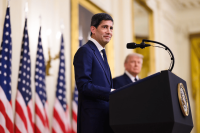
Kevin Warsh walks into his first Federal Open Market Committee meeting as chairman with a problem most new bosses dread. The people in the room do not appear to agree with him. Steve Liesman delivered this message on CNBC this…

This post may contain links from our sponsors and affiliates, and Flywheel Publishing may receive compensation for actions taken through them.
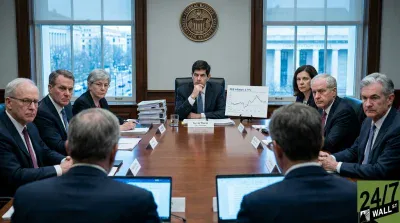
Kevin Warsh walks into his first Federal Open Market Committee meeting as chairman with a problem most new bosses dread. The people in the room do not appear to agree with him. Steve Liesman delivered this message on CNBC this morning, June 17, 2026. He walked through a Deutsche Bank tally of every Fed speech given since the May meeting, and the tally shows a committee that has drifted noticeably away from the rate-cut camp Warsh occupied before taking the gavel.
The numbers are stark and explain why traders have spent the last two weeks unwinding bets on imminent easing even as oil pulls back and geopolitical tensions cool. 17 speeches catalogued by Deutsche Bank, 11 leaned neutral, 5 were hawkish, and only 1 was rated dovish. More telling than the snapshot is the drift. All but two have grown more hawkish since the May meeting, including the lone dove.
What the speech tally actually says
The named hawks are familiar to anyone listening. Hammock, Logan, and Kashkari sit at the most hawkish end. Bowman is rated the lone dove, though even her recent remarks have moved in the hawkish direction.
Deutsche Bank’s framing, as relayed by Liesman, sharpens the point. “This pronounced hawkish trend signals the committee’s reevaluation of the balance of risk… increasing risk that rates might be higher, rates might be needed.” That is a committee preparing the ground to keep policy tight.
Why the hawks have the data on their side
The April PCE report gave the hawks ammunition that is hard to argue with. Headline PCE inflation ran at 3.77% year over year, an acceleration from 2.86% in January and February. Energy drove the acceleration, climbing 18.26% year over year, but core PCE refuses to behave. Core PCE printed 3.29%, and services inflation stayed at 3.49%. That last number worries policymakers, since services prices reflect wages and trend stubbornly rather than spike.
The Treasury market has noticed. The 10-year yield closed at 4.43% on June 16, after touching 4.56% on June 8. The 30-year sits at 4.93%, with the curve positively sloped from 3.67% at the 1-month tenor all the way out. Bond investors are pricing patience.
Warsh’s diplomatic problem
Warsh was a known rate-cut sympathizer before his nomination, and the question Liesman raised is whether that view survives contact with the data and the committee. “It’s not clear that Warsh continued to support rate cuts as he did before taking office. A lot has changed. If he does, he’ll likely have to wait until the data go his way and use the power of the chair.”
The new chair becomes a politician inside his own building. Liesman reached for a rock-and-roll reference. “I think he’s going to try to use all his, to quote Mick Jagger, well-learned politics, to cajole and bring people on board to his point of view.” The path Liesman sketched runs through softer inflation prints and a productivity story that lets the doves breathe. “You get low inflation… that productivity starts to assert itself in the data. He might find some supporters when it comes to reducing rates.”
What markets have already priced
Fed funds futures now assign roughly a 60% probability of a December rate hike, a number that would have looked absurd a quarter ago given the geopolitical thaw and softer crude. Traders also expect today’s statement to drop its easing bias, which would remove the language that has telegraphed cuts for months. You can see the broader Fed framework discussion in the official policy materials at the Federal Reserve’s FOMC page.
For investors, the practical takeaway is that Warsh inherits a committee that has already made up its mind about the near term. Duration trades that assume aggressive easing look exposed. JPMorgan’s 2026 outlook flagged exactly this risk. Markets were pricing roughly 80 basis points of rate cuts through 2026 while the Fed sat near its neutral estimate. Warsh has the chair. He does not yet have the votes.
Contact [email protected] for any questions or corrections.
Omor Ibne Ehsan is a writer at 24/7 Wall St. He is a self-taught investor with a focus on growth, cyclical, and dividend equities that have strong fundamentals, value, and long-term potential. He also has an interest in high-risk, high-reward investments such as penny stocks.