Nvidia Stock Trades Flat Despite $1 Trillion Sales Target as ‘Market Expects Nvidia to Keep Beating Expectations’
A recent episode of Reuters Morning Bid focused on one of the strangest signals in the AI market right now. NVIDIA (NASDAQ:NVDA | NVDA Price Prediction) announced an $80 billion stock buyback, raised its dividend sharply, and projected $1 trillion…

This post may contain links from our sponsors and affiliates, and Flywheel Publishing may receive compensation for actions taken through them.
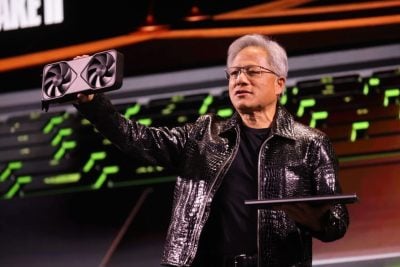
A recent episode of Reuters Morning Bid focused on one of the strangest signals in the AI market right now. NVIDIA (NASDAQ:NVDA | NVDA Price Prediction) announced an $80 billion stock buyback, raised its dividend sharply, and projected $1 trillion in sales of its most advanced AI chips “just this year and next.”
Despite the good news, the stock barely moved. The Reuters host argued that expectations around NVIDIA may have become so elevated that even extraordinary results are no longer enough to meaningfully surprise investors.
The Flat-Reaction Paradox
Capital returns at this scale usually spark a major re-rating. NVIDIA’s board approved the $80.0 billion repurchase authorization on May 18, 2026, in addition to the $38.5 billion remaining under its prior buyback program. The company also raised its quarterly dividend from $0.01 to $0.25 per share.
The underlying quarter was equally massive. NVIDIA reported $81.6 billion in revenue, up 85.2% year over year, while non-GAAP EPS came in at $1.87, ahead of consensus expectations. CEO Jensen Huang described the AI buildout as “the largest infrastructure expansion in human history.”
Yet shares still slipped. According to Fuse data, NVDA fell 4.43% during the week ending May 22, closing at $215.33. The Reuters host argued the market already expected NVIDIA to “keep beating expectations to this degree,” while rising bond yields may be limiting how much investors are willing to pay for long-duration AI growth stories. Higher yields compress valuation multiples across growth stocks, particularly companies where investors are already pricing in years of exceptional expansion.

Nvidia’s Biggest Customers May Become Its Biggest Competitors
The Reuters segment also highlighted the biggest long-term bear case surrounding NVIDIA. Many of the company’s largest hyperscale customers are increasingly trying to reduce dependence on NVIDIA chips by designing their own silicon internally. “Google, Meta, Microsoft are increasingly making their own chips,” the host noted, while adding that “AMD and Intel are also catching up.” The companies spending the most money on AI infrastructure may eventually decide they no longer want NVIDIA taking such a large share of the economics.
NVIDIA disclosed that hyperscale customers represent approximately 50% of Data Center revenue. Meanwhile, Meta Platforms recently raised its 2026 capex guidance to $125 billion to $145 billion, with investment increasing toward internally designed AI chips alongside merchant silicon purchases.
The market has started aggressively rewarding NVIDIA’s challengers. Advanced Micro Devices (NASDAQ:AMD) gained 10.24% over the week, and Intel added 10.18%. Intel (NASDAQ:INTC) has also received “huge investment, including from the US government,” to compete at the leading edge, with CEO Lip-Bu Tan now anchoring the turnaround.
Nvidia Still Has A Major Structural Advantage
NVIDIA may face more competition, but it also operates from a position of extraordinary profitability and capital efficiency. The analyst on the segment argued NVIDIA remains “not a capital intensive company” compared with rivals operating in a “very cyclical business.” In other words, competitors may eventually narrow the technological gap, but doing so could require enormous and recurring capital spending that permanently pressures margins.
The numbers show how large that gap currently is. NVIDIA generated $48.6 billion in free cash flow in a single quarter while maintaining a 75.0% non-GAAP gross margin. AMD reported Q1 revenue of $10.25 billion with a 55% non-GAAP gross margin. Intel’s latest quarter included $4.07 billion in restructuring charges and a GAAP net loss of $3.73 billion.
Jensen Huang framed the demand environment as “the largest infrastructure expansion in human history”. Whether that expansion stays as profitable for NVIDIA as it has been is the real question. The takeaway from the Reuters segment is to watch what kind of expectations are already embedded in Nvidia’s price.
Contact [email protected] for any questions or corrections.
Thomas Richmond is a financial writer and content strategist with 5+ years of experience covering stocks and financial markets. He has published over 500 articles focused on individual stock analysis, helping investors better understand business fundamentals, stock valuations, and long-term opportunities.
Thomas previously served as a Content Lead at TIKR, a stock research platform, where he helped scale the company’s blog to hundreds of articles per month and contributed to a weekly newsletter reaching more than 100,000 investors.
Outside of work, Thomas enjoys weight lifting and soccer.