Down 45% This Year: 1 High-Yield Turnaround Machine Under $15 to Buy Hand Over Fist
Beaten-down retail names trading under $15 are getting a second look from value-focused investors this spring, especially the ones quietly improving cash flow while the headlines stay grim. With the consumer split into a clear K-shape and an ultra-hawkish Federal…

Beaten-down retail names trading under $15 are getting a second look from value-focused investors this spring, especially the ones quietly improving cash flow while the headlines stay grim. With the consumer split into a clear K-shape and an ultra-hawkish Federal Reserve regime under Kevin Warsh squeezing rate-sensitive sectors, institutional capital has largely left department stores for dead. That setup is exactly where mispricings tend to live.
With that in mind, here is one stock trading under $15 where the operational data and the share price are telling very different stories.
Kohl’s (NYSE: KSS)
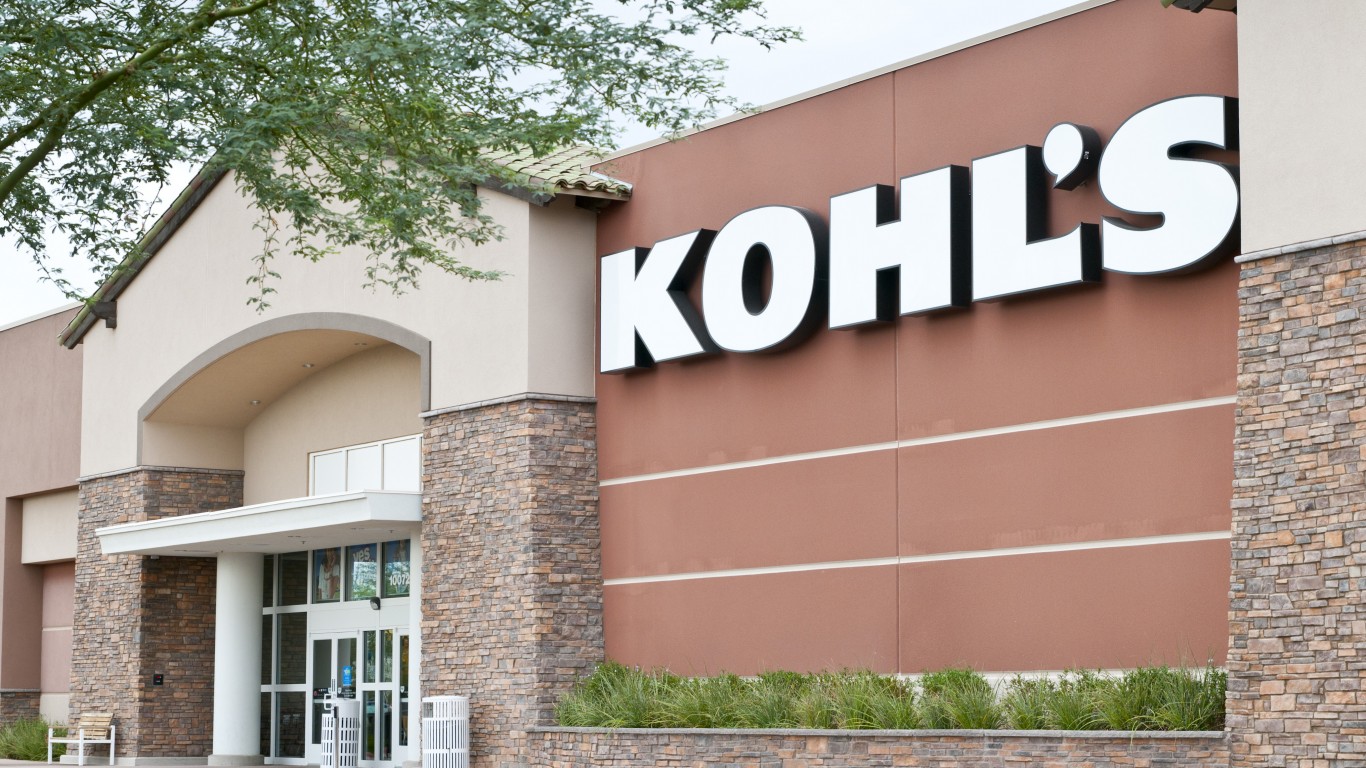
Kohl’s (NYSE:KSS | KSS Price Prediction) is a U.S. department store chain headquartered in Menomonee Falls, Wisconsin, operating more than 1,100 locations along with a growing digital business anchored by Sephora at Kohl’s.
Shares closed at $13.06 on May 22, 2026, after a 35.35% year-to-date drawdown from $20.20. For a retail investor, that price tag is meaningful: it pairs a sub-$15 entry point with a name that still threw off $1.008 billion in free cash flow last fiscal year. The market is pricing this like a melting ice cube; the financials are not cooperating with that thesis.
On fundamentals, Kohl’s trades at a trailing P/E of 5 and a price-to-book of 0.352, with FY2025 EPS of $2.38. The dividend yield sits at 3.94% on a $0.50 annual payout, putting it firmly in high-yield territory at this share price. The Wall Street consensus price target of $16.96 implies double-digit upside from current levels, though the rating mix leans cautious with 2 Buys, 7 Holds, 2 Sells, and 2 Strong Sells.
The bull case is the gap between operations and sentiment. Q4 FY2026 delivered adjusted EPS of $1.07 versus $0.8512 expected, a 25.7% beat, on revenue of $5.17 billion that topped estimates by 9.49%. Gross margin expanded 25 basis points to 33.1%, SG&A declined 4.9%, and inventory fell 7% year over year. Most striking, revolving credit borrowings collapsed from $749 million to $45 million, and free cash flow surged 453.85% to $1.008 billion. CEO Michael Bender said, “We are ending 2025 in a stronger position than we started… we made meaningful progress, despite our Q4 topline coming in softer than our expectations.”
The growth flywheel is also turning. Sephora at Kohl’s completed its full-chain rollout and is tracking toward a $2 billion beauty business, with MAC now in over 850 stores alongside Tarte and Charlotte Tilbury. Digital penetration rose 220 basis points in Q4, and the impulse queueing line drove over 40% category sales growth.
The risk cutting against this thesis is real. Comparable sales fell 2.8% in Q4, traffic remains soft, and the dividend was cut 75% from $0.50 to $0.125 quarterly in 2025 to preserve balance sheet flexibility. Macro pressure is showing up in the data: gasoline spending spiked to $503.7 billion in March 2026, squeezing discretionary apparel budgets, while services already represent 69% of total PCE. There is also a 10% interest rate on $360 million in senior secured notes due 2030 to service. But these are known knowns, and they appear baked into a stock trading at 0.0944 times sales. With cash flow rebuilding and the balance sheet de-risking, the setup under $15 looks like a turnaround machine the market refuses to price.
Kohl’s has plenty of cyclical and structural questions still to answer. Do your own diligence, size positions to your risk tolerance, and weigh whether the cash-flow recovery story is one you want to own through another uneven consumer cycle.
Contact [email protected] for any questions or corrections.
Alex Sirois is a financial writer with experience spanning both retail and institutional investing. He has written for InvestorPlace and held roles at BNY Mellon and Bernstein, giving him a perspective that bridges Main Street portfolios and Wall Street analysis.
Alex holds an MBA from George Washington University and has built his career across multiple industries, including e-commerce, education, and translation — a breadth of experience that informs how he breaks down complex financial topics for everyday investors. His writing is conversational, actionable, and grounded in long-term, buy-and-hold investing principles.
At 247 Wall St., Alex focuses on delivering analysis that is both accessible and useful, with a clear emphasis on helping readers make more informed decisions with their money.