Jim Cramer Defends CrowdStrike. Says the Company Just Posted “An Extraordinary Number” on Its Most Key Metric.
Jim Cramer defended CrowdStrike (NASDAQ:CRWD | CRWD Price Prediction) on Thursday’s Mad Dash after the cybersecurity leader’s post-earnings selloff, arguing that net new annual recurring revenue came in well above expectations. CrowdStrike reported its fiscal Q1 2027 results on June…

This post may contain links from our sponsors and affiliates, and Flywheel Publishing may receive compensation for actions taken through them.

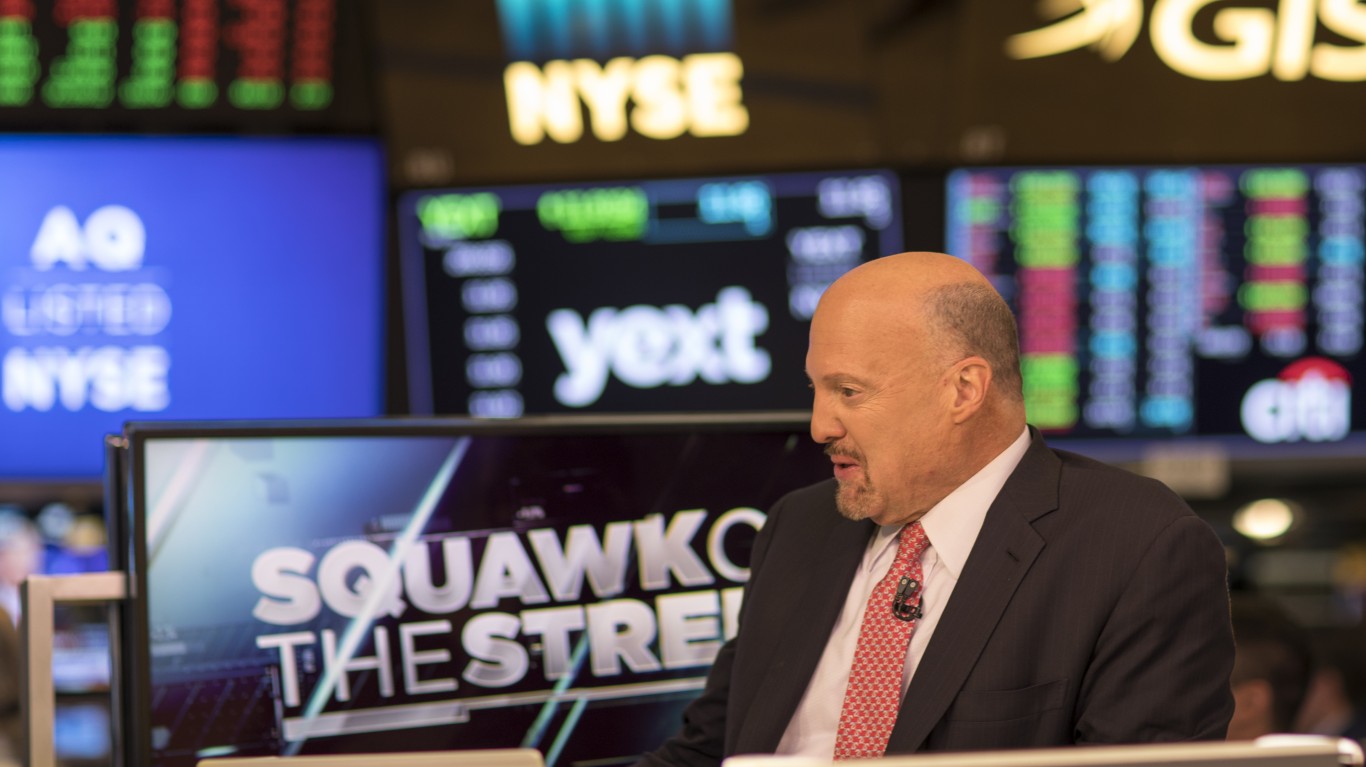
Jim Cramer defended CrowdStrike (NASDAQ:CRWD | CRWD Price Prediction) on Thursday’s Mad Dash after the cybersecurity leader’s post-earnings selloff, arguing that net new annual recurring revenue came in well above expectations. CrowdStrike reported its fiscal Q1 2027 results on June 3, 2026, beat on both lines, and raised its full-year outlook. The stock fell anyway, dropping 6.87% on June 4 to $696.22.
Cramer’s framing: “The key number, the key stat in this kind of business, which is cyber, is the net new annual recurring revenue, which was an extraordinary number. It was at $550. That’s gigantic.” He attributed the pullback purely to high expectations.

Why Net New ARR Is the Metric That Matters
In subscription cybersecurity, net new annual recurring revenue measures fresh recurring revenue added during the quarter. It is the cleanest read on demand momentum and the most reliable leading indicator of future revenue durability, which is why Cramer prioritizes it over headline EPS or revenue.
The official release showed record Q1 net new ARR of $255.80 million, up 32% year-over-year, with total ARR reaching $5.51 billion, up 24%. Management raised full-year net new ARR growth guidance by 520 basis points at the midpoint to 27.7%. Revenue of $1.39 billion grew 25.57%, non-GAAP EPS of $1.10 beat the $1.07 consensus, and the company logged its eighth consecutive quarterly EPS beat.

Why the Stock Fell Anyway
Cramer cited the parabolic-move setup. “There’s a parabolic move, and you almost never can equal because the expectations are so high for what the shareholders want.” Shares are up 64.82% from January 2 through June 3 and up 59.32% in the prior month alone. When a stock runs hard into a print, the buy-side bar moves above official guidance, and even strong releases can trigger sell-the-news reactions.
The software industry felt the same dynamic. The iShares Expanded Tech-Software Sector ETF (NASDAQ:IGV), where CrowdStrike sits as the 10th largest holding, is down 5.19% year-to-date through June 3 even after a 13.3% one-month rip, signaling the broader group is digesting the same expectations reset.
The Business-Model Defense
Cramer leaned on what CrowdStrike sells: “They’re selling enterprise software. They are not selling boxes.” Recurring subscription revenue is more predictable, higher margin, and stickier than one-time hardware sales. Platform numbers support durability. Subscription revenue hit $1.32 billion, up 26%, 51% of customers now use six or more Falcon modules, and free cash flow margin expanded to 34% from 25%. CEO George Kurtz framed the quarter around an AI-security inflection, citing Project QuiltWorks with OpenAI and Anthropic and Charlotte AI AgentWorks with AWS and NVIDIA.

Cramer’s Key Takeaways for CrowdStrike
When Cramer was asked whether he would buy, he said, “Do I want to buy CrowdStrike? Let everything settle down.” He advised waiting for initial panic selling and short-seller noise to subside before considering entry. His confidence rests on the CEO: “If you bet against George. So far it’s been a real bad bet, and it’ll be bad again.”
Cramer’s defense rests on one strong data point and a track record argument for CEO George Kurtz. It is a credible bull case, but this stock trades at a forward P/E near 161 and a price-to-sales ratio above 40, where expectations run hot. The same dynamic that pushed shares lower on a beat-and-raise could keep the name volatile into the 4-for-1 split with a record date of June 25, 2026. Cramer’s “let-it-settle” framing is the disciplined posture for anyone eyeing the pullback.
Contact [email protected] for any questions or corrections.
Thomas Richmond is a financial writer and content strategist with 5+ years of experience covering stocks and financial markets. He has published over 500 articles focused on individual stock analysis, helping investors better understand business fundamentals, stock valuations, and long-term opportunities.
Thomas previously served as a Content Lead at TIKR, a stock research platform, where he helped scale the company’s blog to hundreds of articles per month and contributed to a weekly newsletter reaching more than 100,000 investors.
Outside of work, Thomas enjoys weight lifting and soccer.