Little-Known Shipping ETF Turns $100K Into $2.1M in 1 Year
Put $100,000 into BWET on June 4, 2025, and you would have $2.13 million today. The setup is straightforward. The Breakwave Tanker Shipping ETF (NYSEARCA:BWET) opened that day at $9.93 a share, closed June 3 at $188, and by midday…


Put $100,000 into BWET on June 4, 2025, and you would have $2.13 million today. The setup is straightforward. The Breakwave Tanker Shipping ETF (NYSEARCA:BWET) opened that day at $9.93 a share, closed June 3 at $188, and by midday Thursday was changing hands at $209.50, an additional 11% in a single session. The full one-year price-only return clocks in at 1,793%. Headlines have placed it anywhere from 1,276% to 1,450% depending on the snapshot day, which is what happens when a fund moves this fast.
What actually did the work
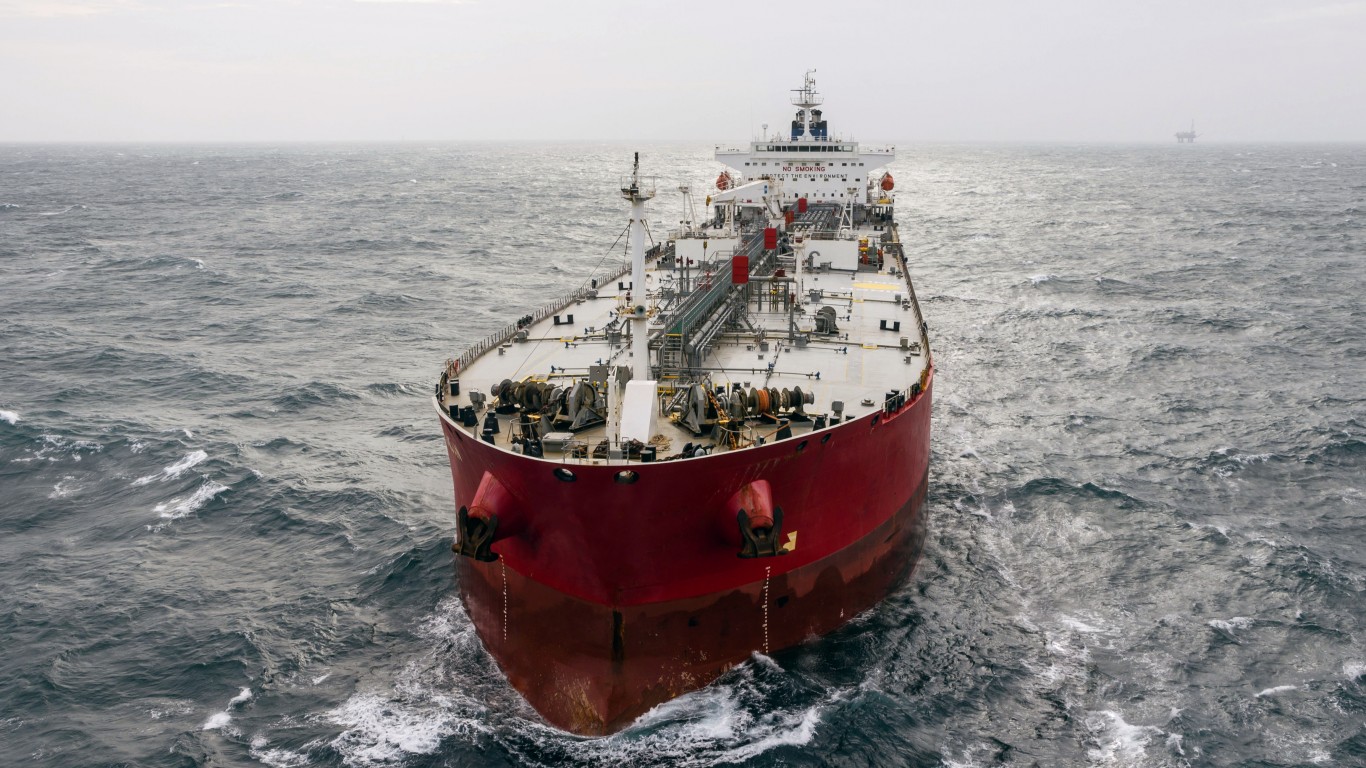
BWET sits quietly for years at a time. The fund tracks crude oil tanker freight futures, with 90% in Very Large Crude Carrier (VLCC) contracts and 10% in Suezmax, and outside of a real shipping shock it tends to grind. Then on February 28, 2026, the Strait of Hormuz effectively closed. The EIA attributes the shutdown to a US-Iran conflict and a US blockade against Iranian oil shipments through the strait, the same waterway that normally carries nearly 20% of global oil supply. When a chokepoint of that scale shuts, tanker rates reprice violently.
Brent crude averaged $117 per barrel in April, $46 higher than February. Implied volatility on Brent reached 106% on March 12, the highest reading since the early weeks of COVID in 2020. WTI followed the same trajectory, climbing from $64.51 per barrel in February to $102.13 in May. The fund’s exposure runs through freight contracts rather than crude itself, so what matters most is that VLCC rates repriced for vessels forced onto Cape of Good Hope routings instead of Persian Gulf shortcuts. Capacity drained. Futures curves inverted.
The structural backdrop helped. Global ship orders hit a 17-year high earlier in 2026, fleets are aging, and the August 2025 VLCC spot market was already described as “the strongest in years” before the conflict. The shock landed on a market that was already tight. That is the mechanism. A geopolitical shutdown of a waterway that handles one-fifth of world oil flows, transmitted through near-dated freight futures the ETF rolls each month, on top of a fleet that could not absorb it.
What to watch from here
The EIA’s May 2026 Short-Term Energy Outlook assumes Hormuz traffic resumes in late May or early June and that most pre-conflict production and trade patterns do not normalize until late 2026 or early 2027. Some Persian Gulf producers may never return to prior output. If that timeline holds, BWET’s freight futures should compress as the long-haul premium drains, but slowly, because vessels currently routed around Africa do not redeploy overnight. The same EIA note flags that a one-month delay in reopening would lift Brent more than $20 per barrel above the current forecast. That is the leverage embedded in the fund.
Three observable signals will tell you the trade is over. Strait of Hormuz transit volumes returning toward pre-February rates, which LSEG and the IEA publish weekly. Brent implied volatility falling back under 30%, which is where it sat for most of 2024. And the Baltic Exchange tanker rate indices reverting from their post-February spike. None of those has happened yet, though spot tanker futures briefly dipped on Ukraine-Russia peace talk headlines in mid-December 2025, and the muscle memory of that move is worth keeping. The fund’s 3.5% expense ratio and thin underlying liquidity also matter more once volatility cools, because both compound against holders in a calmer market.
The $100,000 to $2.13 million arithmetic is real, the mechanism that produced it is geopolitical and time-stamped, and the same playbook will not run again unless another chokepoint closes. The structural piece that survives a Hormuz reopening is tanker tightness, which keeps BWET interesting at much lower magnitudes long after the news cycle moves on.
Contact [email protected] for any questions or corrections.
Omor Ibne Ehsan is a writer at 24/7 Wall St. He is a self-taught investor with a focus on growth and cyclical stocks that have strong fundamentals, value, and long-term potential. He also has an interest in high-risk, high-reward investments such as cryptocurrencies and penny stocks.