Why ROM Holders Watched $10,000 Evaporate to $8,655 When NVIDIA and Broadcom Stumbled on Friday
A holder who started Friday, June 5, 2026 with $10,000 in ProShares Ultra Technology (NYSEARCA:ROM) ended the day with about $8,655. The fund opened at $161.98 and closed at $140.20, a single-session loss of 13.45%. Over the same five trading…

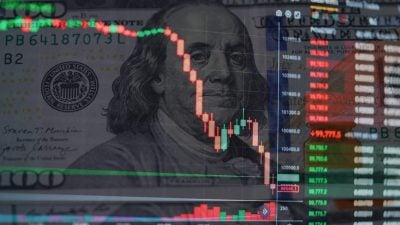
A holder who started Friday, June 5, 2026 with $10,000 in ProShares Ultra Technology (NYSEARCA:ROM) ended the day with about $8,655. The fund opened at $161.98 and closed at $140.20, a single-session loss of 13.45%. Over the same five trading days, ROM gave back 11.8%, with the week starting at $158.95. Those numbers are what a 2x daily tech ETF does on the worst day the sector has had in over a year.
The math is almost embarrassingly clean. ROM is structured to deliver twice the daily return of the Dow Jones U.S. Technology Index. The Technology Select Sector SPDR Fund (NYSEARCA:XLK), the standard reference for the same basket, fell roughly 7% on June 5, opening near $193 and closing at $180. Double that and you get the ROM print, give or take a few basis points of fees and tracking. That is the entire arithmetic of the day, and it tells you almost nothing about why the move happened. To understand that, you have to look at who is inside the fund.
Four Names Doing Most of the Work
The Technology Select Sector index that ROM effectively tracks is a top-heavy thing. NVIDIA sits at roughly 15% of XLK, Apple at 13%, Microsoft at 12%, and Broadcom at 5%. Four names, more than 45% of the portfolio. Semiconductors and semiconductor equipment alone account for nearly 39% of the fund. A bad day for chips is a bad day for the index, and a bad day for the index, doubled, is what landed in the ROM holder’s account.
The catalyst was a two-step. On Wednesday, June 3, Broadcom reported a quarter that was, on paper, spectacular. Q2 FY2026 revenue came in at $22.187 billion, up 47.9% year over year, with AI semiconductor revenue of $10.80 billion, up 143%. Hock Tan guided Q3 to approximately $29.4 billion in revenue and $16.0 billion in AI semi revenue, growing over 200% year over year. By any normal standard, that is a blowout. The market wanted more. AVGO fell roughly 8% on June 5 alone and about 14% on the week, going from about $447 to $386. The dip-buyers showed up anyway. Goldman Sachs kept a buy rating and lifted its target to $525, calling the long-term AI trajectory intact.
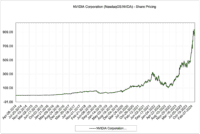
Then Friday brought the second hit. May nonfarm payrolls came in at 172,000 versus an 80,000 consensus. The 2-year Treasury yield jumped from 4.05% on June 4 to 4.17% on June 5, a sharp single-session move on a payroll print, and traders now fully priced in a Fed rate hike by year-end 2026. High-duration growth equities, which is to say everything in ROM, do not like that. NVDA dropped 6.2% to $205.10, on the day. Apple only fell about 1% and Alphabet roughly 1%, but with NVDA and AVGO both down hard, the damage was done.
Why a 6.66% Sector Day Felt Like 13%
This is the part that catches new ROM holders off guard. The leverage is daily, which means gains compound up the right side of a trend and losses compound down. In a sustained uptrend, that is glorious. ROM is still up roughly 49% year to date through June 5, and up about 112% over the past year, against XLK’s 25% YTD and 54% one-year return. The 2x worked beautifully on the way up. It also worked on the way down, which is the contract the prospectus describes and most readers never read.
The other piece is concentration meeting positioning. The S&P 500 was carried by roughly six to eight AI-leveraged names in 2026, and ex-AI the index was up just 2.4% through May. Inside a sector-only fund like ROM, that narrowness is amplified. When the AI capex story takes a single bad headline (a guidance number that was merely excellent rather than transcendent), the names that did all the lifting are also the names that take all the selling. The VIX closed Thursday at 15.40, in the 15.6th percentile of the past year. Nobody was hedged for this. Put/call ratios were near multi-decade lows. The unwind was mechanical.
What Comes Next, and What to Actually Watch
The AI capex story itself remains intact. Broadcom is guiding AI semi revenue to grow over 200% year over year next quarter. NVIDIA’s most recent quarter showed data center revenue of $75.25 billion, up 92% year over year. The numbers underneath the funds are doing what the bulls said they would do. What changed on June 5 is the price you have to pay for that growth, and whether short-rate expectations let you keep paying it.
Three things will tell you which way the next leg goes. First, Apple’s WWDC keynote on June 8. Polymarket puts 93% probability on an AI-charged Siri announcement and 89.5% on the full slate of new operating systems. AAPL is 13.23% of the fund, so the keynote matters more for ROM than the headlines suggest. Second, Alphabet’s $80 billion equity raise to fund AI infrastructure. The Reddit chatter has already pivoted, with one r/stocks post titled “the opportunity is here: it’s GOOGL” pulling 2,134 upvotes by Friday afternoon. Execution and any commentary on AI ROI will set the tone for the hyperscaler trade. Third, the 2-year yield. If it keeps drifting toward 4.25% or 4.30% on hot data, multiple compression continues regardless of what earnings do.
The prediction markets are saying out loud what the price action implies. For NVDA on Monday, Polymarket has the up/down market sitting at 50.5/49.5, essentially a coin flip. The crowd assigns 81.5% probability that NVDA holds above $190 by the end of next week, but only 57% above $200. Translated, the consensus expects stabilization, not a sharp bounce. For a 2x fund, stabilization is the worst outcome of the three, because chop is where leveraged ETFs bleed regardless of direction. A clean recovery rally compounds in your favor. A clean downtrend compounds against you. A volatile flat tape compounds against you anyway, courtesy of the daily reset.
If you owned ROM through the rally, June 5 took a real bite but left you with most of the year’s gains. If you are looking at the chart and wondering whether to step in, the question is whether the market will keep paying current multiples for that growth while the 2-year yield is creeping higher and positioning is no longer one-sided. NVIDIA and Broadcom will almost certainly keep growing AI revenue; the multiple they earn for it is the open variable. Watch the 2-year, watch WWDC, and watch what the hyperscalers say about capex on the next round of calls. That is where the next 13% day, in either direction, gets decided.
Contact [email protected] for any questions or corrections.
Austin Smith is a financial publisher with over two decades of experience as an investor, analyst, and advisor. He covers stocks, ETFs, Artificial intelligence and personal finance for 24/7 Wall St. Previously, he spent over a decade at The Motley Fool as a senior editor for Fool.com, portfolio advisor for Millionacres, and launched The Ascent to help reader take control of their personal finances.
His work has been featured on Fool.com, NPR, CNBC, USA Today, Yahoo Finance, MSN, AOL, Marketwatch, and many other publications. He is as an advisor to private companies, and co-hosts The AI Investor Podcast with Eric Bleeker.
When not looking for investment opportunities, he can be found skiing, running, or playing soccer with his children. Learn more about Austin's investment approach here.