1 Plain-As-Day Dividend King to Buy and Never Sell That Has Paid a Continuous Dividend Since 1891
Procter & Gamble (NYSE:PG | PG Price Prediction) is a stock built for multi-decade ownership because its portfolio of daily-use staples generates the kind of inelastic cash flow that funds a dividend through every economic regime humanity has thrown at…

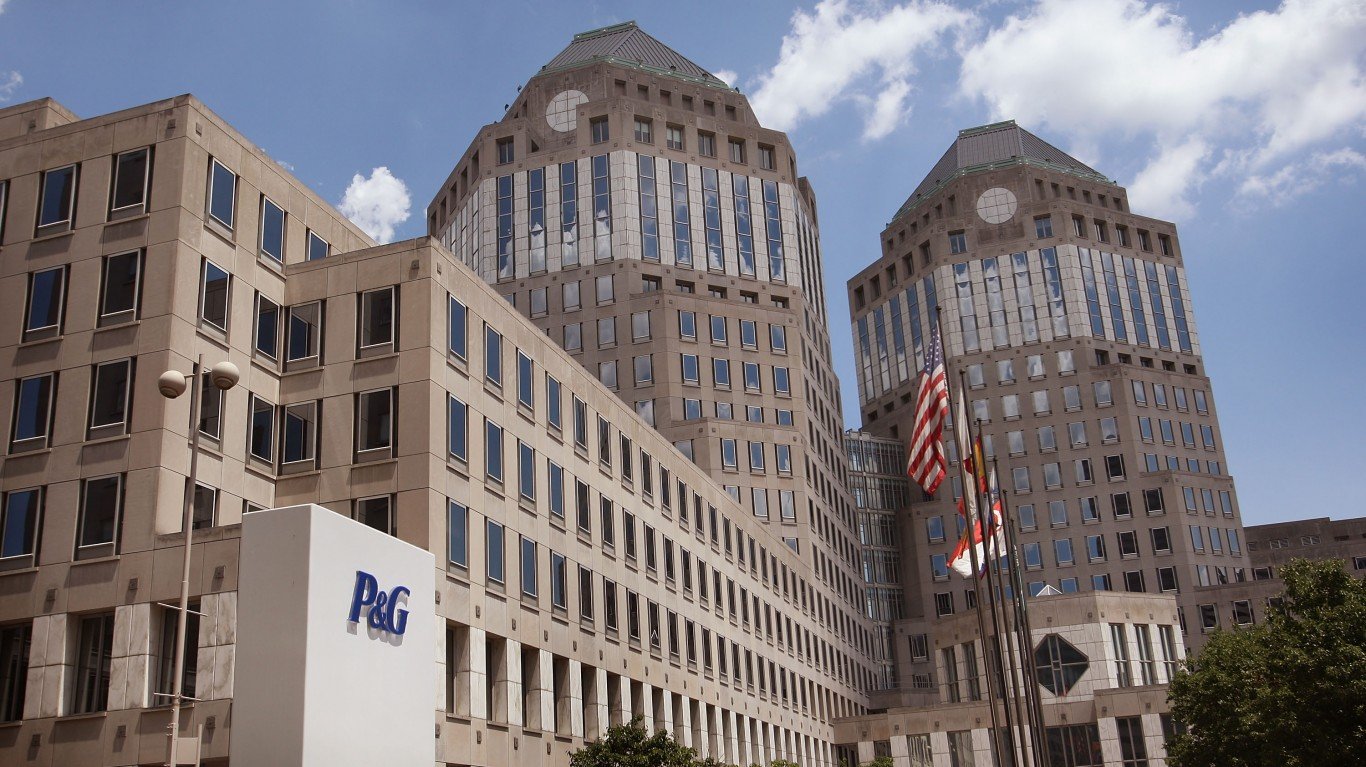
Procter & Gamble (NYSE:PG | PG Price Prediction) is a stock built for multi-decade ownership because its portfolio of daily-use staples generates the kind of inelastic cash flow that funds a dividend through every economic regime humanity has thrown at it since 1891.
Pillar 1: A Business Built to Outlast Cycles
The forever case starts with what P&G actually sells. Tide, Gillette, Crest, and Pampers are not discretionary purchases. Consumers replace detergent, razors, toothpaste, and diapers on a schedule dictated by biology and household routine, not by the unemployment rate. That demand profile shows up in the BEA data: food spending alone rose from $1,513.8B in January 2025 to $1,562.8B in April 2026, and total personal consumption expenditures climbed from $20,462.2B to $21,979.4B over the same window. Households keep buying staples.
That inelasticity gives P&G pricing power. With CPI running at 332.4 in April 2026, the company pushed through tariff and commodity headwinds totaling roughly $400 million and $150 million after-tax while still posting Q3 FY26 organic growth across all five segments and an operating margin (TTM) of 23.1%.
Pillar 2: Income That Compounds Without Drama
P&G is in its 70th consecutive year of dividend increases, with roughly $10 billion in dividends and $5 billion in buybacks planned for fiscal 2026. The current quarterly payout is $1.0885, up from $0.9407 in early 2024 and roughly $0.285 in 1999. The dividend yield sits at 2.88%.
Coverage is the part retirees should focus on. FY2025 free cash flow came in at $14.045 billion against a dividend payout of $9.872 billion, a coverage ratio of 1.42x. The eight-year average is 1.61x. Cash conversion ran at 111% in FY2025. The check clears with room to spare.
Pillar 3: Survival Built Into the Balance Sheet
P&G has paid a dividend through the Great Depression, two world wars, the 1970s inflation shock, the 2008 financial crisis, and the recent tariff cycle. Beta sits at 0.385, institutional ownership at 71.95%, and return on equity at 31.1%. Trailing P/E is 21x on diluted TTM EPS of $6.83. None of those readings flash danger.
The Scenario Where It Lags
In a risk-on bull market led by tech and growth, P&G will trail. Shares are down 5.94% over the past year, currency-neutral core EPS was flat year-over-year in Q3 FY26, and core gross margin compressed 100 basis points on tariff costs. That underperformance is the price of owning a business that does not need a tailwind to function. The forever thesis is about collecting a growing dividend through the next forty years of unknown markets, which is exactly what this balance sheet is engineered to do.
For long-horizon income investors, the setup is straightforward: a defensive cash machine with a 70-year dividend growth record and coverage well above 1x.
Contact [email protected] for any questions or corrections.
Alex Sirois is a financial writer with experience spanning both retail and institutional investing. He has written for InvestorPlace and held roles at BNY Mellon and Bernstein, giving him a perspective that bridges Main Street portfolios and Wall Street analysis.
Alex holds an MBA from George Washington University and has built his career across multiple industries, including e-commerce, education, and translation — a breadth of experience that informs how he breaks down complex financial topics for everyday investors. His writing is conversational, actionable, and grounded in long-term, buy-and-hold investing principles.
At 247 Wall St., Alex focuses on delivering analysis that is both accessible and useful, with a clear emphasis on helping readers make more informed decisions with their money.