Merck Rises 5% as Earnings Beat Lifts Profit Outlook; Eli Lilly Climbs 7%, Johnson & Johnson Edges Higher
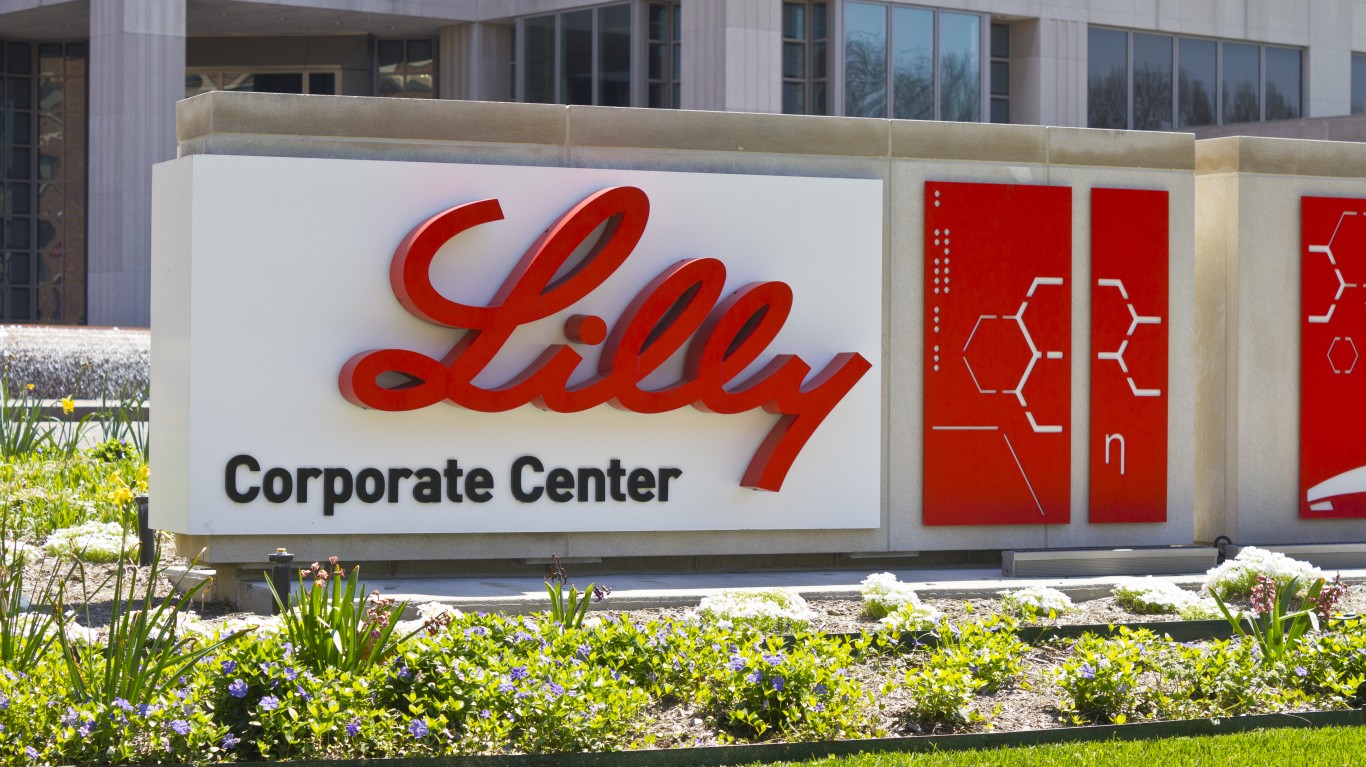
Merck and Eli Lilly both beat Wall Street, but their paths to profit look nothing alike, and the gap between them could widen sharply as one faces a looming patent cliff and the other rides an unstoppable drug category.


Merck (NYSE:MRK | MRK Price Prediction) is the second big drugmaker to reward investors with an earnings beat and a raised profit outlook. However, Merck’s steady, Keytruda-anchored growth tells a very different story from the obesity-driven surge at Eli Lilly (NYSE:LLY). In morning trading, Merck stock is at $147, up 5%.
Looking at the peer group, Eli Lilly stock is at $1,379, up 7%. Johnson & Johnson (NYSE:JNJ) stock is at $275, up 1%.
Merck’s Beat and Raised Outlook Power the Gain
Before the open on October 29, Merck released its Q3 2026 results. Adjusted earnings at Merck reached $2.49 per share, exceeding the $2.09 consensus from Wall Street analysts. Merck’s revenue of $18.09 billion also beat the $17.31 billion consensus from Wall Street analysts.
Keytruda, the company’s biggest product, generated $8.6 billion in franchise sales for Merck, up 6%, including $830 million from Keytruda Qlex, the newer version given under the skin. Pulmonary arterial hypertension drug Winrevair was another standout for Merck, with sales up 93%.
On the outlook, Merck raised its 2026 adjusted earnings per share (EPS) guidance to $2.77 to $2.82 from $2.66 to $2.76.
That exceeding the $2.65 consensus from Wall Street analysts. It came alongside a narrower Merck revenue outlook of $66.8 billion to $67.3 billion, in line with expectations.
Chairman and CEO Robert Davis stated, “Our science-led strategy is transforming our business.” Davis noted that oncology data presented at last weekend’s European Society for Medical Oncology (ESMO) meeting, including results for the company’s antibody-drug conjugate sac-TMT and a late-stage therapeutic cancer vaccine, further reduce the risk in Merck’s late-stage pipeline. Still, the quarter had soft spots, as Merck’s adjusted EPS came in below the $2.58 of a year earlier and its adjusted operating margin fell to 30.7% from 37.7%.

Why Eli Lilly and Merck Are Rising for Different Reasons
Merck stock is now up 43% year to date (YTD), ahead of the group. Eli Lilly is rising more on its own beat, with revenue of $24.4 billion, up 39%.
Eli Lilly also raised its full-year revenue guidance to $91 billion to $92 billion, with Mounjaro and Zepbound driving that growth.
Over the year so far, Eli Lilly stock is up 29%, trailing Merck despite its faster top-line growth. Both companies beat, but Eli Lilly’s growth comes from obesity drugs, while Merck’s comes from a broader, slower-growing portfolio that leans on Keytruda. Johnson & Johnson stock is up 35% YTD, moving alongside its peers’ results. Diversification sets Johnson & Johnson apart from both, since it pairs its drug business with a MedTech arm selling heart devices, surgical tools and contact lenses.
Among other large drugmakers, Pfizer (NYSE:PFE) stock is up 1%. AbbVie (NYSE:ABBV) stock is up 1%. Bristol Myers Squibb (NYSE:BMY) stock is down 1%, a dip that cuts against the sector’s broader gains.
Merck’s Life After Keytruda Is the Next Test
Looking ahead, Merck faces a key question: whether newer products like Winrevair and Keytruda Qlex can carry growth as Keytruda approaches its peak. Merck expects more than $2 billion of 2027 pressures from generic competition hitting Bridion, the Januvia family and Adempas. Davis described the coming Keytruda patent expiration as “more of a hill on the overall revenues of our company,” with growth returning after.
Bulls point to sac-TMT, which has a Food and Drug Administration (FDA) decision date of June 15, 2027, and to the cancer vaccine Merck says is now validated in a late-stage trial. The bears counter that slowing Keytruda growth, vaccine hesitancy and pricing pressure could weigh on Merck in 2027. Merck’s sac-TMT review is worth watching closely as it advances.
Contact [email protected] for any questions or corrections.
David Moadel is financial writer specializing in stocks, ETFs, options, precious metals, and Bitcoin. David has written well over 1,000 articles for leading online publications, helping investors understand markets, income strategies, and risk.His work has appeared in The Motley Fool, InvestorPlace, U.S. News & World Report, TipRanks, ValueWalk, Benzinga, Market Realist, TalkMarkets, Finmasters, 24/7 Wall St., and others.With a master’s degree in education, David has taught at the elementary, high school, and college levels. That teaching background shapes his writing style: clear, educational, and practical. David has also built a loyal social-media audience by providing trustworthy financial content on YouTube, X/Twitter, and StockTwits.