Buy, Hold, or Sell: Shaking Off a 21% Flash Crash, Is IonQ the Ultimate Quantum Speculation at $56?
At $56.69, IonQ (NYSE:IONQ | IONQ Price Prediction) looks fully valued, with a more compelling risk/reward setup emerging only at $50.00 or below. The trapped-ion quantum pioneer absorbed a 20.6% one-week flush that punished speculative positioning without breaking the operational…

At $56.69, IonQ (NYSE:IONQ | IONQ Price Prediction) looks fully valued, with a more compelling risk/reward setup emerging only at $50.00 or below. The trapped-ion quantum pioneer absorbed a 20.6% one-week flush that punished speculative positioning without breaking the operational story.
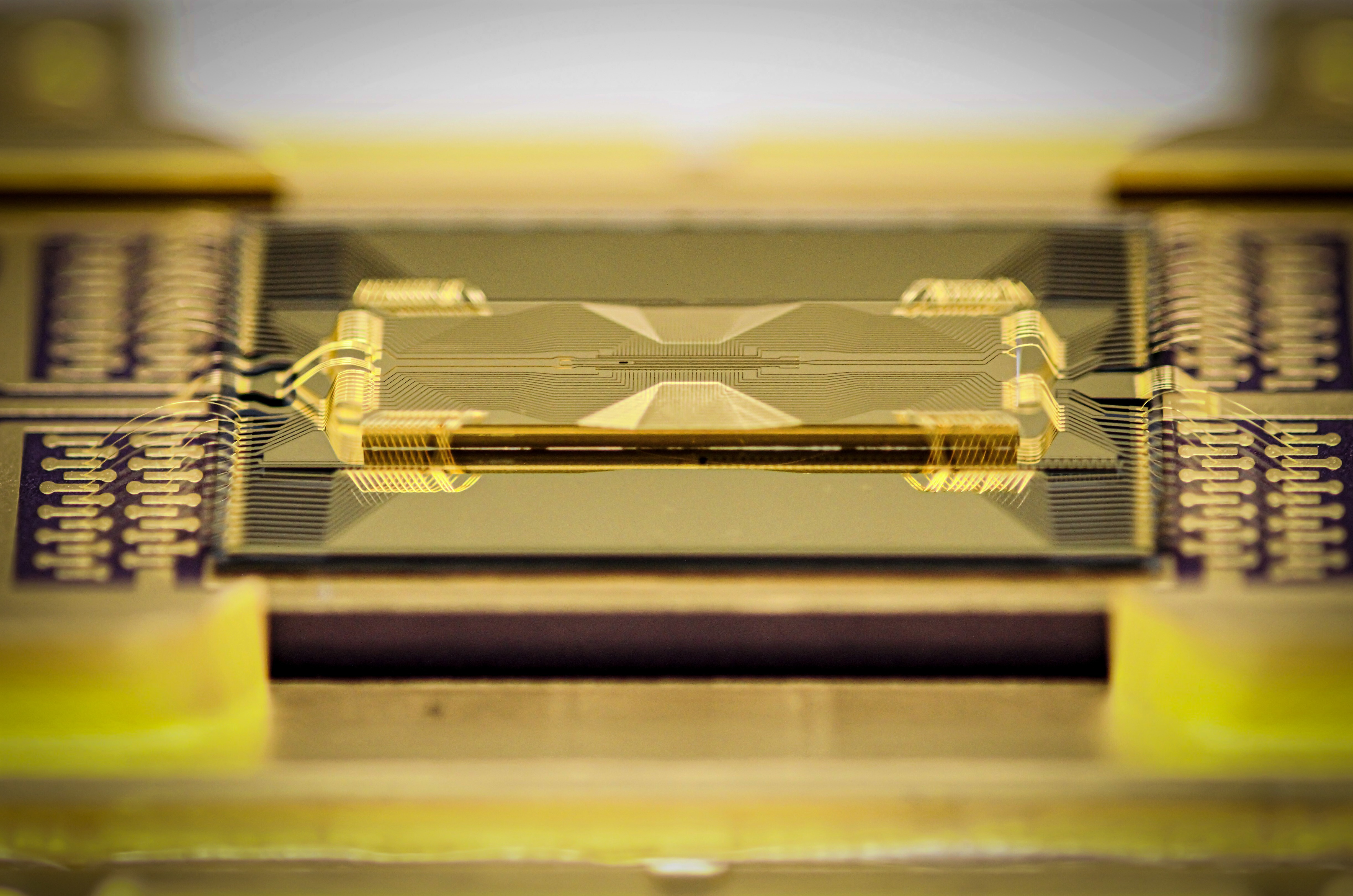
IonQ designs trapped-ion quantum computers and sells them alongside quantum networking, sensing, and post-quantum security products into commercial and government markets across more than 30 countries. Going into 2026, management framed the year as a shift from platform building to scaled execution. Q1 results delivered: $64.7 million in revenue, up 755% year over year, with the first 256-qubit system sold to Cambridge.
Why the Quantinuum IPO Re-Rated the Whole Group
Bulls argue the dip is a gift. Quantinuum’s IPO validated the category and held above the offer despite a sharp opening, signaling public-market appetite for pre-revenue quantum names at premium multiples. IonQ, already commercial, stands out. Remaining performance obligations grew 554% to $470 million, meaning every $1 of Q1 revenue added roughly $2.5 in future backlog.
Catalysts are stacking. Management raised FY26 guidance to $260 million to $270 million, won a $39 million Space Development Agency HALO contract, a DARPA HARQ slot, and an MDA SHIELD award. Wall Street is on board: 11 Buys, 2 Holds, 0 Sells, with a $67.64 average target.
The Cash Burn Problem
Bears focus on the income statement. IonQ posted an adjusted EBITDA loss of $96.8 million and burned $151 million in operating cash in a single quarter. Stock-based compensation hit $128.5 million, exceeding revenue and diluting holders. The $805.4 million GAAP “profit” is a non-cash warrant mark rather than operating earnings.
Valuation looks demanding. The market cap sits near $22.79 billion on a $270 million revenue run rate. Shares fell roughly 21% in a single session after earnings, a reminder that beats do not insulate IonQ from sentiment unwinds. Insider behavior is uninspiring: no executive bought the dip.
Why $50 Is the Line That Matters
The hold case rests on entry discipline. Fundamentals are accelerating, but a beta of 3.18 means IonQ amplifies every market move. The June flush carried shares from $71.40 to $56.69 in a week, and history suggests these reversals can extend. A retest of $50 or below would offer materially better risk-reward against the $67.64 consensus target.
Watch the SkyWater close, Q2 revenue against the $65 million to $68 million guide, and whether 256-qubit commissioning stays on track for end of Q2 2027. A confirmed close above the 52-week high of $84.64 would shift the framework toward chase.
What the Tape Says
IonQ trades at $56.69 against a $67.64 analyst target from 13 covering analysts, implying roughly 19% upside if consensus is right. Shares are up 26.34% year to date and 41.51% over one year.
The S&P 500 proxy SPY has been roughly flat across the post-earnings window, with IonQ delivering 19.46% over 30 days versus SPY at 0.73%. Polymarket traders assign 54.5% odds to the US federal government taking a stake by year end, a wildcard the consensus model does not capture.
The Setup: A Speculative Reset Scenario
At $56.69, IonQ looks fairly priced relative to consensus.
The Quantinuum IPO validated the category and Q1 validated IonQ, but the stock is digesting a 9.73% single-session drop inside a 20.6% weekly slide. That reflects sentiment damage while the operational thesis remains intact. Paying up here means buying after a violent move into a name with a beta of 3.18 and an FY26 adjusted EBITDA loss guided to between $310 million and $330 million.
A $50 or below entry would rebuild margin of safety against the $67.64 consensus target and aligns with rolling support that has caught prior flushes. If the stock fills the gap toward the $33 February lows, the thesis only strengthens because nothing about the 554% RPO growth or DARPA traction reverses on a tape move.
A decisive break of $33 would suggest the SkyWater close is in trouble or guidance is shaky. A clean reclaim of $84.64 on volume confirms the speculative bid is back and the entry window closed. Patience screens favorably here because the asymmetry only improves at lower prices.
Contact [email protected] for any questions or corrections.
Alex Sirois is a financial writer with experience spanning both retail and institutional investing. He has written for InvestorPlace and held roles at BNY Mellon and Bernstein, giving him a perspective that bridges Main Street portfolios and Wall Street analysis.
Alex holds an MBA from George Washington University and has built his career across multiple industries, including e-commerce, education, and translation — a breadth of experience that informs how he breaks down complex financial topics for everyday investors. His writing is conversational, actionable, and grounded in long-term, buy-and-hold investing principles.
At 247 Wall St., Alex focuses on delivering analysis that is both accessible and useful, with a clear emphasis on helping readers make more informed decisions with their money.