If the SpaceX IPO Is a Hit, One Industry Could Become an Ultimate Buy in 2027 and Beyond
The crowd on Polymarket is pricing a 100% probability that SpaceX completes its IPO by June 30, with the offering targeted at $135 per share for a $75 billion raise. If that debut lands as a hit, Tesla (NASDAQ:TSLA) CEO…

This post may contain links from our sponsors and affiliates, and Flywheel Publishing may receive compensation for actions taken through them.

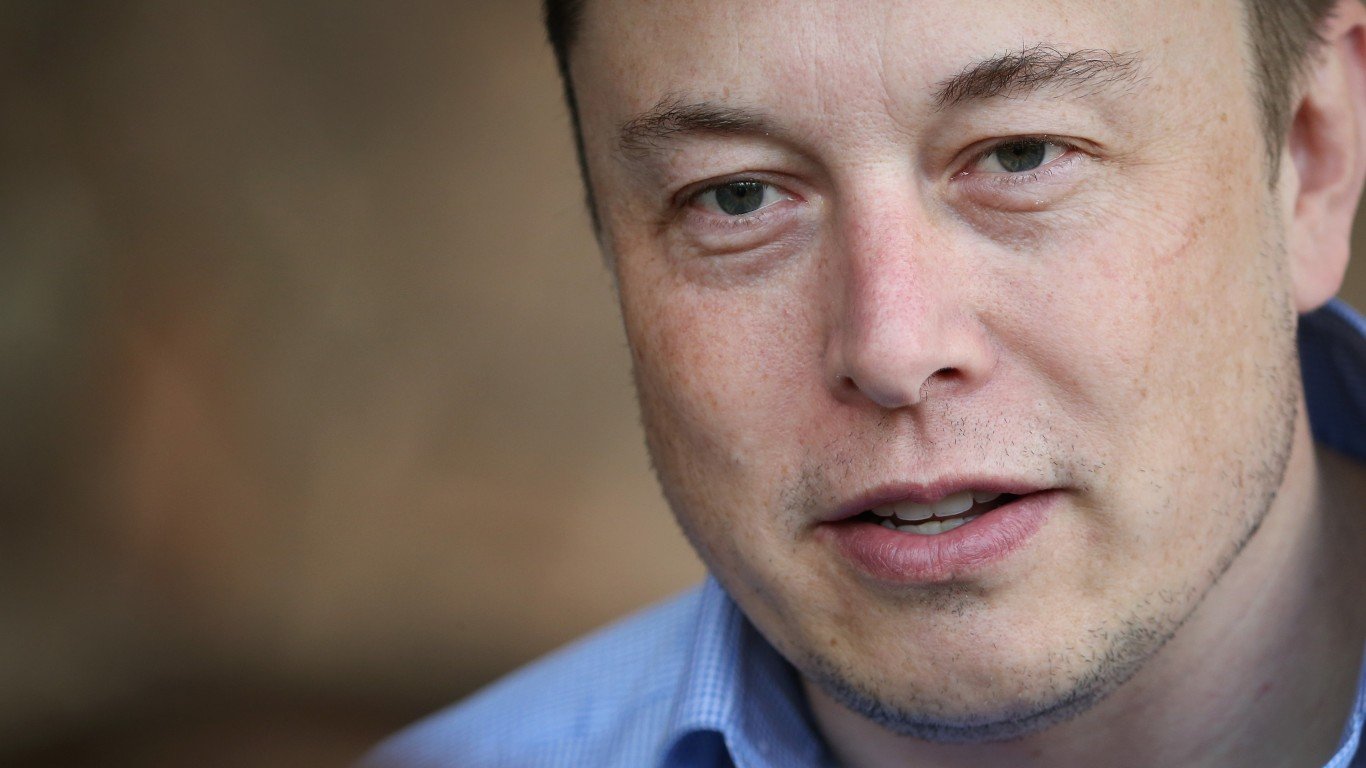
The crowd on Polymarket is pricing a 100% probability that SpaceX completes its IPO by June 30, with the offering targeted at $135 per share for a $75 billion raise. If that debut lands as a hit, Tesla (NASDAQ:TSLA) CEO Elon Musk gains a fresh public-equity lever to fund Terafab, the chip-manufacturing megafacility outlined in the SpaceX S-1 filing.
According to the filing, Terafab is a Tesla (March) and Intel (NASDAQ:INTC) (April) collaboration aiming to be the world’s largest chip manufacturing facility, with a long-term goal of one terawatt of annual compute production. Its strategy vertically integrates lithography masks, logic and memory fabrication, and advanced packaging. The catch: per the S-1, specific projects development timelines, milestones and capital expenditures “have not yet been determined.”
A successful SpaceX IPO would unlock a new megafab customer for semiconductor equipment makers, who get paid to outfit fabs regardless of chip prices. Below are five U.S.-listed equipment names ranked by exposure to Terafab’s priorities.
1. ASML (ASML)
ASML (NASDAQ:ASML | ASML Price Prediction) sits at the top because Terafab can’t fabricate cutting-edge logic without extreme ultraviolet (EUV) lithography, and ASML is the sole supplier. CEO Christophe Fouquet noted that “the semiconductor industry’s growth outlook continues to solidify, driven by ongoing AI-related infrastructure investments. Demand for chips is outpacing supply.”
ASML’s FY2025 revenue hit $37.94 billion, EUV systems grew 39% to $13.47 billion, and year-end backlog reached a record $45.06 billion. ASML stock has climbed 62% year to date.
The bear case: China export controls and tariffs could clip near-term system sales. The valuation also requires AI capex to stay on its current trajectory into 2027 and beyond.
2. Lam Research (LRCX)
Lam Research (NASDAQ:LRCX) supplies etch and deposition tools essential for memory chips, including the high-bandwidth memory (HBM) stacks that AI accelerators consume in bulk. Terafab’s focus on memory fabrication and advanced packaging puts Lam Research directly in line for incremental tool orders.
Lam Research’s Q3 FY2026 revenue hit a record $5.84 billion with non-GAAP EPS of $1.47, and June-quarter guidance points to around $6.6 billion. CEO Tim Archer credited “AI-driven demand reshaping the semiconductor industry.”
LRCX stock is up 89% year to date. If Terafab eventually adds significant memory supply, DRAM and NAND prices could weaken, yet Lam Research still collects equipment revenue.
3. Camtek (CAMT)
Camtek (NASDAQ:CAMT) is an Israel-based inspection and metrology specialist concentrated in advanced packaging, the third pillar of Terafab’s vertical-integration strategy. CEO Rafi Amit described “an unprecedented start to the year in terms of incoming orders” and called the company “positioned at the epicenter of the AI market.”
Camtek’s Q1 FY2026 revenue came in at $121.66 million with non-GAAP EPS of $0.70, and management guided second-half 2026 to grow over 25% versus the first half. Camtek stock trades at a forward P/E ratio of 47x with a consensus analyst price target of $187.25.
Risks include Middle East geopolitics and Strait of Hormuz supply-chain exposure. CAMT shares are off 18.5% over the past month, a reminder that small-cap equipment names trade with sharp swings.
4. Onto Innovation (ONTO)
Onto Innovation (NYSE:ONTO) provides process control, metrology and inspection tools for advanced packaging, HBM and gate-all-around logic, mirroring Terafab’s roadmap. Onto recently signed a $240 million-plus volume purchase agreement with a leading HBM manufacturer through 2027.
Onto Innovation’s Q1 FY2026 revenue reached $291.95 million, and management guided Q2 to $320 million to $330 million. CEO Mike Plisinski pointed to “global AI investment fueling a robust upcycle in semiconductor capital equipment spending.”
ONTO stock carries a trailing P/E ratio of 118x and an analyst target of $351.88. The valuation already prices in robust AI capex, so any delay in Terafab or HBM cooling could compress the multiple.
5. Cohu (COHU)
Cohu (NASDAQ:COHU) rounds out the list as the early-cycle test and handling play. About 60% of Cohu’s revenue is recurring, and Cohu’s test-cell utilization rose to 78% at the end of March.
The company’s Q1 FY2026 revenue grew 29% to $125.12 million, though non-GAAP EPS of $0.01 missed the $0.03 estimate. Cohu’s management raised its FY2026 high-performance computing revenue outlook to $80 million to $100 million, against an AI-driven compute addressable market sized at around $750 million.
COHU stock has surged 132% year to date, reflecting cyclical recovery hopes. The bear case: Cohu’s ongoing GAAP losses, customer concentration, and tariff exposure leave little margin for execution slips.
What to Watch Now
If SpaceX’s IPO succeeds and Musk uses public equity to advance Terafab, every front-end and back-end equipment vendor with logic, memory and packaging exposure stands to win incremental orders. The five names listed above sit closest to the action across lithography, etch and deposition, packaging inspection, metrology and test.
However, the thesis hinges on two unknowns: whether Terafab is built at the scale described in the S-1, and whether AI capex from buyers like Taiwan Semiconductor Manufacturing (NYSE:TSM), Samsung, and Micron Technology (NASDAQ:MU) stays elevated through 2027 and beyond. Export controls, tariffs, and the China overhang for ASML and Lam Research add uncertainty.
For investors in memory makers, equipment names can offer exposure to the AI buildout while hedging memory-price risk. Watch the SpaceX debut and any disclosure on Terafab capital expenditures and equipment partners.
Contact [email protected] for any questions or corrections.
David Moadel is financial writer specializing in stocks, ETFs, options, precious metals, and Bitcoin. David has written well over 1,000 articles for leading online publications, helping investors understand markets, income strategies, and risk.His work has appeared in The Motley Fool, InvestorPlace, U.S. News & World Report, TipRanks, ValueWalk, Benzinga, Market Realist, TalkMarkets, Finmasters, 24/7 Wall St., and others.With a master’s degree in education, David has taught at the elementary, high school, and college levels. That teaching background shapes his writing style: clear, educational, and practical. David has also built a loyal social-media audience by providing trustworthy financial content on YouTube, X/Twitter, and StockTwits.