3 Reasons SpaceX Stock Might Be a Buy as Soon as it IPOs
The day has come. The Space Exploration Technologies (NASDAQ:SPCX) IPO is ready to touch down, and it’s going to be interesting to see how the shares twist and turn in their first full day on the public markets. It’s an…

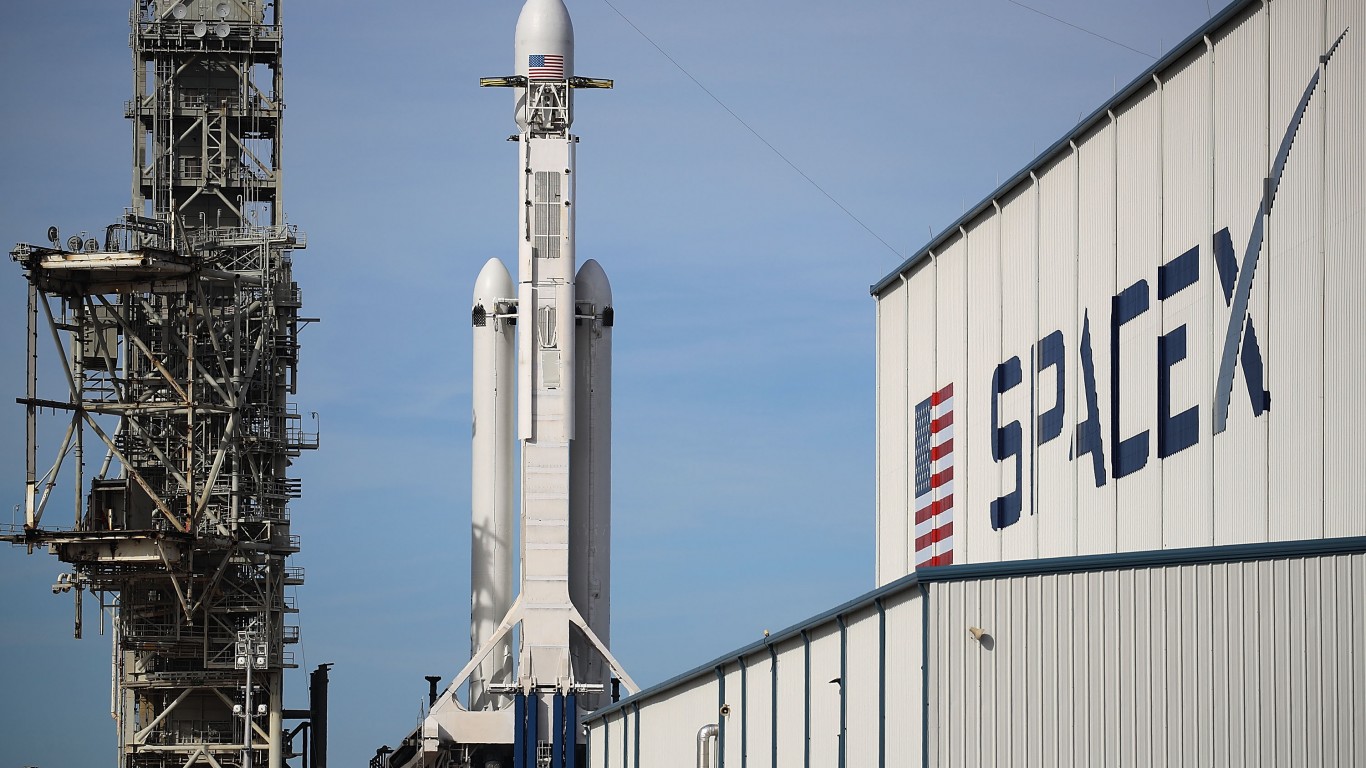
The day has come. The Space Exploration Technologies (NASDAQ:SPCX) IPO is ready to touch down, and it’s going to be interesting to see how the shares twist and turn in their first full day on the public markets.
It’s an oversubscribed IPO, to say the least, as last-minute investors look to submit their limit orders (and yes, I’d strongly suggest limit orders, not market orders, since there’s no telling how high shares will come in at the open) and other investors look to sell off some positions to raise cash to buy during the trading session.
As shares land, though, there are quite a few sell-side analysts with buy ratings and a price target that entails gains from the $135 per-share IPO price. Notably, Opennheimer has a $190 price target set. For those who can get in at the IPO price, there might be a case for hanging in for the ride.
To buy or not to buy the SpaceX IPO?
Indeed, SpaceX fans and Elon Musk followers have been waiting many years for this moment. And it’s looking like a valuation north of the $2 trillion mark is a given. With a ton of potential growth drivers to look forward to over the long run, perhaps the premium price of admission for the retail crowd is still worth paying. Of course, a lot of the business models that SpaceX will be pursuing, including asteroid mining, are unproven and overhyped.
Even for the long-term believers in the vision, the leader, and the company’s track record of execution, there are going to be a lot of speculators looking to flip the stock on day one and day two. And it could be the talk of the town and the trader’s favorite for the rest of the year. Perhaps there’s a reason why the S&P 500 isn’t going to fast-track this hot new IPO, and I’m sure most S&P 500 index holders will be completely fine with that.
Indeed, the valuation is a major concern for most. For others, it’s the debt pile. But if there’s a company that can grow into the multiple, it’s SpaceX. In this piece, we’ll focus on a trio of reasons why SpaceX might actually be a great buy for the long-term investors who are okay with the hyper-volatility that comes with such a mega IPO.
Bull point #1: A virtual monopoly on big launches
First, SpaceX pretty much has a massive moat surrounding its reusable rocket launches. With Starship, the company is pretty much making it more economical to fly stuff (think infrastructure) up there.
While there are some other space plays out there, none of them are at the forefront like SpaceX is. If SpaceX perfects Starship, perhaps it will have increased the barrier to entry by that much more. Why launch with any other rocket company when SpaceX has the track record, the capacity, and the efficiencies down? If the cost-per-kilogram of payout nosedives, it’ll be SpaceX to thank. Then, the virtual monopoly turns into an absolute one.
Bull point #2: The disruptive long-term potential of Starlink
Second, the Starlink constellation is already a shining star for SpaceX. As bigger and better satellites are launched, though, and device hardware gets up to speed, the big question is whether Starlink has what it takes to take even more share of the wireless market.
As the technology improves, satellite connectivity will clash with data centers, and that’s where the real opportunity could lie. In the earlier days, telecoms and Starlink will cooperate. But what happens further down the road when Starlink becomes more able to step into the place of wireless subscriptions? Time will tell. Either way, it’s a real business and one that could change telecom forever.
Bull point #3: Orbital data centers, AI, space tourism, asteroid mining, lunar manufacturing, and beyond
Finally, there’s no shortage of moonshots and wild cards that could one day turn into big profit drivers. Of course, they’ll be cash sinks over the foreseeable future. It’s not cheap to build orbital AI infrastructure, while investing in AI models, space tourism, infrastructure for the moon, or any of it.
Dismiss the moonshots, if you will, but some of them might actually help SpaceX become a very profitable company in the 2030s. In the meantime, SpaceX needs to spend money to make it. For now, the big question is whether the potential for growth justifies the opening day multiple.
I guess we’ll have to wait and see how hot shares come in ($180 per share before the close or less?) to gauge the price of admission.
Contact [email protected] for any questions or corrections.
Joey is a 24/7 Wall St. contributor and seasoned investment writer whose work can also be found in publications such as The Motley Fool and TipRanks. Holding a B.A.Sc in Computer Engineering from the University of British Columbia (UBC), Joey has leveraged his technical background to provide insightful stock analyses to readers.
Joey's investment philosophy is heavily influenced by Warren Buffett's value investing principles. As a dedicated Buffett disciple, Joey is committed to unearthing value in the tech sector and beyond.