Let’s Be Real. For Most Retirees, Only One Big 55+ Community Actually Works
Tour five name-brand 55+ communities across three states and the brochures all promise the same dream, but sit down with the actual numbers and the field collapses surprisingly fast to a single winner most retirees never see coming.

This post may contain links from our sponsors and affiliates, and Flywheel Publishing may receive compensation for actions taken through them.
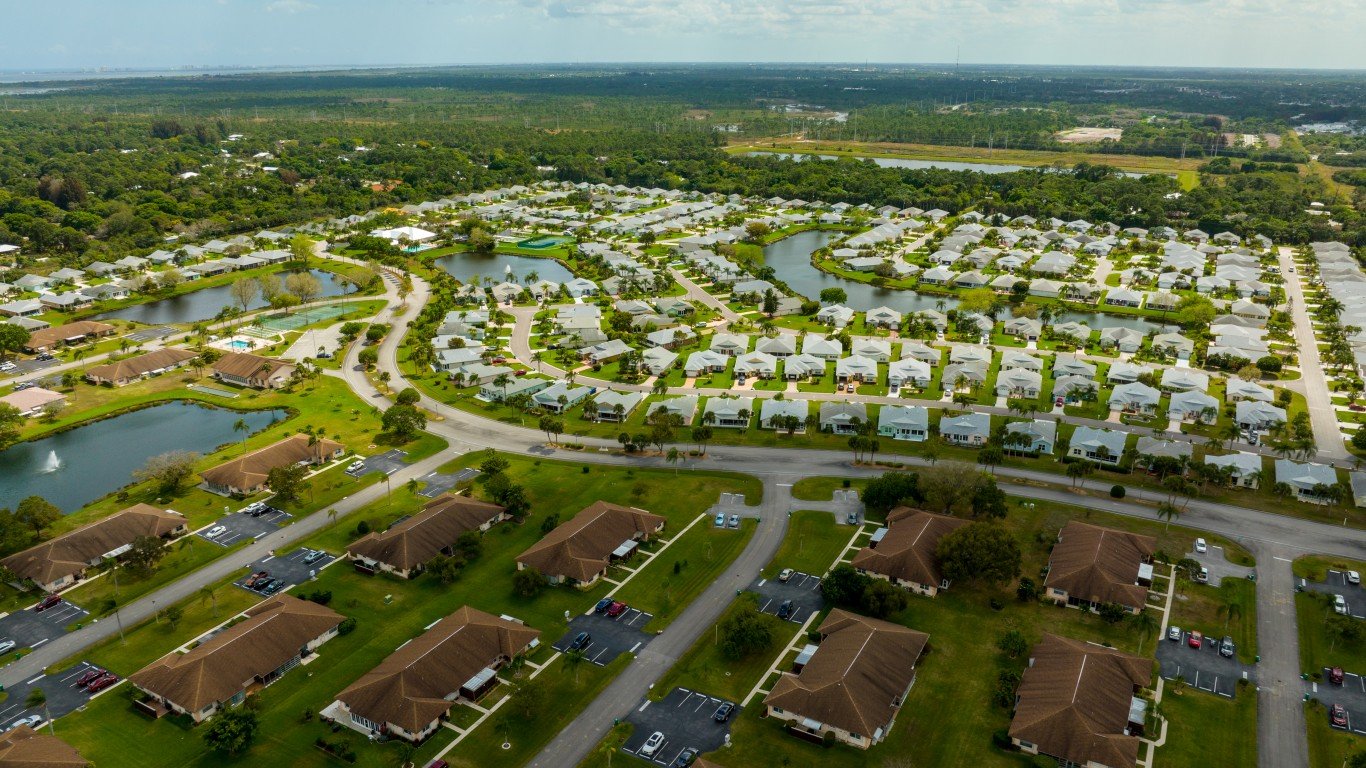
You tour five 55+ communities across three states. The brochures promise pickleball, low maintenance, neighbors your age. Then you sit down with the numbers. Sun City West requires Arizona property taxes and thin Medicare Advantage networks. Latitude Margaritaville demands Florida insurance premiums that keep climbing. Robson Ranch pencils until you price the HOA and hospital distance. When we filter for what actually works on the money people have, one name shows up more than any other: The Villages.
Why the Field Narrows Fast
Most name-brand 55+ communities are priced for the top quartile of retirees. Trilogy, Solivita, Robson Ranch, Latitude Margaritaville: entry homes in the mid-$400s to $600s, with stacked HOAs and club fees. The BEA pegs California’s regional price parity at 110.72 and Washington at 107.013. Existing home sales are stuck at 4.06M annualized, and the 10-year Treasury sits at 4.65%, keeping mortgage rates elevated.
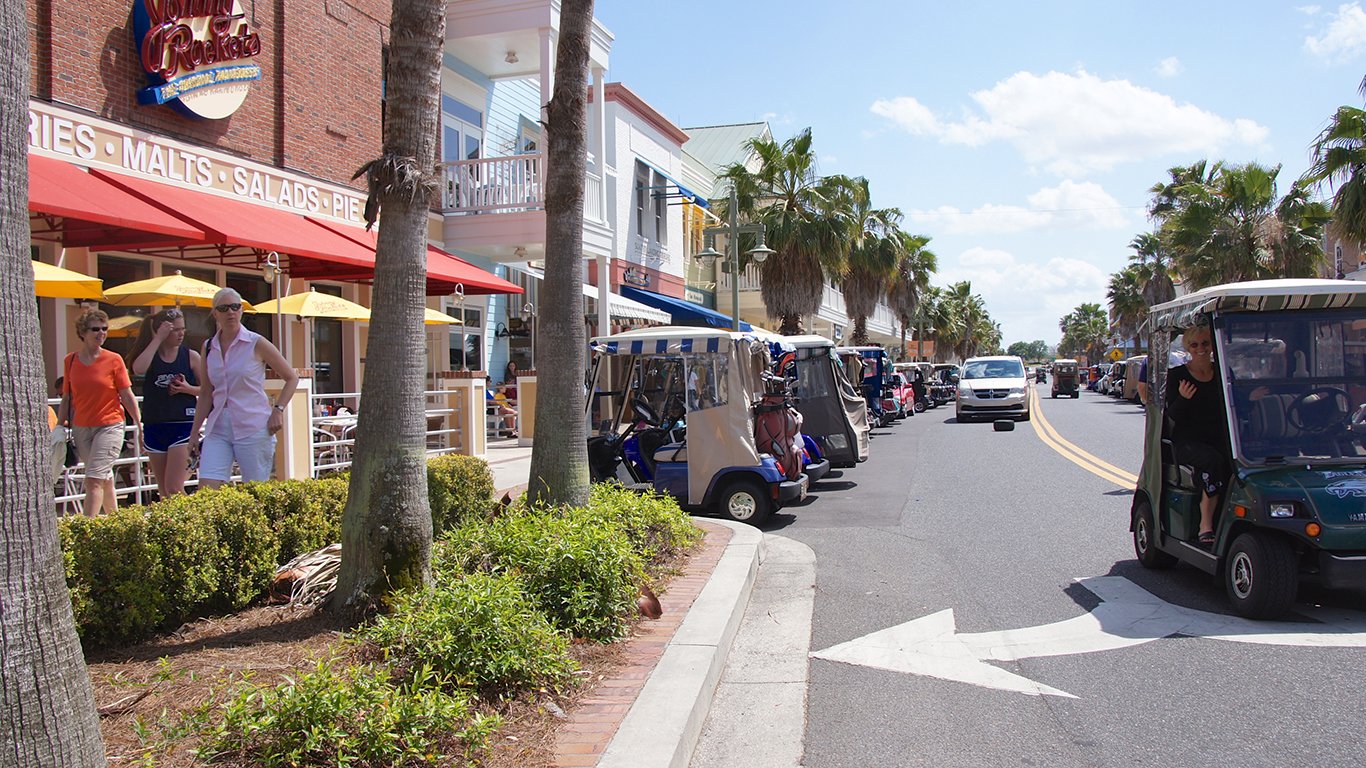
The Villages threads the needle because of scale. Florida charges no state income tax on retirement withdrawals or Social Security. Homestead capping protects the primary residence, and Sumter County uses CDD structures to keep millage low. Prices span patio villas near $250K to estate homes above $1 million, so the community is not gate-kept by price alone.
The Cost Picture at 65
Assume a couple, both 65, buying a Villages designer home around $375K in cash from a downsize:
Housing carry: property tax roughly $4,500, homeowners insurance $2,600 to $3,800, CDD maintenance $1,500 to $2,300, and amenity fee $2,340 a year. Total: $12,500 before repairs.
Medicare Part B, Medigap Plan G, and Part D for two: $9,000 to $10,000 a year. Food on the USDA moderate-cost plan: $12,000. Utilities: $4,800. Two vehicles including insurance and gas: $5,500. Golf carts, club dues, dining, travel: $9,000. Miscellaneous, home maintenance reserve, gifts, taxes: $8,000.
Working budget: roughly $61,000 to $63,000 a year in current dollars. The BLS puts average annual household expenditure at $78,535; this scenario runs below that because there is no mortgage and no children.
Running the Math
Social Security for a dual-earner couple with average benefits, adjusted for the 2026 COLA of 2.8%, lands around $52,000 to $56,000 a year combined if both claim at Full Retirement Age. That funds the base and leaves the portfolio to close an $8,000 to $12,000 annual gap plus federal tax on withdrawals.
At a 4% withdrawal rate on a 30-year horizon, funding a $12,000 net gap plus a $3,000 tax overlay means roughly $375,000 invested. Add $50,000 to $75,000 in reserves for major repairs and vehicle replacement, and the target lands at $425K to $450K. That is meaningfully lower than any other name-brand 55+ community can claim on comparable amenities. If one spouse claims at 62 and the other delays to 70, the portfolio target drops.
The Bond and Insurance Line Most Tours Skip
New construction Villages homes carry a CDD bond, an infrastructure assessment that can run $15,000 to $30,000 or more, paid over 20 to 30 years on the tax bill or settled at close. On a $375K designer home, an unpaid $22,000 bond amortized near 5% adds about $1,700 a year for two decades. Real money, invisible on Zillow.
Florida insurance is the other quiet variable. Premiums in the Villages footprint have outpaced CPI, currently at the 80th percentile historically. Underwrite housing insurance at 6% to 8% annual growth for the next decade. Resale homes in older sections north of County Road 466 often have bonds nearly paid down, which is why a $340K resale can carry lower than a $375K new build. The single question “is the bond paid off” can swing your all-in carrying cost by $20,000 or more over the hold.
What It Actually Takes
The scenario works on roughly $425K to $450K in liquid assets, a paid-off home in an older Villages section, both Social Security checks running at or near Full Retirement Age, and a 4% withdrawal rate you actually respect. Buy resale where the bond is settled and the number drifts toward $400K. Buy new construction and let a decade of Florida insurance repricing compound, and it drifts back toward $500K. With consumer sentiment at 49.5, in the bottom decile historically, this is a buyer’s window if you have the cash and patience. The bond status and insurance trajectory, more than the amenity fee or pickleball courts, decide whether The Villages still functions on your money a decade in. Price both, and you have your answer.
Contact [email protected] for any questions or corrections.
I am a long time investor and student of business, and believe finding good companies that can become great investments is the best game on earth. After 20 years of writing and researching the public markets it is clear that individuals have never had more tools and information to take control of their financial lives. From ETFs and $0 commissions to cryptos and prediction markets there has never been a greater democratization of access to investing.
I write to help people understand the investments available to them so they can make the best choice for their portfolio, whether they're starting out or looking for income in retirement.