Wall Street Is Watching Kevin Warsh Closely as Trump Pushes Fed Toward Rate Cuts
The Federal Reserve is scheduled to meet on June 16 and 17. President Trump is no doubt hoping the central bank, with Kevin Warsh at the helm, will lower its benchmark interest rate at that meeting. The more likely…

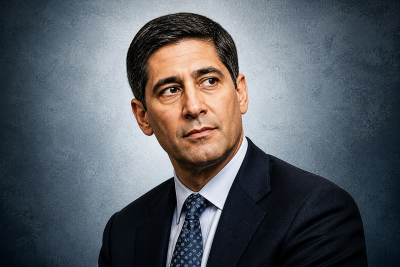
The Federal Reserve is scheduled to meet on June 16 and 17. President Trump is no doubt hoping the central bank, with Kevin Warsh at the helm, will lower its benchmark interest rate at that meeting.
The more likely outcome of that meeting is a rate pause, though. And if anything, interest rate hikes are looking more likely this year than cuts for a few big reasons.
Why Trump wants rate cuts
Trump has been pushing for interest rate cuts because he feels lower interest rates tend to promote spending among consumers and businesses.
When the Fed lowers its benchmark interest rate, it costs banks less to borrow. They tend to pass that savings along to consumers and businesses in the form of lower loan and credit card rates. Lower borrowing costs can boost corporate profits, leading to higher stock values.
Rate cuts are highly unlikely in 2026
The Fed’s primary objective is to keep inflation under control and promote long-term economic stability. The central bank’s optimal inflation target is 2%, and earlier in the year, the Consumer Price Index (CPI) seemed to be inching closer to that target.
In May, however, the CPI hit a three-year high at 4.2% year over year, which means inflation is going in the wrong direction.
Now it’s worth noting that Core CPI tends to influence the Fed’s monetary policy decisions more so than the broader CPI. Core CPI removes energy and food costs, which are more susceptible to wild swings from short-term events.
Oil prices, for example, have surged in the wake of the Middle East conflict. Removing that measure gives the Fed a clearer picture of broad economic trends. But even Core CPI rose 2.9% year over year, which puts the Fed further from its preferred target than it wants to be.
The Fed also looks at labor market conditions to make rate cut decisions. In May, the U.S. economy added 172,000 nonfarm payroll jobs, and the national unemployment rate was only 4.3%. A rate that low doesn’t typically justify rate cuts, since it’s indicative of a strong labor market.
Also, the U.S. economy seems to be growing on a whole. GDP growth reached 2% in 2025 and the International Monetary Fund expects it to rise to 2.4% in 2026. That’s a sign of a healthy economy — not a struggling one. And rate cuts aren’t necessary in a strong economy.
Rate hikes are the more likely scenario — and stocks could feel the pressure
If inflation continues to surge and prices remain high, the Fed might need to raise its benchmark interest rate to slow inflation.
“I am increasingly concerned that higher interest rates could be necessary later this year,” Dallas Fed President Lorie Logan said in a June 3 speech given in Texas. Reuters also reported that traders put the odds of a Fed rate hike at 60% by October.
Interest rate hikes, however, can have a negative impact on the stock market even though they can be an indication of rapid economic growth. When borrowing costs increase, it can become harder for companies to turn a profit.
Furthermore, rising rates make lower-risk investments like Treasury securities and bonds more attractive relative to stocks, prompting investors to shift money out of equities. That could lead to lower prices.
Higher interest rates also inherently tend to discourage consumer spending. That could lead to weaker company earnings.
What to expect in June
There’s a good chance the Fed will sit tight during its June meeting and take a “wait and see” approach rather than move its benchmark interest rate from where it is now.
The Fed knows that the conflict overseas has had a direct impact on consumer prices, even with direct food and energy costs taken out of the equation. So policymakers may not be in a hurry to make decisions on what could be a temporary situation.
But all told, investors may be in for a bumpy year, depending on the action (or inaction) the Fed decides to take. Volatility is normal for stock investors, but preparing for it can be helpful in avoiding rash decisions.
Contact [email protected] for any questions or corrections.
Maurie Backman has more than a decade of experience writing about financial topics, including retirement, investing, Social Security, and real estate. Her work has appeared on sites that include The Motley Fool, USA Today, U.S. News & World Report, The Washington Post, and Kiplinger.
Prior to becoming a full-time financial writer, Maurie worked in the financial industry trading distressed debt. She then changed course and spent a few years designing electronic toys. After a stint in content marketing and UX, she shifted back into writing and has since covered everything from the housing market to estate planning to Medicare.
When she's not busy writing, Maurie can be found hiking, walking her dogs, driving her kids to their various sports practices and games, and curling up with a good book. She cooks on occasion and bakes way too often.