Inflation Surges to 2023 Highs. Will Fed Chair Warsh Defy Trump on Rates?
For much of the past year, investors have focused on one question: when will interest rates come down? President Trump has made no secret of where he stands. He has repeatedly criticized the Federal Reserve for keeping rates too high…

This post may contain links from our sponsors and affiliates, and Flywheel Publishing may receive compensation for actions taken through them.
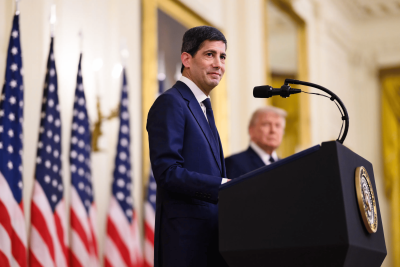
For much of the past year, investors have focused on one question: when will interest rates come down? President Trump has made no secret of where he stands. He has repeatedly criticized the Federal Reserve for keeping rates too high and argued that lower borrowing costs are needed to support economic growth.
His decision to nominate Kevin Warsh as Federal Reserve chair was widely viewed as a move toward a more accommodative central bank. Yet inflation has a way of rewriting the script. Fresh data from the Bureau of Economic Analysis (BEA) suggests the Fed’s inflation fight is far from over, setting up a potentially uncomfortable clash between the White House and the nation’s top central banker.
Inflation Is Moving in the Wrong Direction
The BEA reported that the Personal Consumption Expenditures (PCE) Price Index rose to 4.1% in May, the highest reading since April 2023 and more than double the Federal Reserve’s 2% target.
That alone would be enough to grab investors’ attention. But the Fed’s preferred inflation gauge — core PCE, which excludes volatile food and energy prices — also moved higher, reaching 3.4%, its highest level since October 2023.
Here’s what the latest data shows:
| Inflation Measure | May 2026 | Prior Month |
| PCE Inflation | 4.1% | 3.8% |
| Core PCE Inflation | 3.4% | 3.1% |
| Fed Target | 2.0% | 2.0% |
The numbers present a clear challenge for policymakers. Inflation is accelerating, not slowing.
That matters because the Fed’s dual mandate requires it to pursue both stable prices and maximum employment. With inflation running more than twice its target, the argument for rate cuts becomes increasingly difficult to make.
Warsh May Be More Independent Than Expected
When Trump selected Warsh to lead the Federal Reserve, many observers assumed he would quickly align monetary policy with the administration’s preference for lower rates. Surprisingly, Warsh’s comments since taking office have suggested otherwise.
During his Senate confirmation testimony and following last week’s Federal Open Market Committee meeting, Warsh emphasized the importance of restoring the Fed’s credibility after inflation remained above target for years. That language echoes former Fed chairs who prioritized inflation control over short-term political considerations.
Markets are beginning to notice. According to betting markets, traders now see a 54% probability of a rate hike before year-end, or nearly double the 28% who thought so just one week ago.
In other words, investors have gone from debating rate cuts to pricing in the possibility of higher rates.
To put that in context, a central bank considering rate hikes is not a central bank preparing to stimulate the economy. That could create tension with Trump, who has consistently argued that lower rates would boost growth, investment, and consumer spending.
Oil Prices Could Give the Fed an Escape Hatch
The wildcard remains energy prices. Inflation reignited in part following disruptions associated with the administration’s conflict with Iran, which initially pushed oil prices sharply higher. Energy costs ripple through the economy, affecting everything from transportation and manufacturing to food distribution.
Yet oil markets have recently moved in the opposite direction. West Texas Intermediate (WTI) crude — the benchmark most relevant to U.S. energy pricing because it reflects domestically traded crude oil — recently tumbled below $70 per barrel. That decline is important even though core PCE excludes energy costs.
Lower fuel prices reduce costs throughout supply chains, and those savings often take time to appear in inflation reports. If oil remains near current levels, the Fed may gain valuable breathing room over the next several months.
That said, policymakers will want evidence that inflation is cooling before changing course.
Key Takeaway
May’s inflation report complicates the outlook for both investors and policymakers. A 4.1% PCE inflation rate and 3.4% core PCE reading leave little room for immediate rate cuts and have pushed market expectations toward the possibility of rate hikes instead.
The bigger story, however, may be the relationship between Trump and Warsh. While many expected the new Fed chair to champion aggressive rate cuts, his recent comments suggest preserving the Fed’ credibility may take priority. If inflation remains elevated, that could put him on a collision course with the president who appointed him.
Ultimately, falling oil prices may offer the Fed its best opportunity to avoid that confrontation. If lower energy costs begin filtering through the economy, policymakers could justify holding rates steady at their July meeting and give inflation time to cool on its own. For investors, that’s the scenario worth watching most closely.
Contact [email protected] for any questions or corrections.
After two decades of patrolling the dark corners of suburbia as a police officer, Rich Duprey hung up his badge and gun to begin writing full time about stocks and investing. For the past 20 years, he’s been cruising the markets looking for companies to lock up as long-term holdings in a portfolio while writing extensively on the broad sectors of consumer goods, technology, and industrials. Because his experience isn’t from the typical financial analyst track, Rich is able to break down complex topics into understandable and useful action points for the average investor. His writings have appeared on The Motley Fool, InvestorPlace, Yahoo! Finance, Money Morning, and, of course, 24/7 Wall St. He has been featured in both U.S. and international publications, including MarketWatch, Financial Times, Forbes, Fast Company, and USA Today.