Forget the Chips. Half of Every AI Datacenter Dollar Goes Somewhere Else
Everyone is watching NVIDIA (NASDAQ:NVDA | NVDA Price Prediction) because it remains the default proxy for every AI headline that hits the wire. But here’s what you should actually be watching. The chip story is the most crowded trade on…

Everyone is watching NVIDIA (NASDAQ:NVDA | NVDA Price Prediction) because it remains the default proxy for every AI headline that hits the wire.
But here’s what you should actually be watching.
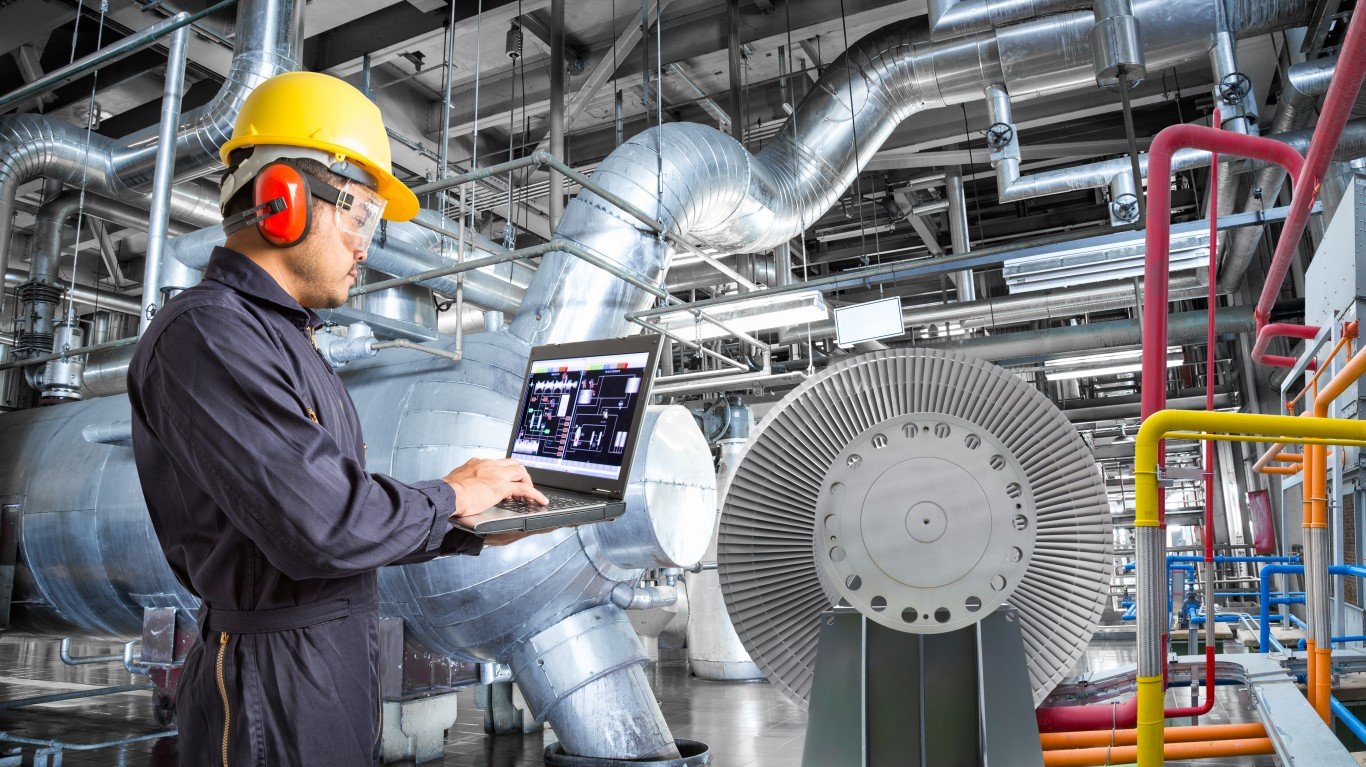
The chip story is the most crowded trade on Earth. Every retirement portfolio, every momentum fund, every cab driver with a Robinhood account already owns it. I’ve held NVIDIA for over 15 years, and when a position becomes that consensus, the easy money is behind you. Meanwhile, the part of the AI buildout almost nobody is positioned for is the physical layer. Roughly 50% of datacenter spend is power and 30% is cooling, not just chips. The silicon is useless without it.
That brings us to Vertiv (NYSE:VRT), the picks-and-shovels operator that builds the power, thermal management, and critical digital infrastructure that keeps AI datacenters running. Its main competitor, Schneider Electric, is foreign-listed, which leaves Vertiv as the dominant tradable pure-play for US investors. Here are three reasons to redirect your attention.
1. A backlog that maps revenue years into the future
Vertiv exited 2025 with a backlog of $15.0B, up 109% YoY, and a book-to-bill ratio near 2.9x after Q4 organic orders surged 252%, the strongest order quarter in company history. Management said the backlog now carries visibility into 2027. That is multi-year revenue locked in independent of any single GPU refresh cycle.
2. Margins and cash inflecting alongside sales
Q1 2026 adjusted operating margin expanded 430 bps YoY to 20.8%, adjusted operating profit jumped 64% to $550.9 million, and free cash flow surged 147% to $652.8 million. Adjusted EPS of $1.17 beat consensus by 16% on revenue of $2.65 billion, up 30.1% YoY. Management raised FY2026 guidance to $6.30–$6.40 in adjusted EPS, implying 50%–52% growth at the midpoint. Operating leverage on a once-in-a-generation buildout is a beautiful thing.
3. Institutional validation that lowers the cost of capital
Vertiv joined the S&P 500 in March 2026 and earned inaugural investment-grade ratings from Moody’s (Baa3) and S&P (BBB-) in February 2026. That triggers passive index buying and unlocks cheaper debt to fund capacity expansion right when customers need it. Net leverage sits at 0.2x, giving management room for further M&A like the Thermal Key and Custom Structural Fabrication deals announced in Q1.
CEO Giordano Albertazzi summed up the setup: “As infrastructure density increases and deployment timelines compress, we’re positioned to be the partner customers need to bring their most ambitious projects to life, at scale.” Executive Chairman Dave Cote added that “we’re still in the early stage of the infrastructure build out for AI.”
Yes, Vertiv trades at roughly 48x forward earnings, EMEA revenue fell 20.3% last quarter, and tariff exposure is real. Shares still climbed 87% YTD against the S&P 500’s 9%, with one-year performance at 165%. The stock has also pulled back 18% over the past month, cooling some of the hype and giving patient investors a cleaner entry to study.
If you believe AI datacenters keep getting built, the picks-and-shovels layer is where the next leg of returns hides. The question is whether you get there before the crowd figures out that half of the AI capex dollar never touches silicon.
Put Vertiv on your research list this week and read the Q1 2026 earnings call before the next round of hyperscaler capex announcements lands.
Contact [email protected] for any questions or corrections.
I've been writing about stocks and personal finance for 20+ years. I believe all great companies are tech companies in the long run, and I invest accordingly.