GBTC’s 1.50% Fee Is Subtly Costing You Thousands Every Decade
If you own Grayscale Bitcoin Trust (NYSE:GBTC), you are paying a premium for Bitcoin exposure that nearly identical funds now sell for a fraction of the price. The fund still quietly charges 1.50% a year, and that meter ran every…

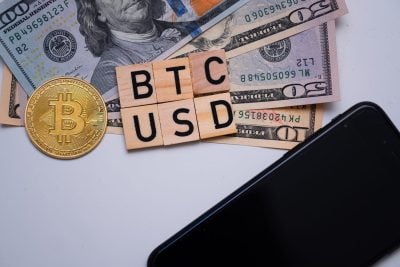
If you own Grayscale Bitcoin Trust (NYSE:GBTC), you are paying a premium for Bitcoin exposure that nearly identical funds now sell for a fraction of the price. The fund still quietly charges 1.50% a year, and that meter ran every single day of 2026’s 27.08% year to date drawdown. Fees do not pause for bear markets.
What You’re Actually Paying
The headline cost is the sponsor fee. At 1.50%, GBTC takes $150 a year out of every $10,000 you have parked in it. BlackRock’s iShares Bitcoin Trust (NASDAQ:IBIT), the dominant low-cost spot Bitcoin ETF, lists its expense ratio at 0.33% as of March 14, 2026. That is roughly $33 a year on the same $10,000. Same coin in the vault. Different toll.
Stretch that gap across a long holding period and the drag compounds. Each year the higher fee shaves off a slice of the price exposure you thought you were buying. Grayscale itself confirms the scale of the business: the firm runs over $35 billion in assets across various digital asset products. The fee is the product.
The Part the Factsheet Doesn’t Highlight
The structural cost is what GBTC used to be and what it still drags behind. For years GBTC was a closed-end trust that traded at a persistent discount to the Bitcoin it held. One analysis at the time argued converting it could unlock up to $8 billion in value for investors by eliminating the trust’s persistent discount to net asset value. The conversion happened in January 2024, and the fee did not move. As InvestorPlace noted in January 2024, “the GBTC ETF carries a high expense ratio of 1.50%”, calling it “considerably more expensive than competitors.”
Holders voted with their money. Outflows hit $700 million to $785 million in a single day on January 22, 2024, and IBIT was already described as “poised to overtake GBTC in assets under management.” There is a second hidden cost in those outflows: legacy holders selling to escape the fee can trigger capital gains distributions and force tax drag on anyone who stays.
The Cheaper Mirror
The exposure trade-off is almost nothing. IBIT and Fidelity’s Fidelity Wise Origin Bitcoin Fund (NYSEARCA:FBTC) both hold spot Bitcoin in cold storage and price off the same network. The performance lines up: over the past year, IBIT returned -38.89%, FBTC returned -38.86%, and GBTC returned -39.58%. Bitcoin itself fell 38.41% over the same window. GBTC trailed the spot coin and trailed the cheaper wrappers, in the same direction, by roughly the size of its fee gap. That is what a fee looks like in the wild.
Year to date the pattern repeats: Bitcoin is down 26.15%, IBIT is down 26.77%, FBTC is down 26.68%, and GBTC is down 27.08%. The cheaper mirror tracks the asset more closely because less of the asset is being skimmed off the top.
What This Means for You
Loyalty to a ticker is not a strategy. If you bought GBTC before January 2024, you owned the only game in town and you paid for that scarcity. That moat is gone. The real question is whether your specific wrapper is worth roughly four to five times what the same exposure costs next door, and what your tax bill looks like if you decide it isn’t.
Contact [email protected] for any questions or corrections.
I am a long time investor and student of business, and believe finding good companies that can become great investments is the best game on earth. After 20 years of writing and researching the public markets it is clear that individuals have never had more tools and information to take control of their financial lives. From ETFs and $0 commissions to cryptos and prediction markets there has never been a greater democratization of access to investing.
I write to help people understand the investments available to them so they can make the best choice for their portfolio, whether they're starting out or looking for income in retirement.