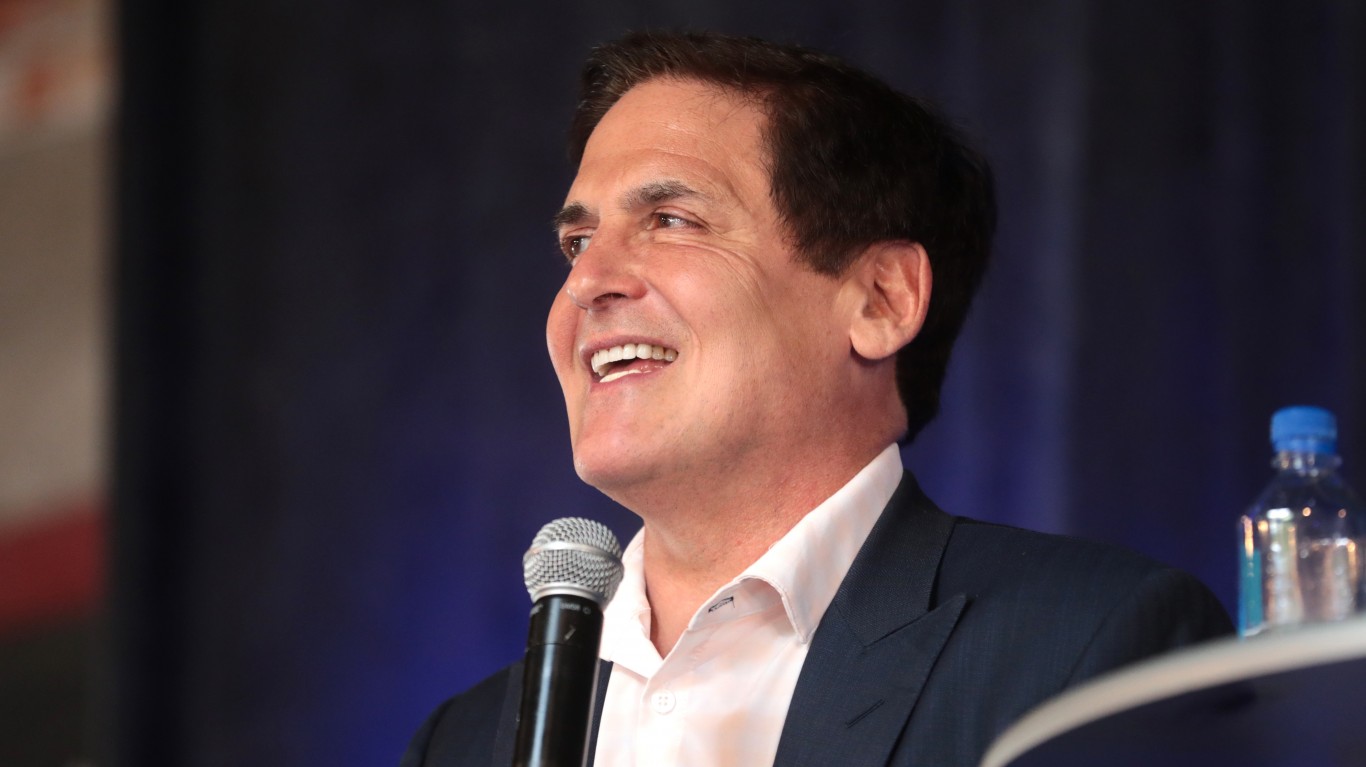
Mark Cuban Warns 6 Popular Investments Could Quietly Ruin Your Wealth
Mark Cuban built a fortune Forbes pegged at $6 billion on its 2025 Forbes 400 list by being more careful about what he refused to fund than what he chased. His framework, surfaced again this month in a widely shared…

This post may contain links from our sponsors and affiliates, and Flywheel Publishing may receive compensation for actions taken through them.

Mark Cuban built a fortune Forbes pegged at $6 billion on its 2025 Forbes 400 list by being more careful about what he refused to fund than what he chased. His framework, surfaced again this month in a widely shared rundown of his investing rules, argues that staying wealthy is mostly about pattern recognition on the way out, not the way in. Consumer sentiment has been in near-historic lows throughout 2026: the University of Michigan index plunged to an all-time low of 44.8 in May 2026 before recovering to a preliminary 54.4 in July, yet it still sits roughly 12% below where it stood a year ago. That backdrop gives Cuban’s warnings sharper edges than they had a year ago.
Cuban frames the six categories below as structurally weak bets that look promising from a distance. Each one, he argues, conceals a flaw that only surfaces after the capital is committed.
1. Businesses That Are Easy To Copy
On Shannon Sharpe’s Club Shay Shay podcast, Cuban warned windfall earners away from glamour categories. “Don’t invest in the restaurant, don’t invest in the clothing label, don’t invest in the liquor company… or music. That is the death!” The issue is the moat, or the lack of one. Restaurants, fashion brands, and indie labels can be cloned by a competitor with a credit card and a logo. Without intellectual property, distribution lock-in, or network effects, early traction rarely compounds into lasting value.
2. Businesses With Huge Capital Needs
Cuban famously passed on Doorbot, the doorbell startup that became Ring and sold to Amazon (NASDAQ:AMZN | AMZN Price Prediction) for roughly $1 billion in 2018. He has said he would pass again, citing “a fundamental aversion to companies that require raising hundreds of millions of dollars to do less in revenues.” Capital-hungry businesses leave no margin for error. Every miss has to be financed by another round, and dilution compounds faster than the underlying business can grow its way out of the hole.
3. Businesses Carrying Heavy Debt
Debt accelerates good outcomes and amplifies bad ones. Cuban treats it as a constraint on optionality: once interest payments are fixed, management loses the ability to absorb shocks or pivot quickly. That warning lands harder in the current credit cycle. The average credit card APR sat at 21.00% in February 2026, which the Federal Reserve’s G.19 release flags as record territory, while the credit card delinquency rate held at 2.92% as of January 2026. Borrowing costs are structurally higher than they were a decade ago, and any business model that assumed cheap money is now operating with a tighter collar.
4. Expensive Investments That Charge High Fees
Cuban has long argued that high expense ratios quietly compound against investors. A fund charging 1% to 2% per year may feel harmless next to a strong headline return, but over a 30-year horizon those fees can consume a meaningful share of a portfolio. With CPI climbing from 321.435 to 333.979 over the trailing year, real returns are already being eroded before fees take their additional cut. The math is even less forgiving in a low-growth environment.
5. Investments You Don’t Understand
This rule sounds basic, then collides with crypto, private credit, structured notes, and leveraged ETFs. Cuban’s point is operational: if you cannot explain how the thing makes money, you cannot judge when it stops working. The recent crypto drawdown illustrates the cost of skipping that homework. Bitcoin opened 2026 at roughly $88,700 and has fallen to around $64,700 as of mid-July, a decline of approximately 27% year to date. That follows a peak of roughly $126,200 in October 2025. Ethereum has also suffered sharp losses in 2026. Long-term holders still sit on enormous gains from earlier cycles, but late entrants who never modeled the volatility absorbed it the hard way.
6. High-Risk Bets Without Boundaries
Cuban’s final category targets position sizing. Speculation is fine when it is contained. The danger is letting a single trade, leveraged product, or concentrated bet grow into something that can sink the whole portfolio. The VIX closed at 18.44 on June 17, 2026, in the normal range, but it has swung between 13.38 and 35.30 over the past 12 months, with the upper end of that range driven by the US-Iran conflict in early 2026. Volatility that looks dormant can reprice quickly and without warning.
What To Do With The Framework
Cuban’s six rules add up to a single discipline: protect the downside first, then let the upside take care of itself. Consumer sentiment, while partially recovering in July 2026, remains about 12% below year-ago levels, year-ahead inflation expectations sit at an elevated 4.2%, and record card rates continue to weigh on households. Each of those pressures tightens the consequences of the six mistakes Cuban describes.
Editor’s note: This update refreshes the University of Michigan Consumer Sentiment figures to reflect the all-time low of 44.8 recorded in May 2026 and the partial recovery to a preliminary 54.4 in July 2026, and corrects the Bitcoin year-to-date performance figure to approximately 27% using the confirmed January 1, 2026 opening price of roughly $88,700 and a mid-July 2026 price near $64,700; the VIX 52-week range has also been updated to 13.38 to 35.30 to reflect the Iran-conflict-driven spike above 35 earlier in 2026.
Contact [email protected] for any questions or corrections.
I am a long time investor and student of business, and believe finding good companies that can become great investments is the best game on earth. After 20 years of writing and researching the public markets it is clear that individuals have never had more tools and information to take control of their financial lives. From ETFs and $0 commissions to cryptos and prediction markets there has never been a greater democratization of access to investing.
I write to help people understand the investments available to them so they can make the best choice for their portfolio, whether they're starting out or looking for income in retirement.