‘Being Hated Is Not Good for Business’: Mark Cuban’s $130 Billion Warning for AI Companies
AI companies are losing a $130 billion battle they never saw coming, and Mark Cuban says the real enemy has nothing to do with permits, power grids, or zoning boards.

In a single quarter, communities blocked or delayed at least 75 AI data center projects worth roughly $130 billion. That figure, from Data Center Watch’s Q1 2026 report, is the highest quarterly total of disrupted data center developments on record. Mark Cuban’s read on why is blunt: it has nothing to do with data centers.
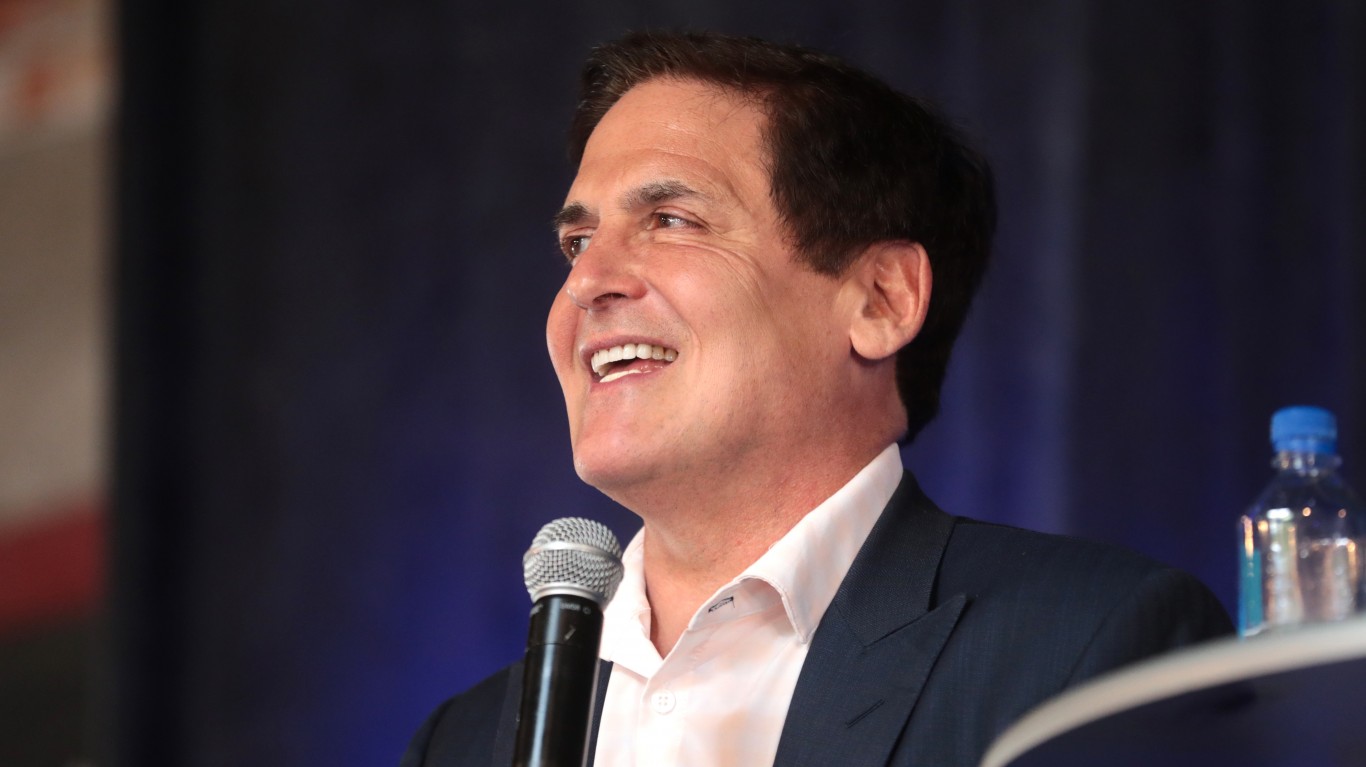
“It’s time for everyone to realize that the fight against data centers has nothing to do with data centers,” Cuban wrote on X on June 25, 2026. “They have become a proxy for the hate towards AI and the concentration and accumulation of wealth it’s creating.” His conclusion landed harder: “One thing I have learned is being hated is not good for business.”
The John Galt Problem
Cuban argues the AI industry has already lost the public relations fight by talking instead of listening. “The big LLMs have lost the PR battle. Why? Because they all suck at putting people first. They have an SV attitude that makes them all think they are John Galt saving the world.” The reference, to Ayn Rand’s hero who expects the world’s gratitude for his innovations, cuts sharply. Silicon Valley spent years telling towns AI will change everything, when it should have asked what they need. Cuban’s view: “It’s too late” to sell the benefits of AI, and only material community support remains.
Why People Are Angry
The anger has a concrete source: jobs. US employers announced just over 97,000 job cuts in May 2026, citing AI as the primary reason for almost 40%, per Challenger, Gray & Christmas, escalating from 7% of cuts in January to roughly 40% by May. “AI is now the leading reason companies give for cutting jobs,” said Andy Challenger. Oracle acknowledged AI cost 21,000 jobs at the company in 2026, per Forbes. On the same morning as Cuban’s post, Nobel laureate Paul Krugman argued on his Substack that AI companies “only belatedly realized that declaring that your technology will destroy jobs is not a great marketing strategy.”
Scale of Opposition
Gallup (May 2026) found 71% of Americans oppose AI data centers near their communities, nearly half strongly, citing power and water use, pollution, noise, and rising utility costs. Morning Consult found support for banning construction near communities rose from 37% to 41% in a single month, with heaviest opposition in the Midwest and South. Prediction markets price regulatory risk directly: Polymarket traders assign a 36.5% probability that a US state enacts a data center moratorium by year-end, with New York’s Responsible Data Center Development Act awaiting Governor Hochul’s signature.
Cuban’s Prescription
Cuban remains bullish on AI, saying he is “a believer there will be net gains in a few years.” His fixes: a community tour asking towns what they need (“You will need to do what they ask”); direct meetings with artists and creative unions in Los Angeles and New York, since “Every creative I know is TERRIFIED about what AI will do to their profession”; and funding community programs at scale, because “Billions of dollars is a lot of money across towns and city programs. Across the major LLMs, it’s a cost of doing business.” He opposes paid celebrity endorsements and political spending.
The Pushback
Not everyone accepts the “proxy for hate” framing. A widely shared reply cited constant noise, light pollution, and falling property values from facilities running around the clock. Cuban’s retort: “Where was this fight against the CHIPS Act?” Columbia Business School’s Daniel Keum cautioned that companies blaming AI for layoffs “doesn’t necessarily mean that’s actually why those layoffs happened.”
Investing Implications
The $130 billion in stranded or delayed projects is capital that is not building anything. Every hyperscaler racing to expand carries permitting and community risk: Meta (NASDAQ:META | META Price Prediction) raised 2026 capex guidance to $125 to $145 billion; Microsoft (NASDAQ:MSFT) is roughly doubling its data center footprint over the next two years; Alphabet (NASDAQ:GOOGL) guided $180 billion to $190 billion with a “significant” further increase planned for 2027; Amazon (NASDAQ:AMZN) posted $43.2 billion in Q1 cash capex; and Oracle (NYSE:ORCL) burned through $55.663 billion of FY2026 capex against negative free cash flow of $23.686 billion (see the Q4 filing). Oracle shares have fallen 29.47% over the past month, a reminder that markets are repricing capex risk. The Wyoming contamination incident tied to a Zuckerberg-backed facility drew congressional scrutiny and a broader suspension of operations, showing community hostility carries real cost. With 58% of Americans blaming data centers for rising electricity bills and AI capex scaling toward $700 billion a year, community benefit agreements are becoming standard.
Cuban’s closing line was direct: given the power and capacity the industry needs, if AI companies do not treat everyday people with respect, they will fall far short of the capacity their businesses require.
Contact [email protected] for any questions or corrections.
I've spent more than 15 years inside enterprise software, working alongside the finance, sales operations, and HR leaders who run the revenue engines at some of the largest tech companies in the country.
My day job is helping enterprise executives make smarter decisions about retention, compensation, and growth. These are the same operational levers that show up in every earnings report investors actually read. That perspective shapes my writing for 24/7 Wall St.
The headline numbers are easy. The interesting stuff is underneath: how companies make money, what executives are worried about, and what any of it means for the person checking their 401(k) on a Sunday afternoon. I write about personal finance and business as someone who has spent her career inside the rooms where these decisions get made.