Meta’s CEO Just Promised Superintelligence. He Thinks Everyone Will Have It
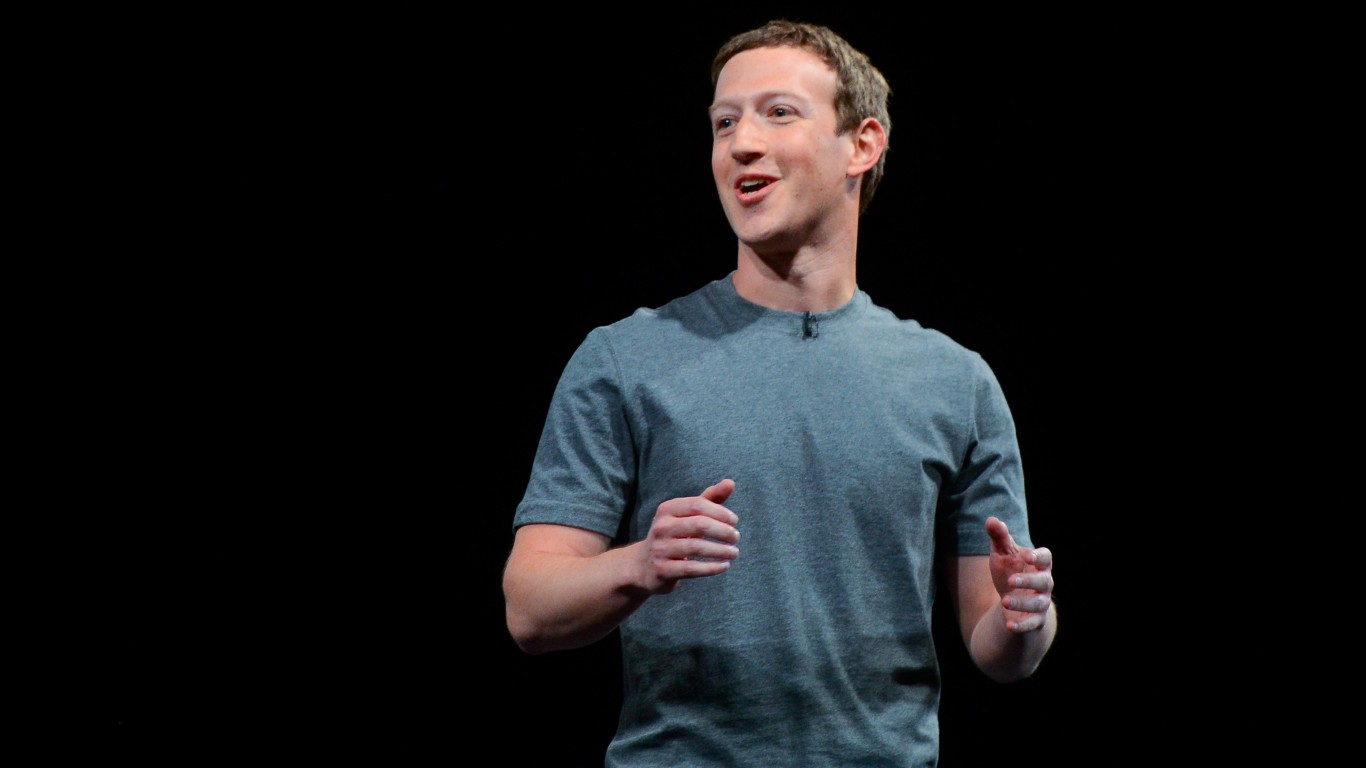
Mark Zuckerberg opened Meta Platforms (NASDAQ:META | META Price Prediction)‘s Q1 2026 earnings call with a sentence that would sound deranged coming from almost any other CEO: “We’re on track to deliver personal superintelligence to billions of people.” It was…


Mark Zuckerberg opened Meta Platforms (NASDAQ:META | META Price Prediction)‘s Q1 2026 earnings call with a sentence that would sound deranged coming from almost any other CEO: “We’re on track to deliver personal superintelligence to billions of people.” It was the thesis.
The claim landed alongside numbers that, for once, support the swagger. Meta posted Q1 revenue of $56.31 billion, up 33% year over year, EPS of $10.44 against a $6.6587 consensus, and net income of $26.77 billion. Roughly $3.13 of that EPS came from an $8.03 billion tax benefit tied to Treasury guidance on capitalized R&D, but the operating engine is real: ad impressions rose 19% and average price per ad rose 12%.
What “Personal Superintelligence” Actually Means

Zuckerberg’s definition is consumer-facing. “Our goal is not just to deliver Meta AI as an assistant, but to deliver agents that can understand your goals and then work day and night to help you achieve them,” he said. He drew a sharp line against rivals: “I hear a lot of people out there talk about how AI is going to replace people. Instead, I think that AI is going to amplify people’s ability to do what they want.”
The product evidence is Muse Spark, the first model out of Meta Superintelligence Labs, which Zuckerberg said took about ten months to ship and drove “double-digit percent increases in Meta AI sessions per user.” On business agents, weekly conversations grew 10 times since the start of the year, to more than 10 million.

The Price Tag
Delivering this to billions requires compute that Meta does not yet own. The company raised 2026 capex guidance to $125 to $145 billion, up from a prior $115 to $135 billion range, citing higher component pricing and data center costs. Contractual commitments stepped up $107 billion this quarter for multiyear cloud and infrastructure deals. Q1 capex alone hit $18.997 billion, up 47% year over year, while Reality Labs lost another $4.03 billion.
Zuckerberg framed the spend as identity: “You are not going to have leading models in the future if your models cannot improve themselves.”

Ambition or Overreach
Wall Street is not yet sold. Since the filing price of $671.77 on April 29, shares have drifted to $564.15. A June 17 report citing internal “atrocious” execution within the AI restructuring helped push the stock down 3% that day. Polymarket traders give Meta a 65% probability of holding a higher valuation than OpenAI by year-end 2027, credible but short of coronation.
Analysts disagree with the stock action. Consensus target sits at $827.32, with 57 buys and zero sells. The bet on Zuckerberg’s sentence is straightforward: either Muse Spark’s successors close the gap with Claude and Gemini fast enough to monetize 3.56 billion daily users, or $125 billion-plus in annual capex starts looking like the most expensive vocabulary lesson in tech history.
Contact [email protected] for any questions or corrections.
Joel South covers large-cap stocks, dividend investing, and major market trends, with a focus on earnings analysis, valuation, and turning complex data into actionable insights for investors.
He brings more than 15 years of experience as an investor and financial journalist, including 12 years at The Motley Fool, where he served as an investment analyst, Bureau Chief, and later led the Fool.com investing news desk. He has also co-hosted an investing podcast and appeared across TV and radio discussing market trends.