Morningstar Says SpaceX Could Be Worth Less Than Half Its $1.75 Trillion IPO Price
One of the most anticipated public offerings in recent memory is drawing skepticism. SpaceX (NASDAQ:SPCX | SPCX Price Prediction) currently has a valuation of roughly $2.44 trillion, up nearly 40% from its $1.75 trillion IPO. Morningstar analysts have signaled the stock could be…


One of the most anticipated public offerings in recent memory is drawing skepticism. SpaceX (NASDAQ:SPCX | SPCX Price Prediction) currently has a valuation of roughly $2.44 trillion, up nearly 40% from its $1.75 trillion IPO. Morningstar analysts have signaled the stock could be worth less than half that figure on a fundamentals basis. That gap was the centerpiece of a recent segment on the Retire SMART Podcast (Ep. 432), where the host walked through why his firm is sitting this one out.
IPOs Historically Underperform in the Near Term
The host’s framing was direct. He described “a company that only does $20 billion or so in revenue, that’s gonna trade at almost $2 trillion in market cap when there’s no profitability.” He noted SpaceX is arriving without profitability, EBITDA, margins, or dividends to anchor the valuation, and pointed to a broader historical pattern in which most IPOs “go down in their first year as much as 55%.” He presented that figure as his characterization of IPO history rather than a precise statistic.
His bottom line for clients: “I’m not buying the IPO, full disclosure, and we’ve told our clients, we don’t recommend they buy this when it comes out.” He reminded listeners that companies typically go public so early investors can “cash out,” framing the decision as “risk-reward” under capitalism rather than a recommendation either way.
What SpaceX Actually Is
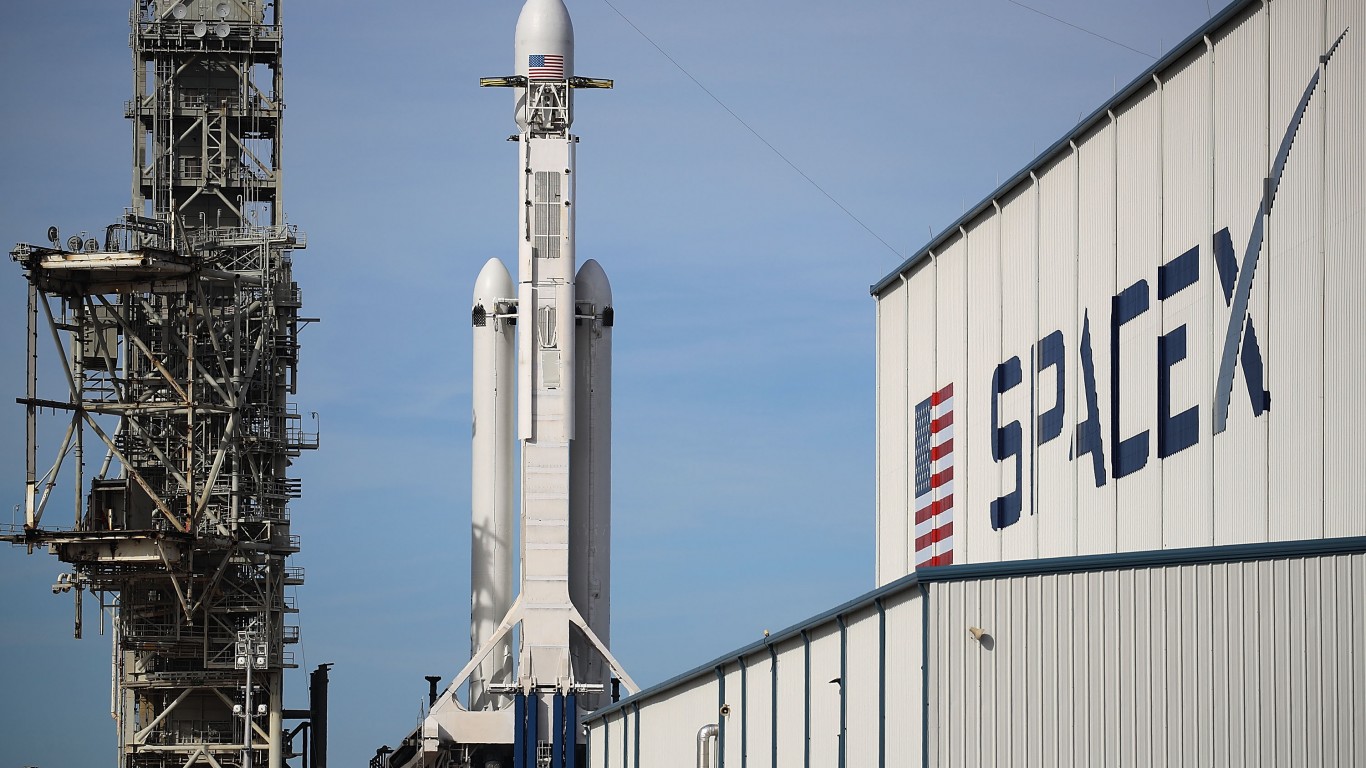
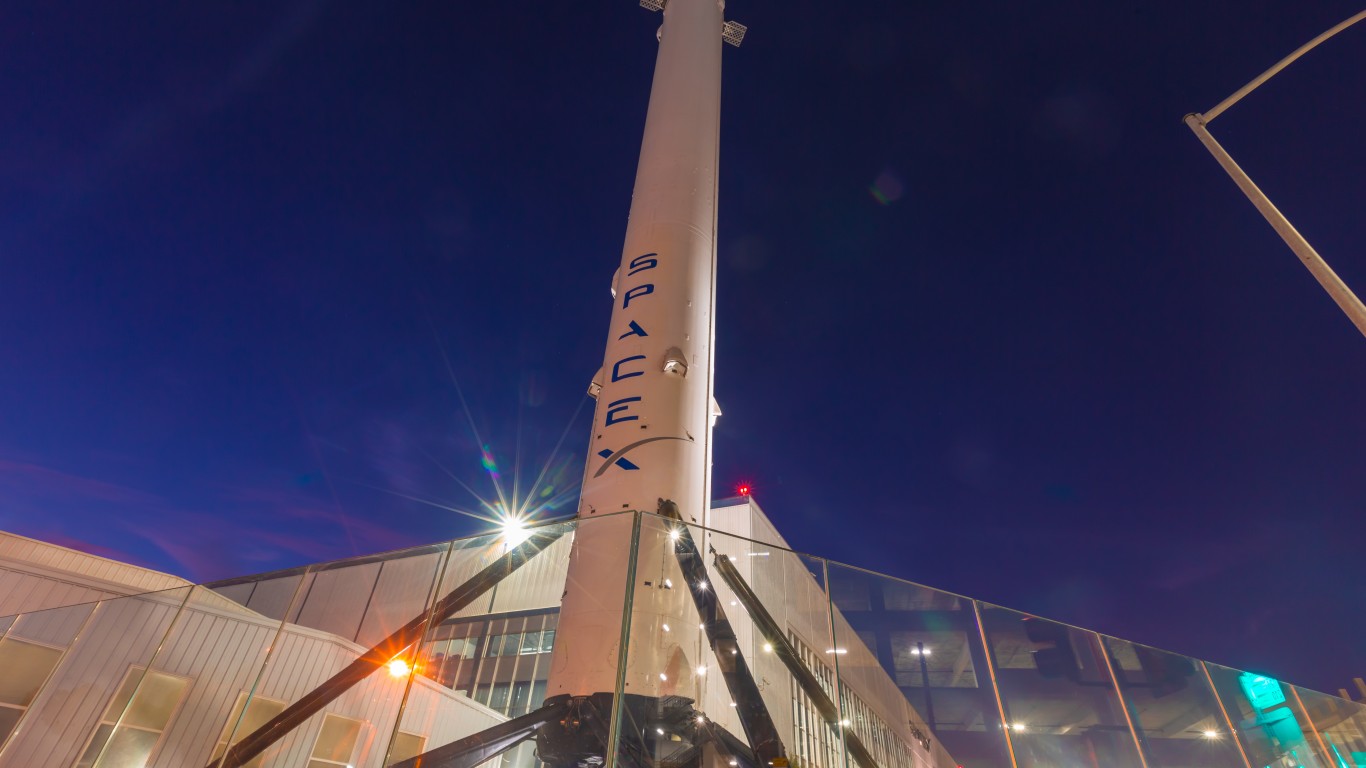
The Morningstar caution lands against a business that is operationally dominant. SpaceX has launched more than 80% of the world’s mass into orbit each year since 2023, and its Falcon rockets have maintained an over-99% mission success rate. Starlink, the broadband arm, operates a constellation of roughly 9,600 satellites in Low-Earth Orbit, serving customers across 164 countries, territories, and other markets as of March 31, 2026.
In early 2026, SpaceX acquired xAI, folding the Grok frontier model and its X-platform distribution into the company alongside launch and connectivity. On the revenue side, the host cited reporting that Google is set to pay “approximately a billion a month to SpaceX to use their compute power,” which he said could meaningfully bolster future financials.
For perspective on what live trading has looked like in the very early window, SPCX changed hands at $185 as of June 18, 2026, with only 5 trading days of history available.
How Profitable, Mature Aerospace Peers Stack Up
It is worth contrasting that valuation debate with how the market prices a profitable, established aerospace and defense name. RTX (NYSE:RTX) carries a market capitalization of roughly $249.9 billion, trades at a forward P/E of 27, and supports a 1.41% dividend yield.
RTX delivered Q1 2026 adjusted EPS of $1.78 on revenue of $22.08 billion, with a backlog of $271 billion across commercial and defense. CEO Chris Calio said, “RTX delivered a very strong start to 2026 with organic sales and adjusted operating profit growth across all three segments.” Shares have advanced 29.27% over the past year.
The takeaway from the comparison: investors are being asked to pay a multiple of SpaceX’s IPO that has no historical parallel in aerospace, in the hope that the company will reach heights none of its peers have ever reached.
What To Watch Next
The debate over SpaceX ultimately comes down to execution. Bulls see a company that dominates launches, owns the world’s largest satellite internet network, and is expanding into AI infrastructure. Bears see a stock already priced for years of success in industries that hardly exist today.
Over the coming quarters, investors will be watching for evidence that SpaceX can grow into its valuation through higher revenue, improving profitability, and continued growth at Starlink. Whether the stock justifies its premium valuation or moves closer to Morningstar’s estimate will depend on those fundamentals rather than the excitement surrounding the IPO itself.
Contact [email protected] for any questions or corrections.
Thomas Richmond is a financial writer and content strategist with 5+ years of experience covering stocks and financial markets. He has published over 500 articles focused on individual stock analysis, helping investors better understand business fundamentals, stock valuations, and long-term opportunities.
Thomas previously served as a Content Lead at TIKR, a stock research platform, where he helped scale the company’s blog to hundreds of articles per month and contributed to a weekly newsletter reaching more than 100,000 investors.
Outside of work, Thomas enjoys weight lifting and soccer.