Nvidia Still Down From Its High. History Says This Is the Buy Window Investors Beg For
NVIDIA (NASDAQ:NVDA | NVDA Price Prediction) at $208 looks mispriced relative to its growth. The chip powering the AI build-out is on sale relative to its own growth rate and to every other megacap competing for capital. The stock sits…

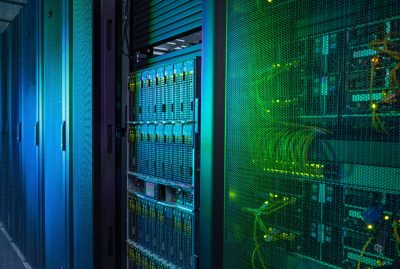
NVIDIA (NASDAQ:NVDA | NVDA Price Prediction) at $208 looks mispriced relative to its growth. The chip powering the AI build-out is on sale relative to its own growth rate and to every other megacap competing for capital. The stock sits roughly 11% below its 52-week high of $236.26, a drawdown that historically arrives with a thesis-breaking event. This time, the thesis is intact.
NVIDIA designs the GPUs, networking fabric, and increasingly the software that hyperscalers use to build what CEO Jensen Huang calls AI factories. In the most recent quarter, the Data Center segment alone produced $75.246 billion in revenue, up 92% year over year, with networking growing 199% year over year. The pullback originated in sentiment while the income statement kept accelerating.
Why the dip looks like an entry
Right now, NVIDIA trades at a forward P/E of 23x, the lowest multiple among the Mag-7 AI names despite the fastest top-line growth. Revenue growth has accelerated four quarters in a row, from 55.6% to 62.49% to 73.21% to 85.23%. Growth at this rate rarely trades at this multiple.
The catalysts are concrete. Guidance for next quarter is $91.0 billion in revenue at a 75% non-GAAP gross margin, explicitly excluding any China Data Center compute. The Blackwell 300 ramp, the Vera Rubin platform, and a new multiyear SK Hynix memory partnership extend the supply story Jensen Huang has been telegraphing for months. Management is raising the dividend to $0.25 per share and adding an $80.0 billion buyback authorization.
Where the bears have a real argument
NVIDIA carries $119.0 billion in supply-related commitments. If AI capex slows even modestly, that figure flips from confidence to overhang. Hyperscalers account for roughly half of Data Center revenue, magnifying any single budget cut.
Michael Burry’s recent NVDA put position has gone viral on Reddit, and the underlying question (whether AI return on invested capital justifies the spend) is fair. Insider activity is net selling across 8 recent transactions. A beta of 2.202 means another 20% drawdown is well within the historical envelope. But again, I wouldn’t give insider selling too much weight as most of this is just stock-based compensation being sold.
The case for waiting
If you want the bull thesis confirmed before paying up, the next earnings print will tell you whether $91 billion in guided revenue was conservative or aspirational. Moreover, China remains a binary. A policy thaw adds revenue currently modeled at zero. Investors who need that question resolved have a defensible reason to hold cash through the next quarter.
NVIDIA currently trades at $208, up 10.6% year to date and 45% over the past year, against an S&P 500 that has returned roughly mid-single digits year-to-date. The consensus analyst target is $298.93, implying meaningful upside, and the ratings split sits at 10 Strong Buy, 48 Buy, 2 Hold, 1 Sell. A 95% bullish analyst base after a 27% drawdown is a signal worth weighing.
The verdict on NVIDIA at this price
At $208, the setup favors patient owners of the name.
The path to appreciation runs through the Blackwell 300 ramp this year and the Vera Rubin platform in 2027, with hyperscaler order books visible through $119.0 billion of supply commitments and named multi-gigawatt deals with OpenAI, Meta, and CoreWeave. You are paying a forward multiple of 23 for a business growing revenue 85% and free cash flow 85%, with $48.554 billion in free cash flow generated in a single quarter.
The thesis breaks if hyperscaler capex guidance reverses, if Blackwell yields stumble, or if a credible competing accelerator captures meaningful share at the rack level. None of those are visible today. Jensen Huang’s line that “the buildout of AI factories, the largest infrastructure expansion in human history, is accelerating at extraordinary speed” is a CEO claim investors should treat skeptically, except that the segment numbers keep ratifying it.
The most important company in the most important capex cycle of the decade is trading at the lowest multiple in its peer group, a condition the market historically delivers only when sentiment cracks.
Contact [email protected] for any questions or corrections.
Omor Ibne Ehsan is a writer at 24/7 Wall St. He is a self-taught investor with a focus on growth, cyclical, and dividend equities that have strong fundamentals, value, and long-term potential. He also has an interest in high-risk, high-reward investments such as penny stocks.