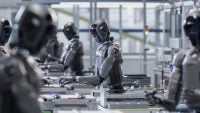
Robots Will Replace 700,000 Workers
It really doesn’t matter who made the statement if he or she really, really knows what they are talking about. Richard Liu, founder and chair of JD.com, said that “sooner or later” robots would replace 700,000 delivery workers in China.…


It really doesn’t matter who made the statement if he or she really, really knows what they are talking about. Richard Liu, founder and chair of JD.com, said that “sooner or later” robots would replace 700,000 delivery workers in China. Early experimental versions of this business model are already in place in China, the FT reported.
Who supports this point of view? To a large extent, Elon Musk and Jeff Bezos. Job destruction by the next generation of tech will not be limited to AI software. It will be advanced robots powered by AI.
Just nine months ago, The New York Times ran an extensive exposé on Amazon’s plans to avoid increasing its workforce by automating about 75% of its operations. Amazon (NASDAQ: AMZN | AMZN Price Prediction) expects to sell about twice as many products as it does now by 2033. Robotic automation would allow for much of the growth. “That would translate to more than 600,000 people whom Amazon didn’t need to hire,: the Times reported. Another conclusion of the analysis is that Walmart (NYSE: WMT) and UPS (NYSE: UPS) will be able to do the same. If the process works, add countless numbers of smaller companies that can make similar business decisions,
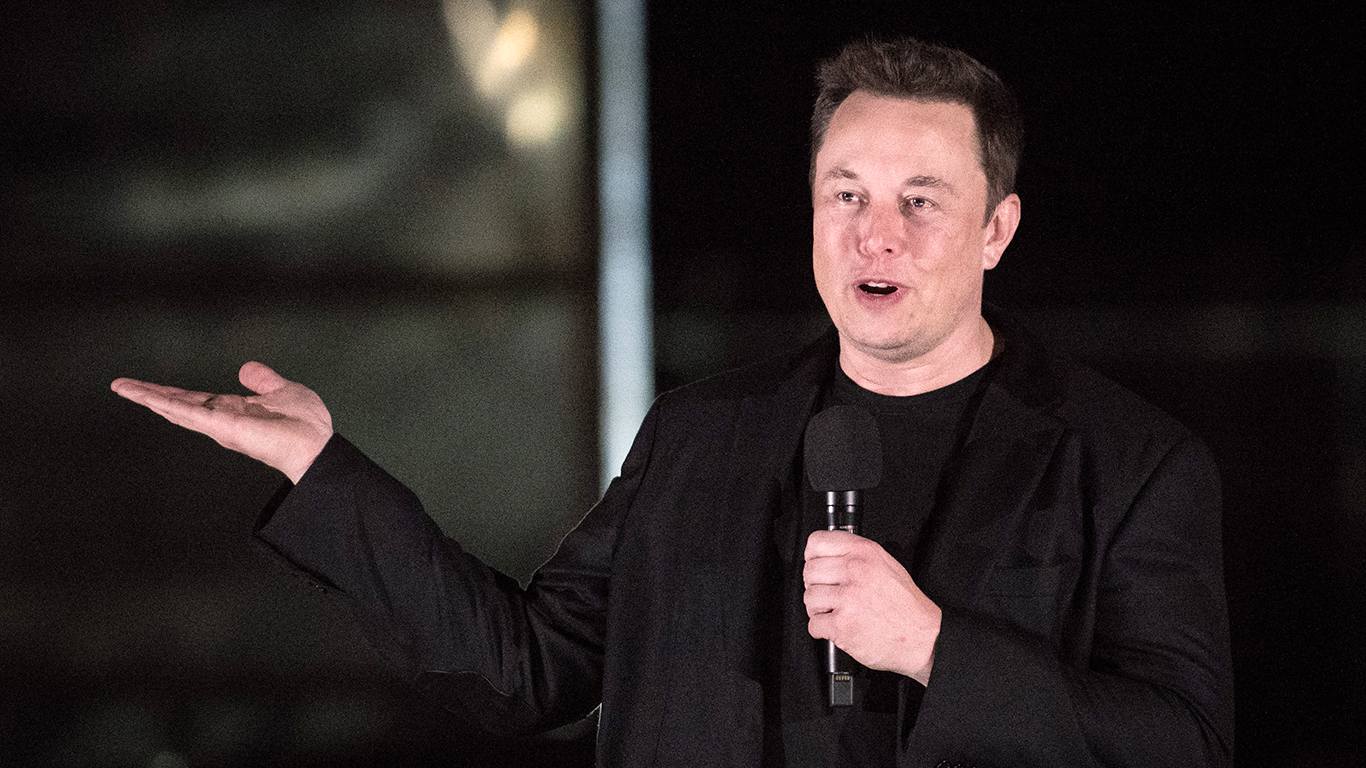
Elon Musk says he can build billions of his Optimus robots, which will handle most human tasks. He has even stopped producing his Model S and Model X vehicles so he can use the factory that builds them to manufacture the first generation of Optimus. NVIDIA (NASDAQ: NVDA) CEO Jensen Huang recently added, “Physical AI has arrived — every industrial company will become a robotics company.”
What is at stake? Around the world, certainly tens of millions of jobs, if these three CEOs (or chairman) are close to correct. It raises, once again, how the world handles this level of unemployment.
The ability to replace factory and delivery workers is only a part of AI job destruction. White-collar workers, particularly at the entry level, have found out that much of what they would do can already be done by AI. The same is true with software programmers. Companies that include Block (NYSE: XYZ) have already laid off thousands of workers because their jobs can be done more cheaply and efficiently by AI applications.
Liu’s comment is one more that supports the idea that AI will cause an employment apocalypse.
Contact [email protected] for any questions or corrections.
Douglas A. McIntyre is the co-founder, chief executive officer and editor in chief of 24/7 Wall St. and 24/7 Tempo. He has held these jobs since 2006.
McIntyre has written thousands of articles for 24/7 Wall St. He is an expert on corporate finance, the automotive industry, media companies and international finance. He has edited articles on national demographics, sports, personal income and travel.
His work has been quoted or mentioned in The New York Times, The Wall Street Journal, Los Angeles Times, The Washington Post, NBC News, Time, The New Yorker, HuffPost USA Today, Business Insider, Yahoo, AOL, MarketWatch, The Atlantic, Bloomberg, New York Post, Chicago Tribune, Forbes, The Guardian and many other major publications. McIntyre has been a guest on CNBC, the BBC and television and radio stations across the country.
A magna cum laude graduate of Harvard College, McIntyre also was president of The Harvard Advocate. Founded in 1866, the Advocate is the oldest college publication in the United States.
TheStreet.com, Comps.com and Edgar Online are some of the public companies for which McIntyre served on the board of directors. He was a Vicinity Corporation board member when the company was sold to Microsoft in 2002. He served on the audit committees of some of these companies.
McIntyre has been the CEO of FutureSource, a provider of trading terminals and news to commodities and futures traders. He was president of Switchboard, the online phone directory company. He served as chairman and CEO of On2 Technologies, the video compression company that provided video compression software for Adobe’s Flash. Google bought On2 in 2009.