Analyst Behind $250 SpaceX Target Says Physical AI Will Be “One of AI’s Fastest-Growing Areas Over the Next 4-5 Years”
Oppenheimer tech analyst Timothy Horan used a recent CNBC segment to lay out a bull case for SpaceX (NASDAQ:SPCX | SPCX Price Prediction), arguing that the company’s edge in artificial intelligence justifies a price target well above where shares are…

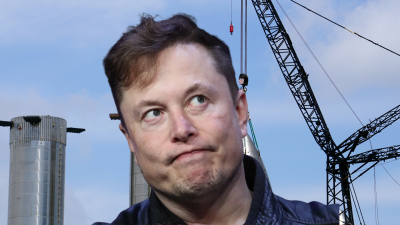
Oppenheimer tech analyst Timothy Horan used a recent CNBC segment to lay out a bull case for SpaceX (NASDAQ:SPCX | SPCX Price Prediction), arguing that the company’s edge in artificial intelligence justifies a price target well above where shares are changing hands today. SpaceX IPO’d roughly 2 weeks ago, and Oppenheimer’s $250 SpaceX price target puts physical AI squarely at the center of the long-term thesis.
The Physical AI Thesis and $250 Price Target
Horan set a $250 price target on SpaceX, with the stock currently trading around $150 per share. According to Horan, that valuation is “largely based on what we think they can do in the AI world.” Shares slid about 15% over the past week from the $185 level.
Horan said robotics, autonomous vehicles, and machine-to-machine systems, including self-driving cars, trucks, trains, and aircraft, will be “one of the fastest areas of AI over the next 4 or 5 years.” SpaceX’s data advantage, drawn from Starlink’s global network and vehicle telemetry within the broader Musk ecosystem, positions the company to lead in both physical and digital AI workloads.
Starlink as SpaceX’s Primary Revenue Driver
Horan believes Starlink will be the company’s primary initial revenue driver, followed by AI infrastructure, and then AI applications, with the latter two carrying higher growth and margins. He frames Starlink as a play on a roughly $2 trillion communications market, accessed through a planned mobile-service launch built on a hybrid satellite-and-terrestrial approach that he likens to the SiriusXM (NASDAQ:SIRI) model.
That framing is similar to how other Wall Street investors view the platform. Defiance ETFs CIO Sylvia Jablonski recently argued that “investors are underestimating SpaceX by viewing it solely as an aerospace company,” calling it a multi-platform infrastructure company involved in launch, communications, defense, and AI connectivity, with Starlink poised to exceed expectations. Defiance has built its product lineup around that view, including the SPCU 2X leveraged ETF and the SPCQ inverse ETF.
The Tesla Merger Wildcard
Horan also addressed merger speculation. A potential SpaceX-Tesla (NASDAQ:TSLA) combination could amplify the AI vision, in his view, but he expects it would take years as both companies raise capital and execute on standalone roadmaps. Tesla’s autonomy data and SpaceX’s connectivity and compute ambitions would be complementary, though for now investors should evaluate SpaceX on its own merits.
SpaceX’s IPO Performance
SpaceX priced its IPO at $135 and traded as high as over $225 before settling lower. James Surowiecki, writing in The Atlantic, argued that SpaceX, Anthropic, and OpenAI are tapping public markets primarily to fund “the extremely expensive artificial intelligence race,” a backdrop that underscores why analysts like Horan are anchoring valuations on AI exposure rather than launch revenue alone.

Contact [email protected] for any questions or corrections.
Thomas Richmond is a financial writer and content strategist with 5+ years of experience covering stocks and financial markets. He has published over 500 articles focused on individual stock analysis, helping investors better understand business fundamentals, stock valuations, and long-term opportunities.
Thomas previously served as a Content Lead at TIKR, a stock research platform, where he helped scale the company’s blog to hundreds of articles per month and contributed to a weekly newsletter reaching more than 100,000 investors.
Outside of work, Thomas enjoys weight lifting and soccer.