




One of Amazon.com’s biggest attractions for its Amazon Prime subscribers is its internal infrastructure and logistics services. Warehouse hubs and e-cargo bikes in congested big cities allow for the same direct delivery service that those in suburban and rural areas get. Goods often flow within as little as 24 hours from a clicked order onscreen to a delivery at one’s front door.
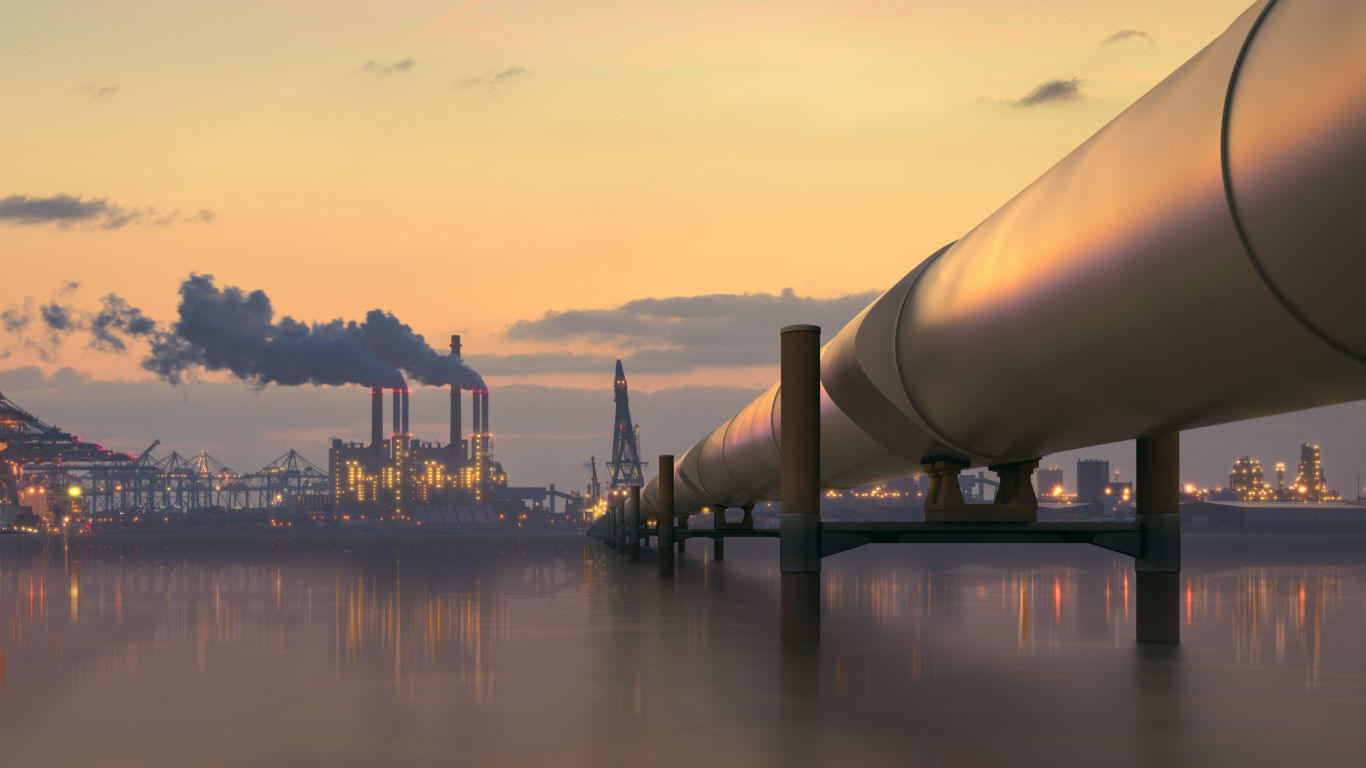
Infrastructure and logistics are the main conduits for the oil and gas industry to become monetized. Nobody uses either in its extracted form; it is stored, transported, and then refined or processed into various products: gasoline, diesel, LNG, kerosene, etc. Those infrastructure and logistics conduits are categorized as midstream assets, and an entirely independent industry made up of pipelines, tankers, refineries, trucks, storage facilities, and maritime tanker vessels are all components of it. Alerian MLP ETF (NYSE: AMLP) is an ETF focused on the midstream sector that is currently posting some impressive numbers that outperform some standalone energy companies: a 7.79% yield, 13% YTD return, and a 15.3% 1-year return. In comparison, Shell plc is currently sporting a 4.08% yield, 5.57% YTD return, and a 14.45% 1-year return.
Alerian MLP ETF
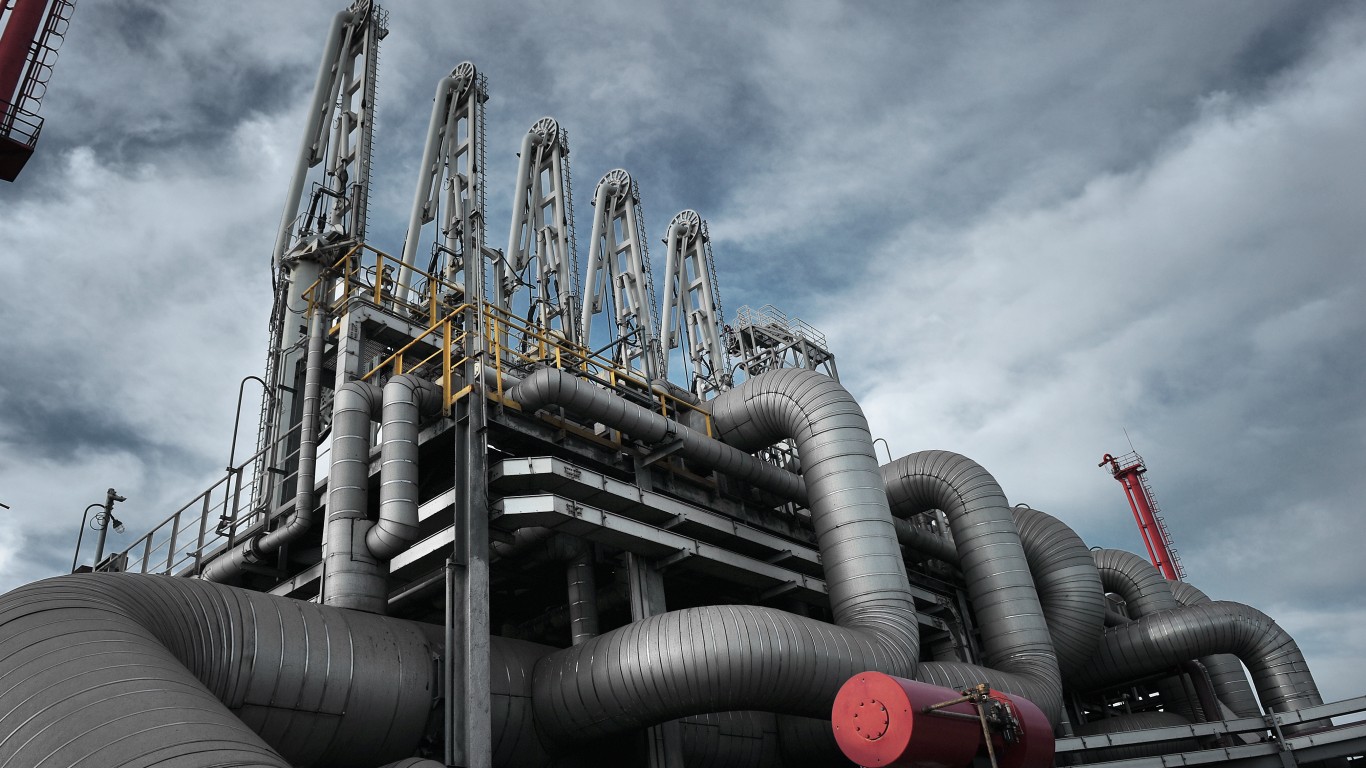
AMLP’s midstream companies are essential from transpoirting natural gas to convert into LNG and to various utilities.
Most, if not all of the 15 midstream stocks owned by AMLP are Master Limited Partnerships. As such, they usually issue K-1s to shareholders to prorate their fee revenues, which are generated almost like toll booths. Midstream companies wishing to avail themselves of the capital markets do so under an arrangement with the SEC akin to that of REITs (Real Estate Investment Trusts): registered midstream companies must remit 90% of their profits back to shareholders in return for a public listing on NYSE, NASDAQ, or CBOE.
In order to bypass the cumbersome K-1 paperwork, AMLP collects all of the revenues into a C-Corp structure that instead issues its shareholders 1099 forms for easier tax filing. Launched on 8-25-2010, AMLP tracks the Alerian MLP Infrastructure Index as its benchmark. An overview of AMLP appears thus:
|
Net Assets |
$14.1 billion |
YTD Return |
13.00% |
|
Yield |
7.79% |
1-Year Return |
15.30% |
|
52-week Range |
$44.64-$55.22 |
3-Year Return |
19.66% |
|
NAV |
$51.16 |
5-Year Return |
17.59% |
|
Avg. Daily Volume |
1.6 million shares |
10-Year Return |
6.84% |
|
P/E ratio |
14.78 |
Expense Ratio |
1.01% |
Top 10 Holdings:
- Plains All-American Pipeline, L.P.: 13.67%
- Western Midstream Partners, L.P.: 13.63%
- Sunoco, L.P.: 13.37%
- Energy Transfer, L.P.: 13.34%
- Enterprise Products Partners, L.P.: 12.98%
- MPLX LP: 12.09%
- Hess Midstream LP.: 9.53%
- Cheniere Energy Partners, L.P.: 4.69%
- USA Compression Partners, LP: 4.39%
- Genesis Energy, L.P.: 3.23%
Why Midstream Prices Are Independent From Oil and Gasoline Prices
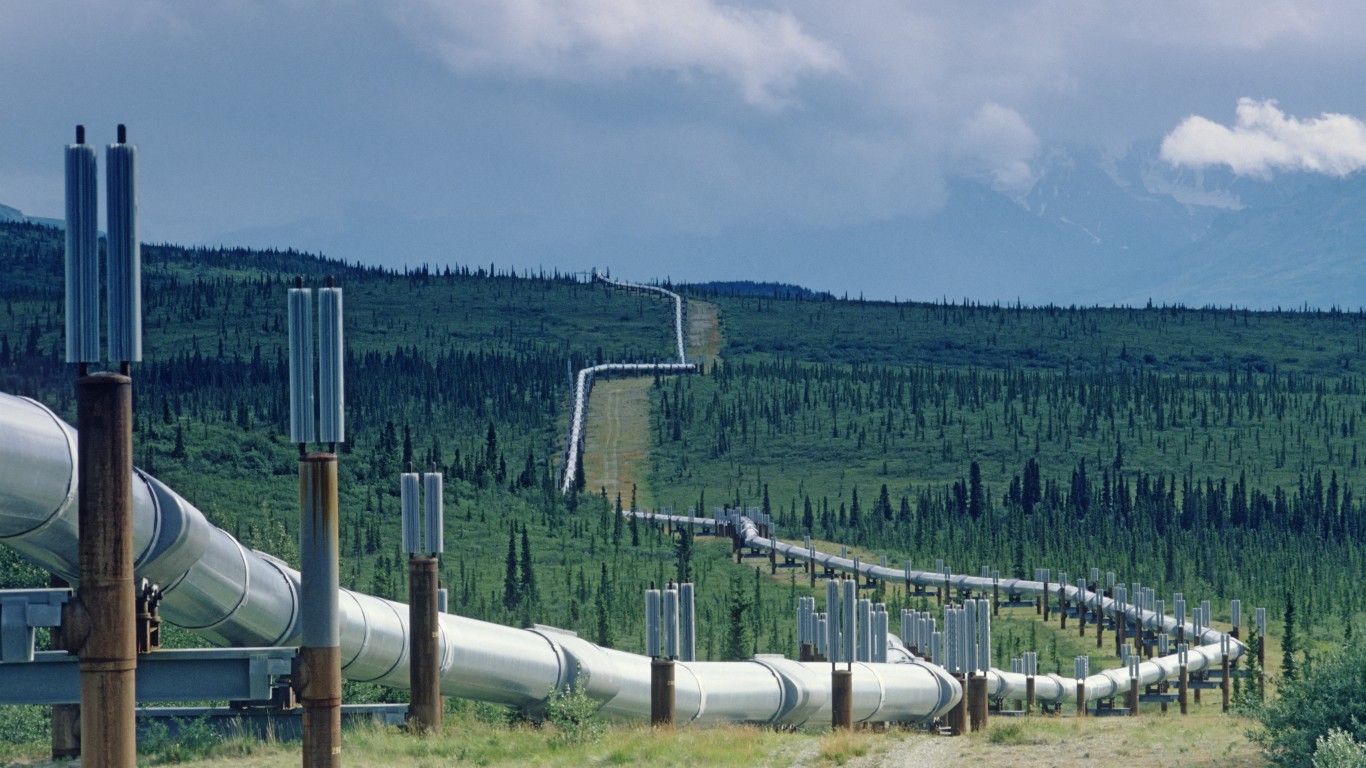
Midstream companies’s revenue generation is from transport, and makes them more akin to toll booths in actual operation.
Industries whose revenues are continually recurring, no matter what economic trends may be on a macro scale, are described as “defensive”, since the goods and services are considered to be essential. Sectors such as food, consumer staples, utilities (water and electric), and healthcare are among them. Unsurprisingly, the midstream sector can also be included in this category, since the transport of hydrocarbons in order to be consumed by end users in both industrial and individual capacities is vital to society.
Midstream companies’ revenues are independent of oil or gasoline market prices, since they are paid for facilitating transport and storage services, regardless of market price. Some of the reasons include:
- Fee Contracts – midstream companies may charge fixed fees based on volume predicated on a per barrel or cubic foot basis.
- Pipeline Space Reservations – energy companies will often prepay for pipeline space reservations on transport capacity to ensure no bottleneck delays
Midstream companies have their own unique risks that are infrequent, but luckily are usually localized, and rarely industry-wide. Some examples include:
- Political Risk: The Biden Administration’s shutdown of the Keystone Pipeline is an example of how government policies can impact midstream companies, even if they are considered essential services and arguably vital strategic assets that are crucial to national security.
- Force Majeure: maritime vessels can suffer damage that causes a massive oil spill, such as the Exxon Valdez. A similar accident can strike a pipeline or a tanker truck that prevents completion of hydrocarbon transport contracts.
- Lawsuits: midstream companies are multibillion dollar entities that may become targets for lawsuits over anything from personal injury to environmental concerns.
While only holding 15 companies, AMLP’s diversity luckily prevents the bulk of its dividend revenues from such potential hazards to protect its shareholders.












 Top Gaining Stocks
 Top Losing Stocks