Wall Street Says Lowe’s Will Cut Its Dividend. The Company Just Raised It. Here Is Who Is Right
Wall Street had Lowe’s pegged as the next dividend story to wobble. Rising rates, a softer housing turnover backdrop, and a sluggish DIY consumer set up a narrative where management would have to choose between defending the balance sheet and…

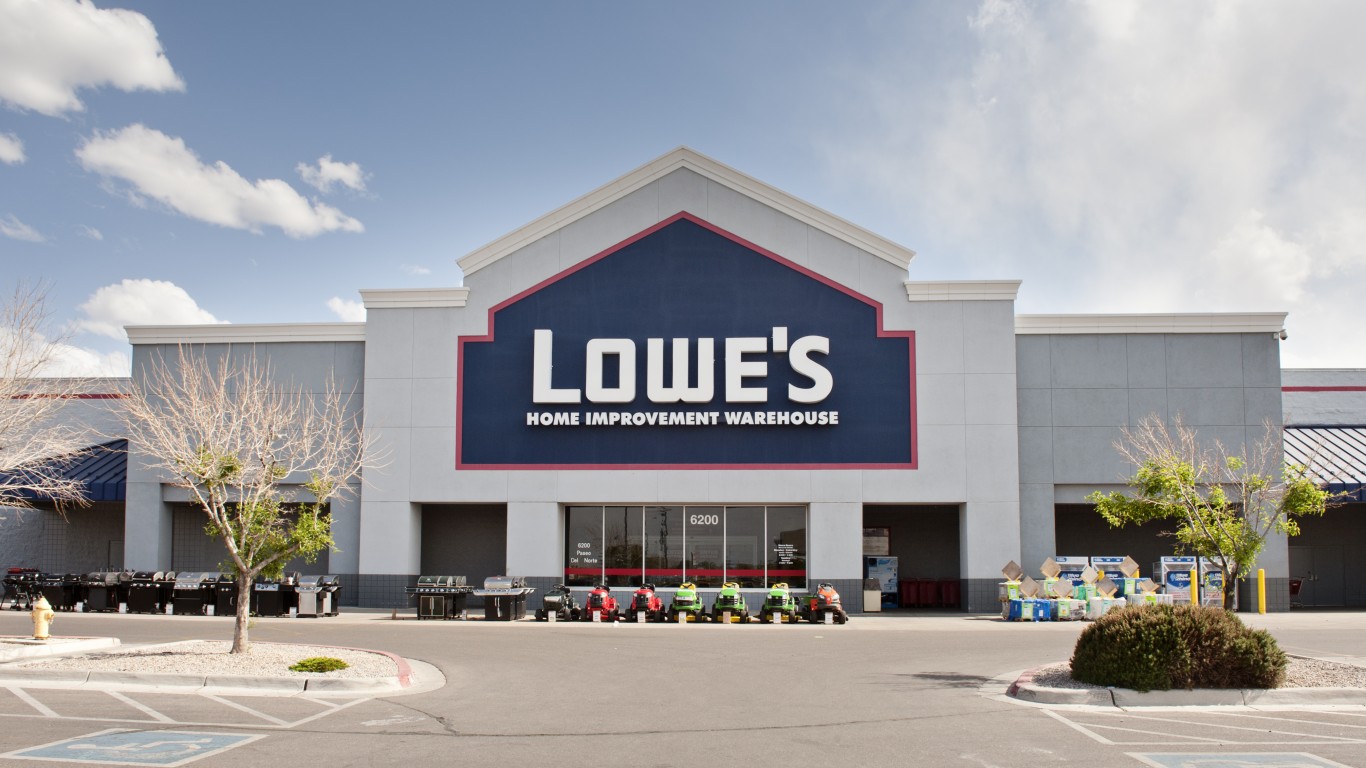
Wall Street had Lowe’s pegged as the next dividend story to wobble. Rising rates, a softer housing turnover backdrop, and a sluggish DIY consumer set up a narrative where management would have to choose between defending the balance sheet and defending the payout. Then on May 29, 2026, the board declared a $1.25 quarterly dividend, raising the payout from the $1.20 level held through Q1 2026 and Q4 2025. The check goes out August 5, 2026. The bears now have to explain why the cash flow statement disagrees with them.
Here is the framework: a dividend cut thesis on Lowe’s (NYSE:LOW | LOW Price Prediction) requires three things to be true at once. Free cash flow has to be compressing toward the payout. Earnings power has to be deteriorating faster than management can offset. And the board has to lose confidence in the medium-term recovery. Look at the numbers, and none of those three boxes get checked.

The Cash Flow Math Does Not Support a Cut
Lowe’s generated $9.86 billion in operating cash flow and $7.65 billion in free cash flow in the fiscal year ended January 2026. The dividend cost the company $2.64 billion. That is 2.9x FCF coverage, in line with the 3.0x prior year and ahead of the 2.4x two years before that. Coverage is stable and holding.
On a per-share basis, trailing diluted EPS is $11.84 against an annualized dividend of $4.80. That puts the earnings payout ratio in the low-40s. Even on management’s own FY2026 adjusted EPS range of $12.25 to $12.75, the new $5.00 annualized run-rate would still leave roughly 60% of earnings retained. Dividend Kings have been cut from far tighter spots than this.
Management Backed Up the Truck Where It Counts
The capital allocation signal worth watching is the mix. In FY2026, buybacks collapsed to $211 million from $4.05 billion the year before, while dividends grew. That is a defensive rotation, and it remains a rotation toward the most contractually visible return. Management is funneling shareholder returns into the most contractually visible form of cash distribution while building flexibility against the macro.
CFO Brandon Sink laid out the balance sheet plan on the Q1 call: “In the quarter, we paid $674 million in dividends at $1.20 per share. We also repaid $2.4 billion in bond maturities as we continue progressing towards our commitment to deleverage and return to a 2.75x leverage ratio by mid-2027.” Companies that are worried about dividend sustainability do not simultaneously commit $2.5 billion of full-year capex and accelerate debt paydown. They hoard.

Twenty-Six Years of Increases Is Not an Accident
The dividend has risen every single year from 1999 through 2026, putting Lowe’s solidly in Dividend Aristocrat territory and within the broader Dividend King conversation. Annual per-share dividends went from $0.12 in 1999 to $4.70 in 2025. The 2022 jump from $3.00 to $3.95 happened straight through the post-pandemic inventory unwind. The 2026 raise happened with CEO Marvin Ellison calling this “the most difficult housing market I’ve faced in this business since the financial crisis”. Track record matters, and this one says management raises through pain, not just through prosperity.
What the Bears Are Right About
The macro is genuinely ugly. Housing starts fell to 1.18 million in May 2026, down 15% from April and sitting at the boundary between healthy and weak. Existing home sales at 4.17 million remain in the soft zone the market has been stuck in since 2023. Ellison himself acknowledged the structural pressure: “With roughly 60% to 65% of our revenue coming from DIY and still being able to deliver positive comps, we take that as a win.” When the win bar is positive comps at all, you are not in a growth market.
Q1 reinforced the caution. Revenue of $23.1 billion grew 10% YoY, but that includes the FBM and ADG acquisitions. Organic comparable sales rose only 1%, and adjusted EPS of $3.03 missed the $3.06 consensus. Gross margin compressed 70 basis points to 33%. Bears have the headwinds right. They are simply drawing the wrong conclusion about how Lowe’s responds to them.
The Insider Tell
The insider tape is the one place where the cut thesis finds oxygen. In mid-June 2026, after the dividend raise was announced, EVP and CLO Juliette Pryor disposed of 19,768 shares across two transactions at roughly $220 to $225, and EVP of HR Janice Dupre sold 14,150 shares at $221.90. That is meaningful for two senior executives to do simultaneously, even allowing for 10b5-1 plans.
Cutting the other way: CEO Ellison net-acquired 29,417 shares on April 1 through RSU vesting after selling a portion for taxes, and no executive has bought open-market shares. The signal reads as ambiguous overall.

The Verdict on the Scorecard
Grading the dividend on the metrics that matter:
- Yield: 2%. Below the S&P average but rising. C+.
- Coverage: 2.9x FCF, payout ratio in the low-40s on earnings. A.
- Growth streak: 26+ consecutive years of annual increases. A+.
- Recent raise: Roughly 4% bump from $1.20 to $1.25, in a tough macro. A-.
- Balance sheet trajectory: Deleveraging to 2.75x by mid-2027 from 3.1x. B+.
Net grade: A-. The yield alone holds the composite back, while durability remains intact.
What to Watch Next
The stock is down 7% year to date and trades at 19 times trailing earnings with a forward multiple of 18. The $263.73 consensus analyst target sits well above the $220 area, and the 200-day moving average of $244.33 marks the gap shorts have been pressing.
If existing home sales can break above 4.5 million and mortgage rates normalize, the operating margin guide of 12% looks conservative and the dividend has clear runway to keep compounding. If housing turnover stays locked up through 2027, growth slows but the payout still gets funded out of the existing FCF base. Wall Street is betting on the worse outcome. The cash flow statement and 26 years of board behavior say management has earned the benefit of the doubt.
Contact [email protected] for any questions or corrections.
Joel South covers large-cap stocks, dividend investing, and major market trends, with a focus on earnings analysis, valuation, and turning complex data into actionable insights for investors.
He brings more than 15 years of experience as an investor and financial journalist, including 12 years at The Motley Fool, where he served as an investment analyst, Bureau Chief, and later led the Fool.com investing news desk. He has also co-hosted an investing podcast and appeared across TV and radio discussing market trends.