Kimberly-Clark’s 80% Payout Ratio: Balance Sheet Says Retirees Shouldn’t Be Scared
Kimberly-Clark (NASDAQ:KMB | KMB Price Prediction) just sent another check to shareholders, and the math is making conservative income investors nervous. The consumer staples giant paid out $1.28 per share on July 2, 2026, marking another quarter in a dividend…


Kimberly-Clark (NASDAQ:KMB | KMB Price Prediction) just sent another check to shareholders, and the math is making conservative income investors nervous. The consumer staples giant paid out $1.28 per share on July 2, 2026, marking another quarter in a dividend streak that now stretches more than five decades. The problem? On certain adjusted measures, the payout ratio is hovering near 80%, and free cash flow barely covered the dividend last year. For retirees who depend on this Dividend Aristocrat for income, that’s the kind of data point that triggers a portfolio review.
However, if you dig into the balance sheet, a very different story emerges. Kimberly-Clark is actively deleveraging, equity is rebuilding at a pace not seen in years and operating cash flow just exploded in the most recent quarter. The dividend sits on a wider beam than the trailing payout ratio suggests.
The Payment That Sparked the Debate
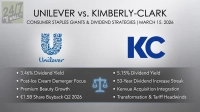
The Q1 2026 declaration lifted the quarterly rate to $1.28 from $1.26, extending Kimberly-Clark’s growth streak to 53 consecutive years of annual increases. At the current price of $110.06, that puts the trailing dividend yield at 5%, well above the broader market and competitive with investment-grade corporate bonds.
The annualized run rate sits at $5.12 per share for 2026, up from $5.04 in 2025 and $4.88 in 2024. The progression has been remarkably mechanical: small, predictable raises that prioritize the streak over flash.
Why Retirees Are Worried: The Coverage Math
The case against Kimberly-Clark starts with one statistic that should make any dividend investor pause. In fiscal 2025, the company generated $1.639 billion in free cash flow against $1.660 billion in dividend payments. That’s a coverage ratio of 0.99x, the first time in a decade that free cash flow has not comfortably covered the distribution.
Historical context makes the deterioration look sharper. From 2016 through 2024, free cash flow coverage typically ran between 1.4x and 1.9x. The driver was capital intensity. Capital expenditures jumped to $1.138 billion in 2025 from $721 million in 2024, consuming 41% of operating cash flow, the highest ratio in the 10-year period.
Q1 2026 looks tighter still when isolated. Free cash flow of $321 million fell short of the $418 million dividend payment. Buybacks also pulled back hard: share repurchases dropped to $141 million in 2025 from $1.0 billion in 2024. Management is clearly prioritizing the dividend, which is exactly what raises the question of whether something has to give.

The Balance Sheet Counter-Argument
Here’s where the bear case starts breaking down. While free cash flow tightened, Kimberly-Clark used 2025 to materially strengthen its capital structure.
Shareholder equity rose to $1.502 billion at year-end 2025 from $840 million in 2024, a 79% jump. Total debt fell by $620 million to $7.296 billion. The debt-to-equity ratio improved from 9.42x to 4.86x in a single year. By the end of Q1 2026, equity had climbed further to $1.796 billion while total debt continued to drift down to $7.084 billion.
Retained earnings of $9.611 billion provide a substantial accumulated cushion. That’s the profile of a company simultaneously paying down debt, raising distributions, and reinvesting in capacity.

Q1 2026 Cash Flow Tells a Different Story
The single most underappreciated data point in this debate is the operating cash flow swing in the latest quarter. Q1 2026 operating cash flow came in at $745 million, up 128% year over year. That’s the kind of working capital release that doesn’t happen at companies on the verge of cash distress.
Earnings followed the same path. Adjusted EPS of $1.97 beat the $1.93 consensus, the fourth consecutive quarterly beat. Revenue of $4.163 billion topped expectations, and net income jumped 17% year over year to $665 million. The International Personal Care segment posted 9% revenue growth with operating profit up 22%.
CEO Mike Hsu framed the quarter directly: “Our first quarter results highlight the strength and resilience of the growth engine we’ve built through Powering Care…[and] we continue to generate meaningful cost savings that reinforce our strong financial foundation and enable us to invest in our exciting future.”
Dividend Scorecard
| Metric | Value | Assessment |
|---|---|---|
| Current Yield | 5% | Premium income |
| Consecutive Growth Years | 53 | Dividend Aristocrat tier |
| Payout Ratio (GAAP EPS) | ~67% | Elevated but workable |
| FCF Coverage (FY 2025) | 0.99x | Tight |
| Debt-to-Equity | 4.86x | Improving sharply |
| Beta | 0.302 | Low volatility |
| Latest Raise | $1.26 to $1.28 | On schedule |
Grade: B+
The free cash flow squeeze is real and worth monitoring, but balance sheet repair, the 27-year uninterrupted payment record, and the operating cash flow acceleration in Q1 2026 outweigh the trailing coverage concern. A pure A would require restored FCF coverage above 1.3x.
The Macro Backdrop Favors the Dividend
Retirees evaluating Kimberly-Clark aren’t doing so in a vacuum. The savings rate has compressed to 4% in Q1 2026 from 6% in Q1 2024, suggesting income-dependent households are drawing down reserves. Per-capita disposable income has climbed to $68,391, but Social Security receipts of $1.630 trillion now anchor retiree budgets more than ever.
Demand for Kimberly-Clark’s core categories has held up. Spending on the “Other” nondurable goods category, which captures personal care and household products, ran at $1,810.8 billion in May 2026 versus $1,714.6 billion in May 2025. Tissue, diapers, and feminine care are textbook recession-resistant categories, and the BEA data shows consumers continuing to spend on them through a softening savings environment.
The Kenvue Wild Card
Looming over everything is the pending $48.7 billion Kenvue (NYSE:KVUE) acquisition, which shareholders have already approved. Integration risk is real, but so is the strategic logic of combining Kimberly-Clark’s distribution muscle with Kenvue’s branded consumer health portfolio. The IFP joint venture with Suzano (NYSE:SUZ), expected to close mid-2026, further reshapes the asset base. Management has guided to organic sales growth of around 3% and double-digit adjusted EPS growth on a constant-currency basis for 2026.
What to Watch Next
The stock has come back to life. Shares are up nearly 8% year to date and more than 11% over the past month, recovering from a tough trailing 12 months that saw the stock fall over 15%. The analyst target sits at $114.80, modest upside from current levels, and the consensus skews toward Hold with nine Hold ratings against six Buy or Strong Buy ratings and just one Sell rating.
For retirees, the key signal posts are clear. First, watch full-year free cash flow coverage restore above 1.2x as the elevated capex cycle normalizes. Second, watch the Kenvue integration cadence for evidence that combined cash flow can fund a larger dividend base. Third, keep an eye on the quarterly raise in early 2027. A skipped or token increase would break the rhythm in a way the bond market would notice immediately.
The 80% payout headline is doing more rhetorical work than the underlying numbers justify. A company actively deleveraging, growing equity at double-digit rates, beating earnings four quarters in a row, and operating in categories with documented stable demand is a Dividend Aristocrat navigating a heavy CapEx cycle while keeping the streak intact.
Contact [email protected] for any questions or corrections.
Joel South covers large-cap stocks, dividend investing, and major market trends, with a focus on earnings analysis, valuation, and turning complex data into actionable insights for investors.
He brings more than 15 years of experience as an investor and financial journalist, including 12 years at The Motley Fool, where he served as an investment analyst, Bureau Chief, and later led the Fool.com investing news desk. He has also co-hosted an investing podcast and appeared across TV and radio discussing market trends.