Forget Tesla: Why Smart Money Is Ditching Tesla To Buy Apple Stock
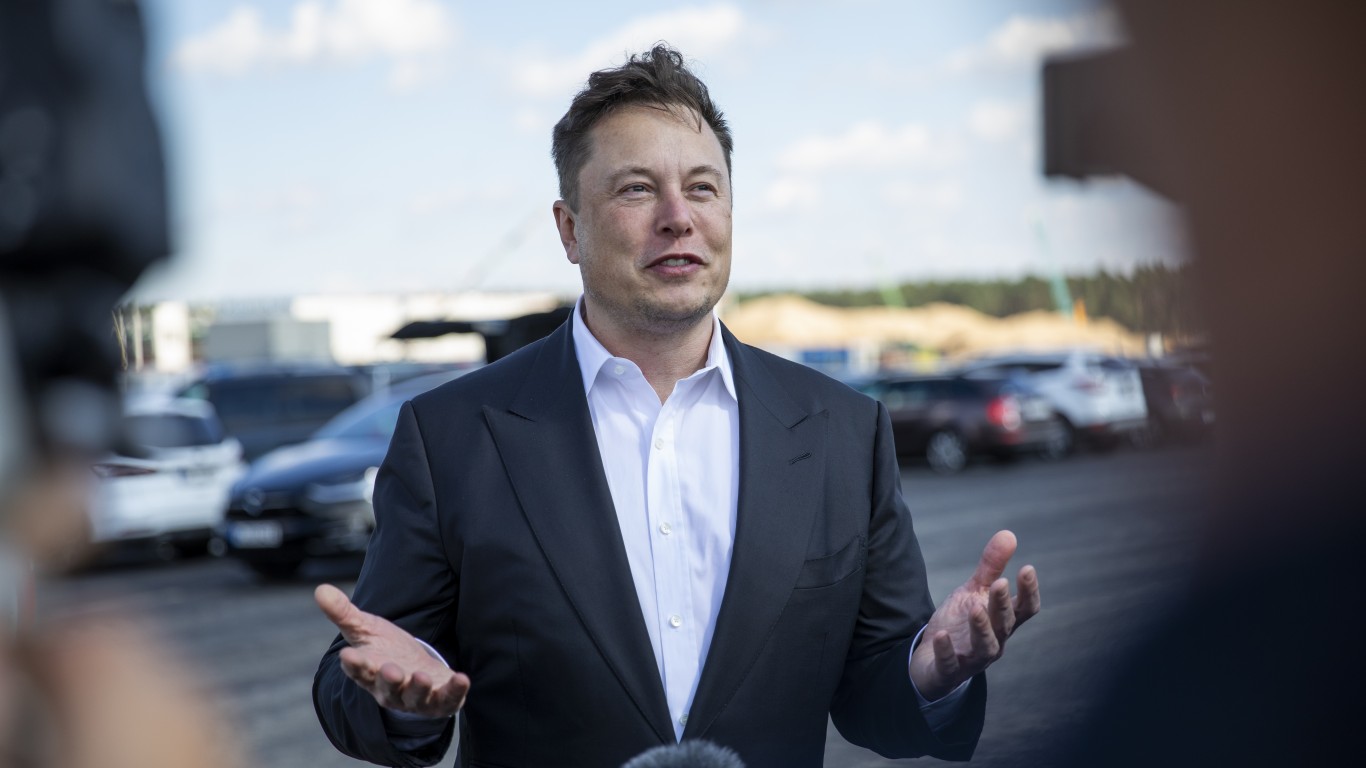
Tesla is once again the ticker every headline is chasing, riding a 10.22% one-week rip on robotaxi buzz and Optimus promises. But here’s what you should actually be watching. The Tesla (NASDAQ:TSLA | TSLA Price Prediction) story requires you to…

Tesla is once again the ticker every headline is chasing, riding a 10.22% one-week rip on robotaxi buzz and Optimus promises. But here’s what you should actually be watching.
The Tesla (NASDAQ:TSLA | TSLA Price Prediction) story requires you to pay 416x earnings for a company whose full-year 2025 revenue fell 2.93%, whose annual net income dropped 46.79%, and whose deliveries declined 9% for the year. That is a story stock trading at a growth stock’s multiple, and the story keeps slipping to the right. Prediction markets currently assign a 0.5% probability to a California robotaxi launch by June 30, 2026, and a 0.1% probability to an Optimus release in the same window. The composite sentiment score has dropped 17.67 points in the past 7 days. Tesla trades at $420.60, down 6.48% year-to-date, while the promises get pushed into 2026 and beyond.
Apple (NASDAQ:AAPL) is the cash machine hiding in plain sight while everyone stares at Cybercab renderings. Three reasons the smart money is quietly stacking Apple.
1. Valuation Sanity on a Proven Business
Apple trades at roughly 38x earnings. Tesla trades at 416x. You are paying nearly ten times less per dollar of earnings for a business generating a 171.4% return on equity and a 32.0% operating margin, compared with Tesla’s 4.6% operating margin and 4.9% ROE. That premium leaves little margin for a robotaxi fleet that regulators have not approved.
2. A Capital Return Machine Tesla Cannot Match
Apple’s board just authorized a fresh $100 billion buyback and lifted the dividend 4%. In fiscal 2025, Apple repurchased $90.71 billion of its own stock and returned roughly $32 billion to shareholders in Q1 26 alone. Tesla offers no dividend and no buyback. For an investor who wants cash flowing back to them rather than into humanoid robot production lines, this is not close.
3. Real Growth Happening Now
Apple just posted its 8th consecutive EPS beat: $2.01 versus $1.94 consensus on $111.18 billion in revenue, up 16.6% year over year. iPhone revenue hit $56.99 billion on what Tim Cook called “extraordinary demand for the iPhone 17 lineup“. Services set another all-time record at $30.98 billion. Every geographic segment posted double-digit growth. Greater China alone surged to $25.53 billion in Q1 26 from $18.51 billion the prior year. Meanwhile Tesla’s automotive revenue fell 11% in Q4 25.
Bank of America reiterated its Buy with a $380 price target, calling Apple’s AI reset “underappreciated.” Apple shares are up 41.6% over the past year and 1,225.63% over the past decade. This is a compounder with 2.5 billion active devices and a Services annuity that keeps hitting records.
For investors weighing story-driven promises against demonstrated cash generation, the contrast between the two names is worth tracking.
Contact [email protected] for any questions or corrections.
Alex Sirois is a financial writer with experience spanning both retail and institutional investing. He has written for InvestorPlace and held roles at BNY Mellon and Bernstein, giving him a perspective that bridges Main Street portfolios and Wall Street analysis.
Alex holds an MBA from George Washington University and has built his career across multiple industries, including e-commerce, education, and translation — a breadth of experience that informs how he breaks down complex financial topics for everyday investors. His writing is conversational, actionable, and grounded in long-term, buy-and-hold investing principles.
At 247 Wall St., Alex focuses on delivering analysis that is both accessible and useful, with a clear emphasis on helping readers make more informed decisions with their money.