Why I Can’t Stop Buying Meta as Mark Zuckerberg Prepares to Hijack Polymarket and Kalshi
I keep buying Meta. Every paycheck, every dip, every time the crowd convinces itself the AI buildout has gone too far, I add more to Meta Platforms (NASDAQ:META | META Price Prediction), and I have not slowed down at $550.25.The…

This post may contain links from our sponsors and affiliates, and Flywheel Publishing may receive compensation for actions taken through them.

I keep buying Meta. Every paycheck, every dip, every time the crowd convinces itself the AI buildout has gone too far, I add more to Meta Platforms (NASDAQ:META | META Price Prediction), and I have not slowed down at $550.25.
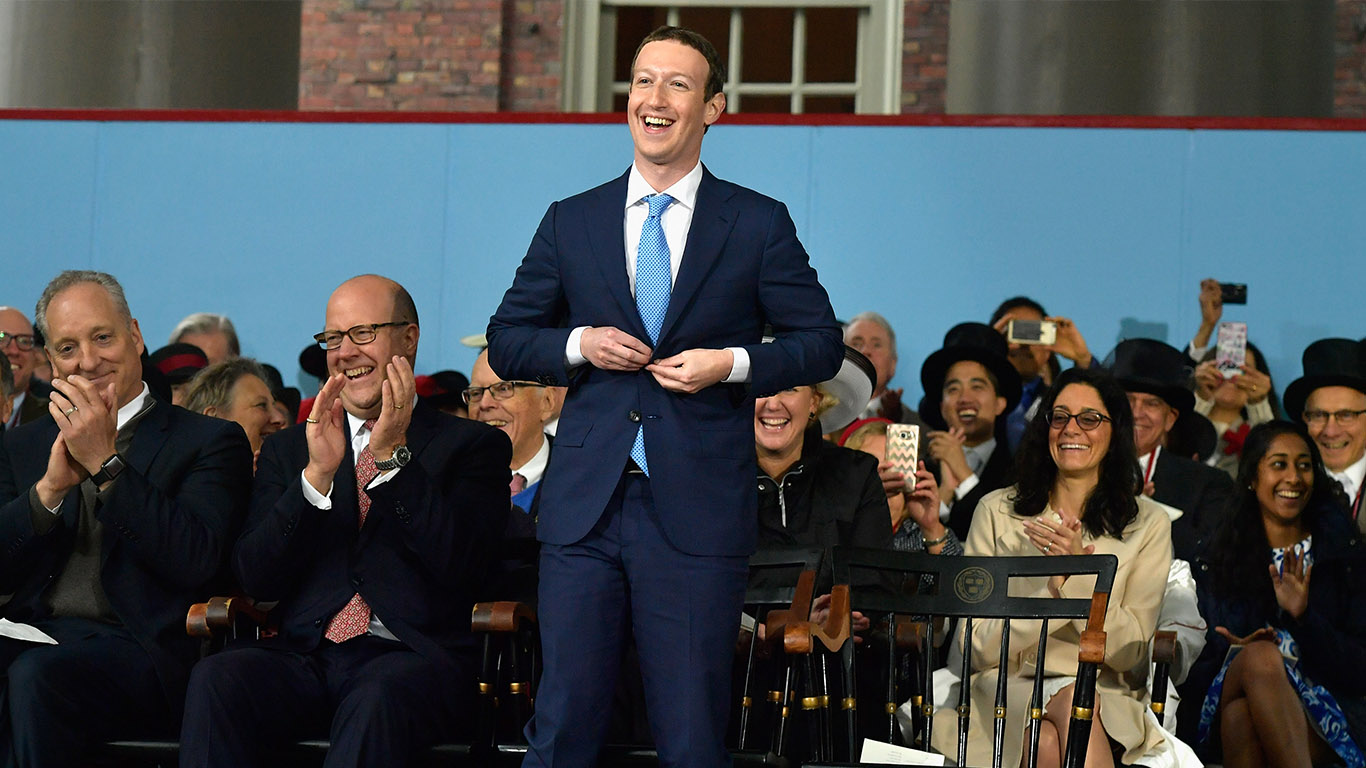
The reason is plain. Mark Zuckerberg has built the most profitable attention machine in modern business, and he is about to bolt a prediction market on top of it. Zuckerberg has ordered senior executives to explore partnerships with Polymarket and Kalshi while Meta quietly test-builds a competing standalone app codenamed Arena, designed around a video-game-style points system targeting the 18-to-34 demographic. Combined prediction market trading volume has scaled past $130 billion this year. Meta sits on 3.56 billion daily active people across Facebook, Instagram, WhatsApp, and Threads. Pairing those two facts is what keeps my finger on the buy button.
The Data Behind the Conviction
Start with the core business. Q1 2026 revenue hit $56.31 billion, up 33.1% YoY, with EPS of $10.44 against a $6.66 consensus, a 56.79% beat and the fifth straight quarter Meta cleared the bar. Ad impressions rose 19% YoY and average price per ad rose 12%, which tells me advertisers are paying more for inventory that is also expanding. That is a pricing engine working in both directions at once.
The profitability stack is rare. Gross margin sits at 81.99%, operating margin at 41.44%, return on equity at 30.24%, and return on invested capital at 20.69%. Debt-to-equity is 0.39 and interest coverage is 71.48x. This is a fortress paying a $0.53 quarterly dividend while generating $32.23 billion of operating cash flow in a single quarter.
Then there is the price. META trades at a P/E of 20 with shares down 16.5% year-to-date and 23.97% over one year from $723.76. The 52-week high was $793.65. For a company guiding Q2 2026 revenue to $58 to $61 billion, paying 20 times earnings looks like a gift the market handed me because it is squeamish about capex.
The Risk I Actually Lose Sleep Over
Capex. Full-year 2026 capex was raised to $125 to $145 billion, up from prior guidance of $115 to $135 billion, to feed Meta Superintelligence Labs. Reality Labs lost $4.03 billion in Q1 alone and $19.2 billion across 2025. If AI returns arrive late or the EU and U.S. youth litigation lands hard in 2026 trials, free cash flow compresses and the stock gets punished again.
I have weighed it. Operating cash flow ran $115.80 billion in 2025, buybacks hit $26.25 billion, and management still guides 2026 operating income above 2025 levels. Zuckerberg called Q1 a milestone tied to “the release of our first model from Meta Superintelligence Labs” and said the company is “on track to deliver personal superintelligence to billions of people.” I would rather own the company funding the next decade than one defending the last one.
Why the Buy Button Stays Active
Three and a half billion daily users. A 41% operating margin. A 20 P/E on five straight earnings beats. A dividend that just started compounding. And a founder-CEO preparing to wire prediction markets into the same feed that already prints $55.02 billion of quarterly ad revenue. Bears can keep arguing about capex while I keep buying the cash machine paying for it.
Contact [email protected] for any questions or corrections.
Alex Sirois is a financial writer with experience spanning both retail and institutional investing. He has written for InvestorPlace and held roles at BNY Mellon and Bernstein, giving him a perspective that bridges Main Street portfolios and Wall Street analysis.
Alex holds an MBA from George Washington University and has built his career across multiple industries, including e-commerce, education, and translation — a breadth of experience that informs how he breaks down complex financial topics for everyday investors. His writing is conversational, actionable, and grounded in long-term, buy-and-hold investing principles.
At 247 Wall St., Alex focuses on delivering analysis that is both accessible and useful, with a clear emphasis on helping readers make more informed decisions with their money.