He Won $50,000 at Rodeos After Filing for Social Security. The IRS Asked Whether He Was Having Fun or Running a Business.
A retiree pockets $50,000 in rodeo prize money and files it as income, but the IRS and Social Security are asking a very different question about how he spent his summer.

This post may contain links from our sponsors and affiliates, and Flywheel Publishing may receive compensation for actions taken through them.
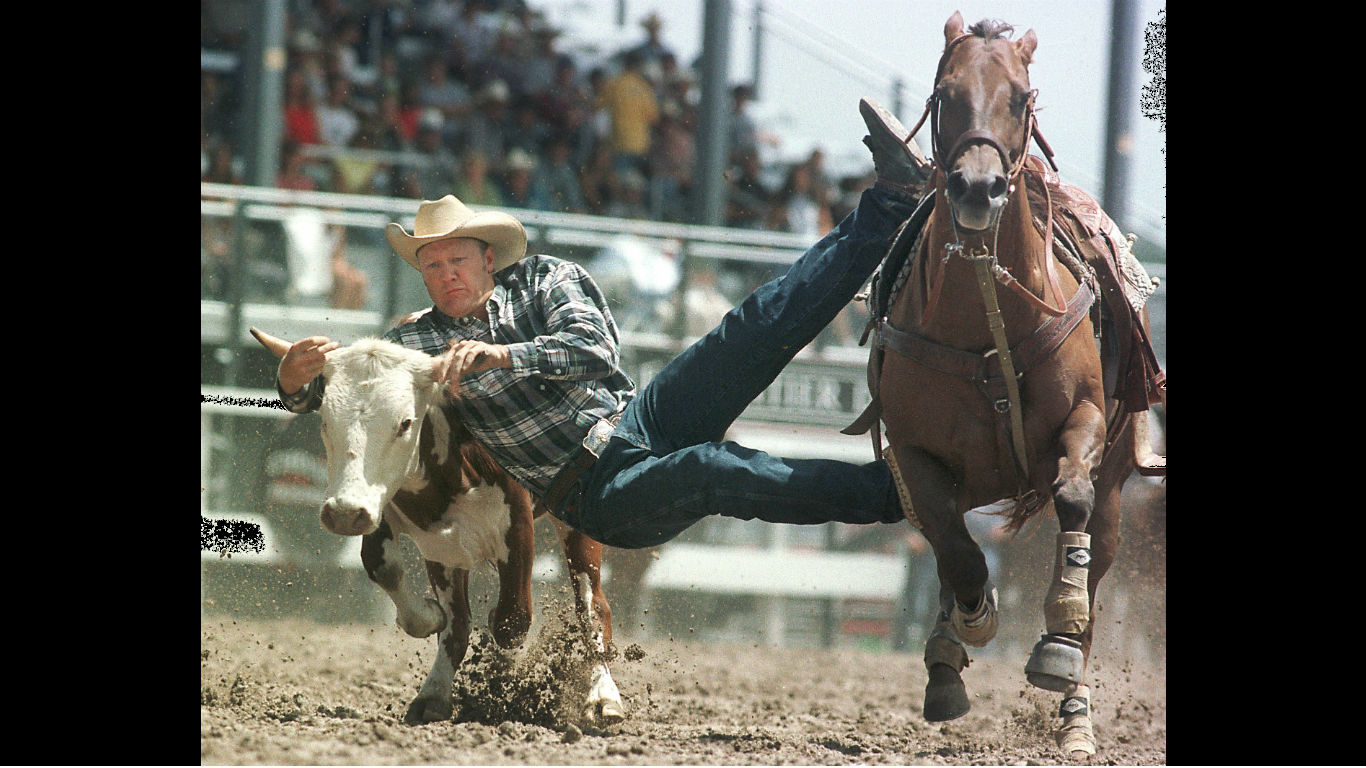
Picture a 63-year-old who filed for Social Security last year, still fit enough to rope a calf, and spent the summer driving a truck and trailer from one weekend rodeo to the next. By fall, the buckles and check stubs added up to roughly $50,000 in prize money. He knew the winnings were taxable. What he did not know was whether the IRS would view his summer as recreation or a business, and whether Social Security would count the resulting income as earnings.
That question sounds philosophical. For Social Security purposes, it can be worth thousands of dollars. For someone collecting benefits before full retirement age (FRA), the answer depends less on the size of the prizes than on the activity that produced them.
Hobby or Business: The Line That Moves the Money
Prize money is taxable either way. What changes is whether it counts as net self-employment earnings, and that is the hinge for Social Security’s earnings test. If the rodeo season is a recreational hobby, the winnings are taxable income but are not self-employment earnings. They generally do not count against the earnings test for people who claim before FRA.
If the same season is a profit-motivated business, the picture flips. The winnings become business receipts. After allowable business expenses are deducted, the net profit is subject to self-employment tax and counts under the Social Security earnings test. The IRS looks at the whole pattern, not one factor. The core questions include:
- Profit motive. Are you competing with a genuine intention of making money, or mostly for enjoyment and camaraderie?
- Businesslike operation. Do you keep books, track entry fees and travel, and separate rodeo money from household money?
- Expertise and effort. Have you trained seriously, sought professional advice, or built your schedule around competitions?
- History of income and losses. Have you produced profits over time, or accumulated losses with little change in how you operate?
- Personal and financial circumstances. Do you depend on the income, and how large a role do recreation and personal pleasure play?
Two people can win the same $50,000 and land on opposite sides of that line. A weekend competitor who enters a handful of local events may look like a hobbyist. A systematic competitor with sponsors, a travel calendar, and organized financial records may look like a business.
Why This Can Cost More Than the Tax
For someone below FRA who is already drawing benefits, the earnings test is the piece most people underestimate. In 2026, someone below full retirement age for the entire year can earn $24,480 before Social Security begins withholding $1 in benefits for every $2 above the limit.
Hobby prize money generally sits outside that calculation. Net profit from a rodeo business does not. If the competitor cleared $50,000 after expenses and had no other earnings, he would be $25,520 over the limit, potentially causing $12,760 in benefits to be withheld. The prize total is only the starting point; deductible business expenses help determine the amount Social Security counts.
Those withheld benefits are not necessarily gone forever. Social Security recalculates the monthly benefit at FRA to give credit for months in which checks were withheld. But the cash-flow loss arrives now, during the season in which the retiree expected both the prizes and the monthly checks. Whatever the classification, taxable income from the activity can also cause more Social Security benefits to become federally taxable. A successful rodeo season can therefore affect the tax return even when it does not trigger the earnings test.
What to Do Before Next Season
The hardest mistake to undo is assuming the prize designation settles the matter. It does not. The IRS looks at how the activity is conducted, while Social Security looks at whether it produced wages or net self-employment earnings. Before entering the next season:
- Ask a tax preparer how the activity should be reported and which expenses qualify as business deductions. Entry fees, travel, equipment, and horse-related costs do not automatically become deductible merely because prize money was won.
- If the activity produces self-employment income, estimate the net profit and report the expected earnings to Social Security. Update that estimate if the season turns out substantially better or worse than planned.
- If you are approaching FRA, account for the timing. The earnings test ends beginning with the month you reach full retirement age, although the tax treatment of the income does not change.
The real question is not whether the prize money is income. It is whether the rodeo is recreation or work. For someone who filed for Social Security early, that distinction can change both the tax return and the checks arriving each month.
Contact [email protected] for any questions or corrections.
Gerelyn Terzo is the author of dividend investing handbook "Dividend Investing Strategies: How to Have Your Cake & Eat It Too." A veteran financial journalist, she covers agri-finance for outlets like Global AgInvesting and the broader stock market and personal finance for 24/7 Wall Street. She began at CNBC and later helped launch Fox Business in New York. Gerelyn currently resides in Woodland Park, Colorado and dabbles in nature photography as a hobby.