Nvidia’s Bold New Bet on AI Neoclouds: Brilliant Platform Strategy or Latest Sign of an AI Bubble?
The AI infrastructure race has entered a new phase. Until now, Nvidia‘s (NASDAQ:NVDA | NVDA Price Prediction) growth has depended largely on selling ever-more expensive GPUs to hyperscalers and AI cloud providers willing to spend billions of dollars building data…

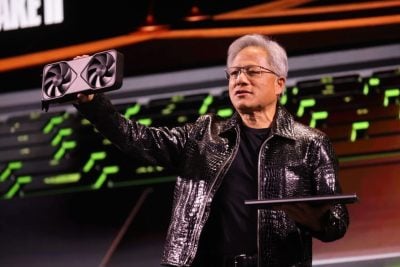
The AI infrastructure race has entered a new phase. Until now, Nvidia‘s (NASDAQ:NVDA | NVDA Price Prediction) growth has depended largely on selling ever-more expensive GPUs to hyperscalers and AI cloud providers willing to spend billions of dollars building data centers.
But as AI shifts from training large language models to serving billions of inference requests every day, the biggest constraint is no longer demand — it’s financing. Even companies with committed customers often struggle to secure enough capital to build AI factories fast enough. Nvidia’s newest initiative attempts to solve that bottleneck while giving itself an entirely new revenue stream.
Nvidia Is Becoming More Than a Chip Supplier
According to Nvidia’s July 1 blog post and comments from CFO Colette Kress, the company is launching an AI Compute Partnership that pairs revenue-sharing with credit support. Instead of requiring AI cloud providers to fund massive GPU purchases upfront, Nvidia helps unlock access to infrastructure — including Grace Blackwell GB300 systems — and then earns both its traditional hardware revenue and a share of the cloud revenue generated from that capacity.
The first participants illustrate Nvidia’s ambition:
| Partner | Planned Scale |
| SharonAI (NASDAQ:SHAZ) | Up to 40,000 GPUs |
| Firmus Technologies | Up to 170,000 GPUs in Indonesia |
Those AI factories will target AI-native companies including Baseten, Fireworks AI, Together AI, and enterprise inference workloads.
This goes well beyond Nvidia’s previous equity investments in companies like CoreWeave (NASDAQ:CRWV) and Nebius Group (NASDAQ:NBIS). Nvidia now has financial incentives tied directly to how much AI compute customers actually consume.
Why This Could Be Bullish for Nvidia
The financial appeal is obvious. Traditional GPU sales are cyclical. Customers spend billions, then pause before the next hardware generation. Revenue sharing changes that equation by adding an ongoing stream of usage-based income on top of hardware sales.
That’s an attractive proposition for a company that generated $194 billion in fiscal 2026 data center revenue while producing record free cash flow. If inference workloads expand as Nvidia expects, every token processed could become another source of recurring revenue.
The strategy also strengthens Nvidia’s competitive moat. Google, Amazon (NASDAQ:AMZN), Microsoft (NASDAQ:MSFT), and other hyperscalers continue investing in custom AI chips that bypass Nvidia entirely for some workloads. Helping independent neocloud providers finance Nvidia-based infrastructure keeps a broader ecosystem alive rather than concentrating AI computing inside a handful of technology giants.
Perhaps most importantly, the program addresses a genuine market friction. As Kress noted, many startups already have customer demand but cannot secure financing quickly enough to build the necessary infrastructure. Nvidia isn’t creating demand — it is helping existing demand reach production sooner.
Is Nvidia the New GE Capital?
Granted, skeptics aren’t inventing concerns out of thin air. The arrangement has echoes of past vendor-financing programs that fueled telecom bubbles and, to a lesser extent, the former GE Capital’s expansion into financing customers purchasing GE equipment.
If AI cloud utilization falls, Nvidia’s revenue-sharing income declines alongside it. Counterparty risk also increases if smaller neocloud providers struggle financially. And if revenue-sharing becomes standard across the industry, hardware margins could eventually face pressure.
Yet there is one important distinction. The telecom bubble often financed speculative network capacity before customers existed. GE Capital’s program ended up exposing the company to extreme risks during the 2008 financial crisis, and was eventually wound down during the General Electric corporate restructuring.
In contrast, Nvidia’s program targets AI inference demand that is already growing rapidly across enterprises deploying agents, copilots and production AI applications. That’s a much healthier starting point than simply financing excess capacity.
The market’s muted reaction — with shares dipping modestly following the announcement — suggests investors are weighing both possibilities rather than embracing either narrative outright.
Key Takeaway
In short, Nvidia looks less like it’s becoming the GE Capital of AI and more like it’s evolving into the platform owner of AI infrastructure.
The risks deserve monitoring, particularly if financing commitments grow faster than actual AI usage. But today’s program appears designed to remove financing bottlenecks rather than manufacture demand. Ultimately, that’s a bullish difference.
Nvidia isn’t just selling picks and shovels anymore. It’s positioning itself to earn royalties on the gold rush itself. As long as AI inference continues expanding at the pace management expects, that may prove to be one of the company’s most valuable strategic moves yet.
Contact [email protected] for any questions or corrections.
After two decades of patrolling the dark corners of suburbia as a police officer, Rich Duprey hung up his badge and gun to begin writing full time about stocks and investing. For the past 20 years, he’s been cruising the markets looking for companies to lock up as long-term holdings in a portfolio while writing extensively on the broad sectors of consumer goods, technology, and industrials. Because his experience isn’t from the typical financial analyst track, Rich is able to break down complex topics into understandable and useful action points for the average investor. His writings have appeared on The Motley Fool, InvestorPlace, Yahoo! Finance, Money Morning, and, of course, 24/7 Wall St. He has been featured in both U.S. and international publications, including MarketWatch, Financial Times, Forbes, Fast Company, and USA Today.