Rallying Near Highs: Is TSM a Buy, Sell, or Hold?
At $455.10, Taiwan Semiconductor Manufacturing (NYSE:TSM | TSM Price Prediction) looks compelling. The stock sits within striking distance of its $476.79 52-week high after a blistering run, and the question is whether the AI foundry trade still has room or…

This post may contain links from our sponsors and affiliates, and Flywheel Publishing may receive compensation for actions taken through them.
At $455.10, Taiwan Semiconductor Manufacturing (NYSE:TSM | TSM Price Prediction) looks compelling. The stock sits within striking distance of its $476.79 52-week high after a blistering run, and the question is whether the AI foundry trade still has room or the easy money is gone.
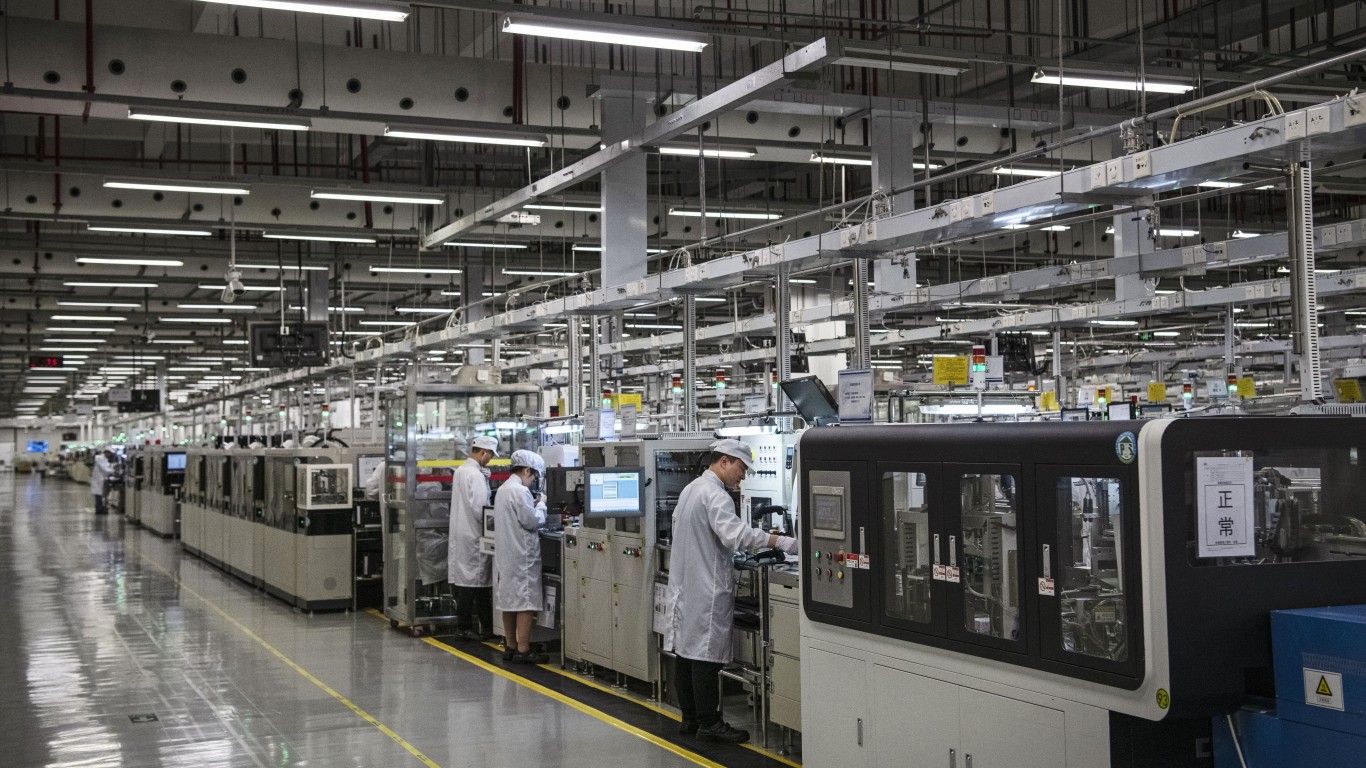
TSM is the world’s largest pure-play semiconductor foundry, manufacturing leading-edge logic chips that power NVIDIA accelerators, Apple silicon, and AMD processors. The stock has compounded on AI infrastructure spending, with revenue accelerating from 21.45% year-over-year growth in Q1 2026 to 30.1% in May.
Shares have more than doubled in a year, and a recent patent complaint from Marlin Semiconductor briefly rattled the stock before buyers stepped back in.

Why the AI Foundry Trade Still Has Legs
The bull case starts with operating leverage. Q1 net income grew 43.82% year-over-year against revenue growth of 21.45%, and May’s 30.1% top-line growth suggests CEO C.C. Wei’s 30%+ full-year guidance is achievable. Cumulative January through May revenue of NT$1.96 trillion tracks that target cleanly.
Valuation looks reasonable for this growth profile. TSM trades at a forward P/E of 28 with 58.1% operating margins and 36.2% return on equity. The U.S. investment tax credit on Arizona capacity stepping up from 25% to 35% on January 1 adds a structural tailwind to margins. Polymarket traders assign a 93% probability that Q2 revenue clears $40 billion, up from 51% just five days earlier.
The Risks Bulls Are Glossing Over
Shares are up 101.26% over twelve months and 50.51% year to date. A lot is priced in. Q2 earnings reactions were brutal: shares fell 6.69% the day after and 5.36% over the following week. Insider activity tells a similar story, with 103 recent transactions skewing toward net selling.
Concentration risk is real. Top 10 customers represent 84% of accounts receivable, leaving TSM exposed to any AI capex pause. The Marlin Semiconductor ITC complaint introduces tail risk, and Polymarket pricing for Q2 gross margins skews toward compression, with only a 70% chance of clearing that level.
The Case for Sitting on Hands
Analyst and AI targets imply only single-digit upside from here. The consensus target sits at $478.95, roughly 6.99% above the current quote. That is a thin margin for a stock with 1.25 beta at a 52-week high. Earnings will set the next leg, with Q2 results landing in mid-July.

What the Numbers Actually Show
TSM currently trades at $455.10 against a consensus analyst target of $478.95, implying roughly 6.99% upside. The 19 covering analysts break down as follows:
- Strong Buy: 5
- Buy: 12
- Hold: 2
- Sell: 0
Shares trade at a trailing P/E of 37 and forward P/E of 28, with the stock up 50.51% year to date. That dwarfs the S&P 500’s mid-single-digit YTD return, meaningful outperformance that frames how much expectation is baked in.
Why $455 Still Works
At $455.10, Taiwan Semiconductor screens favorably on the data.
The path to appreciation runs through the Q2 report in mid-July and the August through October monthly revenue cadence. If Wei holds the 30% full-year growth line, forward earnings reset higher and the 28x forward multiple looks cheap against a 58.4% earnings growth rate.

Risk/reward at this entry skews favorably. Base case modeling points to $502.24, a bull case at $525, and a bear case at $410.74. The thesis breaks if AI capex visibly slows, if the Marlin ITC matter escalates into an import ban, or if NT dollar strength compresses margins below the 67% floor traders are pricing.
TSM remains the single most important node in the AI supply chain, and at 28x forward earnings with 30% growth, the setup looks constructive for long-term holders on the data.
Contact [email protected] for any questions or corrections.
Vandita Jadeja is a financial publisher with over a decade of experience writing about financial topics, including investment, savings, retirement, insurance and banking. Vandita is a Chartered Accountant who loves to debunk financial concepts for readers.
Her work has appeared on sites that include The Motley Fool, InvestorPlace, and Benzinga. She covers investing and focuses on stock picks and price prediction for 24/7 Wall St.
When not looking for the next stock investment opportunity, she can be found traveling, reading, chasing sunsets and enjoying her iced latte.