3 Utility ETFs to Buy Now as AI Data Centers Trigger a 1970s-Scale Power Buildout
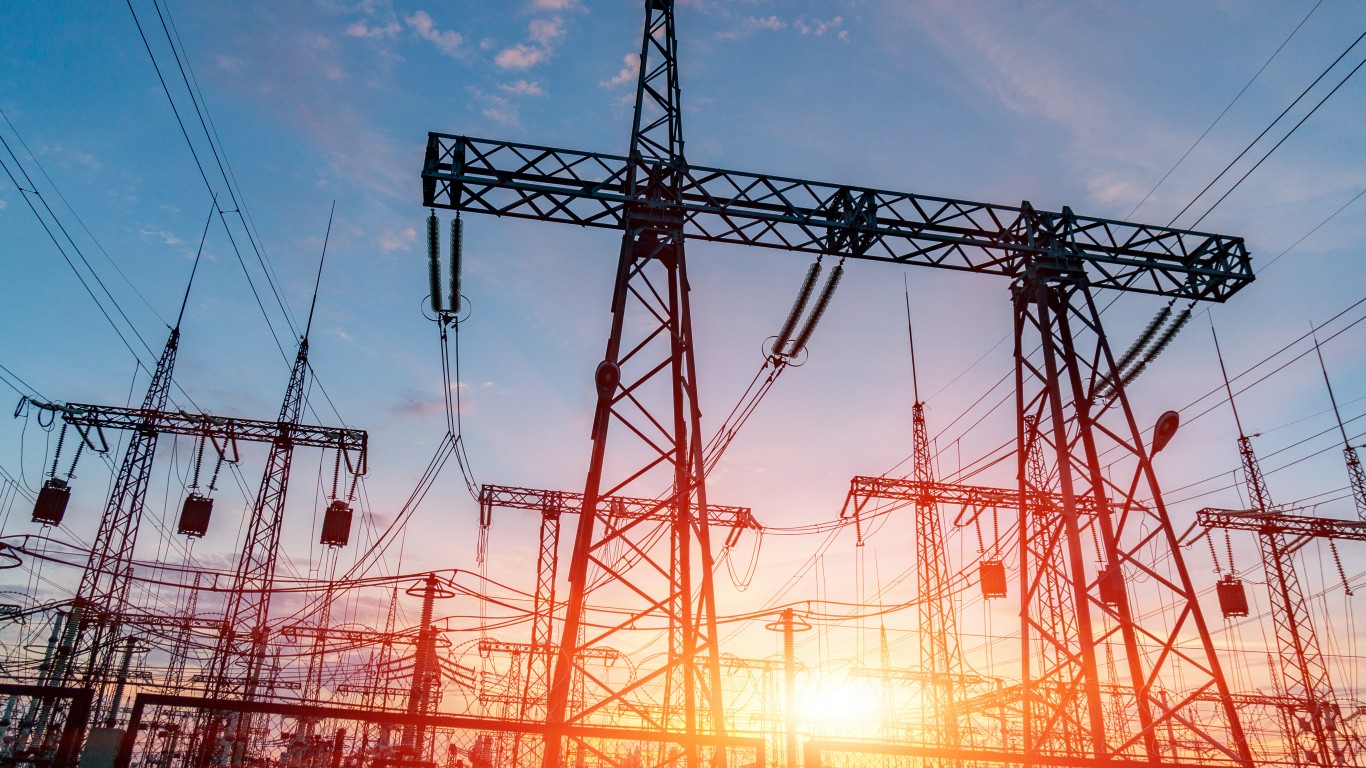
US electricity demand grew roughly flat for a decade. That ended once hyperscalers began signing twenty-year power purchase agreements to feed AI training clusters. Utilities are now planning generation and transmission build-outs on a scale not seen since the 1970s,…


US electricity demand grew roughly flat for a decade. That ended once hyperscalers began signing twenty-year power purchase agreements to feed AI training clusters. Utilities are now planning generation and transmission build-outs on a scale not seen since the 1970s, and three ETFs offer different ways to own that capex cycle: Utilities Select Sector SPDR Fund (NYSEARCA:XLU), Vanguard Utilities Index Fund (NYSEARCA:VPU), and First Trust Utilities AlphaDEX Fund (NYSEARCA:FXU).
Each fund holds US utilities with meaningfully different construction. One is a mega-cap, cap-weighted concentrate. One is a broad index spanning large, mid, and small names. One screens on growth and value factors rather than market cap. The right fit depends on whether the investor wants the names doing the most generation spending, the widest spread of regulated rate bases, or a tilt toward utilities scoring best on factor models.
Why the Buildout Is Happening Now
The EIA’s Annual Energy Outlook 2026 projects total US installed generating capacity rising between 50% and 90% by 2050 across modeled cases, with data center server load a major incremental contributor. Grid Strategies’ analysis, cited by Colorado’s Legislative Council, names data centers as the largest driver of US electricity demand. PJM, the grid covering the mid-Atlantic and Midwest, hosts the nation’s highest concentration of data centers and is already running fast-track interconnection processes.
Capital response is evident in transactions: Constellation Energy closed a $16.4 billion acquisition of Calpine to assemble a 60-gigawatt clean-energy platform aimed at hyperscaler contracts, and Vistra has pushed deeper into long-term power deals with companies like Meta. Vistra’s 2025 framing was that electricity demand is “trending like it’s the 1990s, fueled by AI and crypto”.
XLU: The Lowest-Cost Way to Own the Mega-Caps Doing the Spending
The XLU tracks the Utilities Select Sector of the S&P 500, comprising 34 companies, with a lean 0.08% expense ratio. This fund manages a massive $22.55 billion in assets, making it the largest pool in the category, while delivering a solid trailing yield of roughly 2.6%.
The concentration is the point. NextEra Energy alone accounts for 14% of the portfolio, with Southern Company at 7%, Duke Energy at 7%, and Constellation Energy at 6%. The top ten represent 58% of net assets. This roster has the balance-sheet capacity to permit nuclear restarts, sign hyperscaler PPAs, and absorb multi-billion-dollar transmission upgrades. Constellation and Exelon together provide direct nuclear exposure, which matters because PJM’s January 2026 capacity auction favored existing baseload plants.
This fund has climbed 9% year-to-date and 16% over the past year, all while maintaining a low beta of 0.59. The main trade-off here is single-name risk, as a guidance cut at NextEra or a regulatory hurdle at Duke would impact this fund much more than a broader competitor. However, for any investor betting on the AI capex cycle, that intense concentration is actually a core feature.
VPU: Broader Diversification at Nearly the Same Cost
The VPU follows the MSCI US IMI Utilities 25/50 Index, digging deep into mid-cap and small-cap utility players rather than cutting off at the S&P 500. This fund packs 75 positions, compared to XLU’s 34, all for a tiny 0.09% expense ratio. It currently manages roughly $8.52 billion in assets and provides a competitive trailing yield sitting right around 2.6%.
The extra names meaningfully broaden exposure. Smaller regional utilities, water companies, and independent power producers sit further down the cap structure and can be levered to specific regional load growth, such as the Virginia data center corridor or the Texas ERCOT buildout supported by the state’s $10 billion Texas Energy Fund. VPU is up 9% year-to-date and 16% over the past year, with a beta of 0.60. The smaller positions somewhat dilute the mega-cap winners, which is the point of holding them.
FXU: The Smart-Beta Alternative That Has Outrun the Cap-Weighted Funds
This fund filters utility stocks through growth and value metrics and then tiers the winners so that smaller, high-scoring companies carry just as much weight as the massive incumbents. You will find that top holdings such as Pinnacle West, Eversource, UGI, Consolidated Edison, and PG&E each account for about 4% of the portfolio. Meanwhile, NextEra, which completely dominates the XLU, is scaled back to a lean 1% position here.
The factor tilt has worked in this cycle. FXU is up 12% year-to-date and 21% over the past year, against XLU’s mid-teens. The fund holds 42 positions and includes waste and water names like Waste Management and Republic Services, on the logic that environmental services are utility-adjacent infrastructure.
The FXU carries a 0.61% expense ratio, which is about seven times the cost of the XLU or VPU, while offering a lower yield of 2.1%. With $835.80 million in assets, liquidity remains functional but sits well below the levels seen in those two larger index funds. Ultimately, you are paying a premium for the bet that these growth-screened utility picks will continue to outperform the standard cap-weighted indices.
Choosing Between Them
For an investor looking to combine retirement income with AI capex exposure, the decision turns on how concentrated the bet should be on the largest operators. XLU is the cleanest income-plus-thesis fund: rock-bottom cost, the lowest beta of the three, and direct ownership of the mega-caps with the biggest power-purchase contracts. VPU is the choice for an investor uncomfortable with NextEra alone driving 14% of a position, willing to accept slightly lower returns for a wider net across 75 names. FXU is the satellite. The factor tilt has produced the strongest year-to-date return at 12%, but the higher expense ratio and lower yield make it harder to justify as a core holding.
A blended approach pairs XLU as the foundation, VPU as the breadth layer, and FXU as a smaller alpha sleeve. The Constellation, NextEra, and Vistra news flow driving utility sentiment scores into bullish territory at 0.637, 0.488, and 0.457, respectively, shows up in all three funds, in different proportions.
Contact [email protected] for any questions or corrections.
David Beren has been a Flywheel Publishing contributor since 2022. Writing for 24/7 Wall St. since 2023, David loves to write about topics of all shapes and sizes. As a technology expert, David focuses heavily on consumer electronics brands, automobiles, and general technology. He has previously written for LifeWire, formerly About.com. As a part-time freelance writer, David’s “day job” has been working on and leading social media for multiple Fortune 100 brands. David loves the flexibility of this field and its ability to reach customers exactly where they like to spend their time. Additionally, David previously published his own blog, TmoNews.com, which reached 3 million readers in its first year. In addition to freelance and social media work, David loves to spend time with his family and children and relive the glory days of video game consoles by playing any retro game console he can get his hands on.