Nuclear Power Is the Only Real Answer to AI Data Center Demand and These 3 ETFs Cover the Trade at Three Risk Levels
Power demand is the bottleneck of the AI buildout, and nuclear is the only zero-carbon source that can run a hyperscaler 24 hours a day without weather risk. Hyperscalers have already signed 20-year power purchase agreements with Constellation, Talen, and…

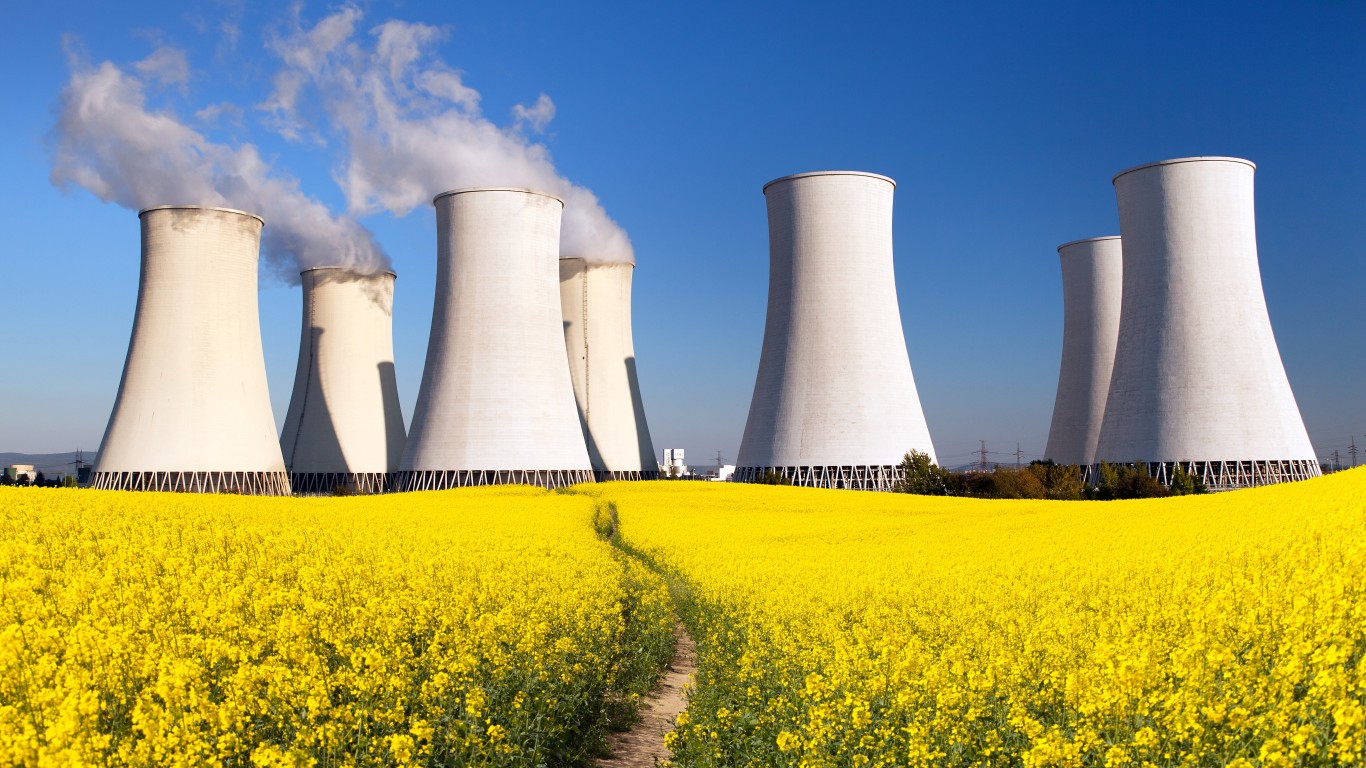
Power demand is the bottleneck of the AI buildout, and nuclear is the only zero-carbon source that can run a hyperscaler 24 hours a day without weather risk. Hyperscalers have already signed 20-year power purchase agreements with Constellation, Talen, and Vistra, while small modular reactor designs from NuScale and X-energy work through Nuclear Regulatory Commission review with Department of Energy backing. For investors who want to express that thesis through a single ticker rather than picking individual miners or utilities, three exchange-traded funds cover the trade at clearly different risk levels: the VanEck Uranium and Nuclear ETF (NYSEARCA:NLR), the Global X Uranium ETF (NYSE:URA), and the Sprott Uranium Miners ETF (NYSEARCA:URNM).
Each fund attacks the same secular story from a different angle. NLR pairs uranium miners with nuclear-tied utilities and leans conservative. URA is the broad uranium chain, tilted toward miners but with fuel-cycle and component names mixed in. URNM is the pure-play miner with the highest beta in the spot uranium market. Below is what each one actually owns, how it has traded, and which kind of investor it fits.
Why AI Power Demand Lands on Nuclear
For a decade, US electricity demand grew at roughly zero, which means that the regime is over. Lawrence Berkeley National Laboratory data center energy consumption rose by about 100 terawatt-hours between 2018 and 2023, lifting data centers from 1.9% to 4.4% of total US electricity use, and the same report projects that share to be between 6.7% and 12% by 2028. A single hyperscale facility can draw over a gigawatt of power, the load of roughly 750,000 homes.
Renewables can be built quickly, but cannot meet a 24/7 industrial load on their own. Goldman Sachs Asset Management frames nuclear as a slower-to-deploy but durable option, with new plant timelines stretching to 2030-2035 in best-case scenarios. That long lead time is exactly why uranium equities re-rate well before megawatts arrive: supply contracts, restart announcements, and SMR approvals all occur years before generation.
NLR: The Conservative Leg
The appeal of this fund lies in the fact that it actually owns the utilities that operate the reactors, rather than limiting itself to companies that extract uranium from the ground. That structural choice matters because utilities like Constellation and Vistra earn regulated and contracted megawatt‑hours, which smooths out the volatility that follows uranium spot price moves. Combine those steadier operators with a focused mix of miners and reactor‑component names, and the result becomes the lowest‑volatility way to hold the theme, a profile shaped by utility cash flows and fuel‑cycle diversification.
The fund holds 27 positions and runs $4.6 billion in assets at a 0.52% expense ratio, the cheapest of the three. The trailing yield is 2.7%, well above what a pure miner basket can produce, because regulated utilities pay real dividends. Total return tells the same story: about 8% over the past year and 145% over five years, with a milder drawdown than the miners during this June pullback, at 12% on the month.
The tradeoff with NLR is upside compression. When uranium spot prices rip, utility cash flows do not move in sync, so NLR will lag in a sharp miner rally. It is a fund for an investor who wants nuclear exposure without taking on commodity price beta.
URA: The Liquid Middle Ground
The appeal of this fund starts with its scale: it is the largest and most liquid uranium‑themed ETF in the U.S. market, holding 6.3 billion dollars in assets and reporting roughly 7.8 billion dollars in net assets in its April NPORT filing. Liquidity becomes a real advantage when sector flows turn, and this portfolio almost always trades at tighter spreads than its peers, a difference that shapes how uranium exposure behaves when volatility picks up.
Compositionally, URA is heavier on miners than NLR but reaches further down the chain than URNM, holding fuel processors, conversion and enrichment names, and reactor component suppliers alongside the big producers. That broader net is why it sits in the middle of the risk ladder. The expense ratio is 0.69%, the yield is 4.7% on a trailing basis, and one-year total return ran 18%, ahead of NLR but with a steeper one-month drop of 13%.
The catch is that URA is global by design. Holdings include Canadian, Kazakh, Australian, and Chinese names, introducing currency and jurisdictional risks that a US utility-heavy fund avoids. Investors comfortable with that tradeoff get the most liquid single-ticker expression of the uranium story.
URNM: The Aggressive Pure Play
The cleanest way to capture leverage to uranium spot prices comes from a portfolio built around producers and physical uranium rather than utilities, which is exactly how this fund is structured. Its top holdings are Cameco at 21%, followed by the Sprott Physical Uranium Trust at 14% and NexGen Energy at 13%, a trio that anchors its exposure directly to the commodity and the companies that move with it. The top ten names account for about 79% of net assets, a level of concentration that magnifies both gains and losses and defines the character of pure‑play uranium exposure and spot‑linked miner baskets.
That physical uranium sleeve is the structural feature worth understanding. When the spot price moves, URNM moves with it directly through the Sprott trust, on top of the operating leverage already baked into the miners. The fund runs $2 billion in assets at a 0.75% expense ratio across 30 holdings, with a trailing yield of 3.3%. The 52-week range of $43 to almost $85 against a current price near $53 tells the volatility story better than any beta number.
This is the fund that will lead a uranium rally and lead the drawdown when sentiment turns. Position size accordingly.
Picking Your Slot
An investor who believes the AI power thesis but does not want to ride uranium spot price swings should anchor with NLR. The utility exposure gives the fund a real dividend, lower drawdowns, and ownership of the companies actually selling power to Microsoft and Amazon under long-dated contracts.
The role this fund plays is straightforward: it suits an investor who wants more direct exposure to uranium while still valuing liquidity and breadth, landing comfortably between utilities and pure miners and covering the entire fuel cycle in a single position. It becomes the workhorse in a barbell, offering enough concentration to matter without drifting into the volatility profile of a pure commodity bet.
The higher‑octane option belongs in the part of a portfolio reserved for high‑conviction commodity trades, because the concentration, the physical uranium sleeve, and the absence of utility ballast create a structure that will outperform if uranium prices keep climbing and underperform sharply if they do not. Sizing it as a satellite rather than a core position is how most investors should treat it, and a blended allocation across all three becomes the cleanest way to express the nuclear‑for‑AI thesis without forcing a choice among risk tiers, a balance shaped by exposure mix and commodity sensitivity.
Contact [email protected] for any questions or corrections.
David Beren has been a Flywheel Publishing contributor since 2022. Writing for 24/7 Wall St. since 2023, David loves to write about topics of all shapes and sizes. As a technology expert, David focuses heavily on consumer electronics brands, automobiles, and general technology. He has previously written for LifeWire, formerly About.com. As a part-time freelance writer, David’s “day job” has been working on and leading social media for multiple Fortune 100 brands. David loves the flexibility of this field and its ability to reach customers exactly where they like to spend their time. Additionally, David previously published his own blog, TmoNews.com, which reached 3 million readers in its first year. In addition to freelance and social media work, David loves to spend time with his family and children and relive the glory days of video game consoles by playing any retro game console he can get his hands on.