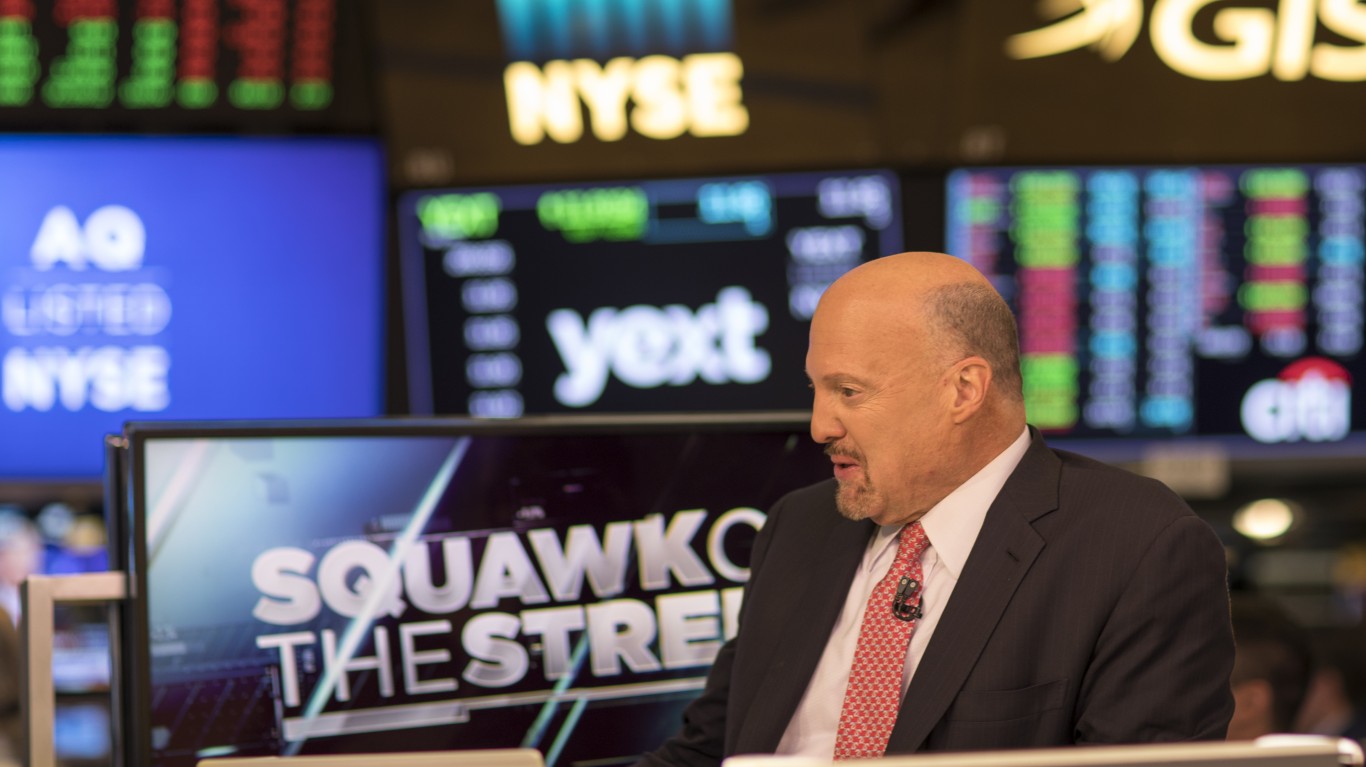
Jim Cramer Calls Biotech “The Hottest Group in the Market” as He Predicts “Deals Are Going to Be Flooding the Market”
On CNBC’s Mad Dash segment on Monday, July 6, 2026, Jim Cramer made one of his most bullish biotech calls in years, arguing that the sector could be entering a new wave of mergers and acquisitions as the regulatory environment…

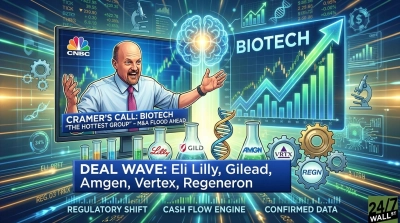
On CNBC’s Mad Dash segment on Monday, July 6, 2026, Jim Cramer made one of his most bullish biotech calls in years, arguing that the sector could be entering a new wave of mergers and acquisitions as the regulatory environment becomes more favorable for dealmaking.
“There is a move in biotech that we have not talked about at all that is really extraordinary, and particularly since the change at the head of the FDA,” Cramer said. “If you look at that chart, this is the group that’s the hottest group in the market.”
Cramer argued that takeover activity, which slowed under the previous administration after an Amgen acquisition nearly faced regulatory opposition, is poised to accelerate. Cramer noted that “we have now waited for so many companies because there have been so few takeovers under the previous administration because of an Amgen deal that was almost blocked,” and predicted that “these deals are going to be flooding the market according to my sources. And you want to be long biotech. I have not said that in ages.”
Why Eli Lilly Could Lead the Next Biotech Buying Spree
Eli Lilly (NYSE:LLY | LLY Price Prediction) is one of the primary acquirers driving biotech M&A activity, thanks to its strong cash flow. The numbers back that up. Lilly reported Q1 2026 revenue of $19.80 billion, up 55.5% year over year, with Mounjaro sales of $8.66 billion and Zepbound U.S. sales of $4.16 billion. Lilly also raised full-year revenue guidance to $82.0 billion to $85.0 billion.
CEO David Ricks told investors the company “continued investing in Lilly’s future growth through four acquisitions” in the quarter, snapping up Orna Therapeutics, Centessa Pharmaceuticals, Kelonia Therapeutics and Ajax Therapeutics.
Gilead Is Already Executing the Strategy Cramer Described
Gilead Sciences (NASDAQ:GILD) is running the playbook Cramer described. It closed the $7.8 billion Arcellx acquisition for Anito-cel in multiple myeloma and signed deals for Ouro Medicines ($1.675 billion upfront plus up to $500 million in milestones) and Tubulis.
CEO Daniel O’Day said Gilead is “adding potentially best-in-disease assets and platforms in oncology and inflammation.” The company expects roughly $11.5 billion in acquired IPR&D charges, which pushed non-GAAP EPS guidance to a loss of $(1.05) to $(0.65).
Amgen: The Deal That Changed the Biotech M&A Landscape
Amgen (NASDAQ:AMGN) posted Q1 2026 revenue of $8.62 billion, with 16 brands growing double digits, including IMDELLTRA at +219%. Its obesity candidate MariTide is advancing in multiple Phase 3 studies, keeping Amgen relevant in the category Lilly currently dominates.
Vertex and Regeneron: Confirmed-Data Franchises
Cramer’s M&A logic focuses on companies close to or already holding confirmed drug data that command inflated acquisition prices. Vertex Pharmaceuticals (NASDAQ:VRTX) fits that mold. CASGEVY and JOURNAVX drove more than 25% of quarterly growth, and Vertex completed its rolling BLA submission for povetacicept in IgA nephropathy, opening a fourth franchise.
Regeneron Pharmaceuticals (NASDAQ:REGN) is playing offense with capital returns, authorizing a new $3.0 billion share repurchase after buying back $803 million in Q1 2026. Dupixent global sales hit $4.88 billion, up 33%, even as EYLEA faces biosimilar pressure.
The Biotech Catalysts That Could Spark More Takeovers
Cramer’s thesis on biotech is that a friendlier regulatory backdrop could reopen the biotech acquisition market after years of subdued dealmaking. Companies with strong balance sheets, such as Eli Lilly and Gilead, are already actively acquiring promising drug developers, while mid-cap biotech firms with attractive late-stage assets could become the next takeover targets. If that trend continues, investors may begin valuing biotech companies for both their growth prospects and potential acquisition capabilities.
Contact [email protected] for any questions or corrections.
Thomas Richmond is a financial writer and content strategist with 5+ years of experience covering stocks and financial markets. He has published over 250 articles focused on individual stock analysis, helping investors better understand business fundamentals, stock valuations, and long-term opportunities.
Thomas previously served as a Content Lead at TIKR, a stock research platform, where he helped scale the company’s blog to hundreds of articles per month and contributed to a weekly newsletter reaching more than 100,000 investors.
He specializes in breaking down complex companies into clear, actionable insights for everyday investors, with a focus on fundamentals-driven research.
His work has also been featured on platforms including Seeking Alpha and Sure Dividend.
Outside of work, Thomas enjoys weight lifting and soccer.