TBPN’s John Coogan: “People Can’t Really Complain.” Here’s Why Blue Origin Is Worth $130 Billion.
Jeff Bezos spent a quarter-century building Blue Origin with his own money. Now, outside investors are finally getting a chance to get a seat at the table. During a recent TBPN discussion, John Coogan broke down Blue Origin’s reported $10…


Jeff Bezos spent a quarter-century building Blue Origin with his own money. Now, outside investors are finally getting a chance to get a seat at the table.
During a recent TBPN discussion, John Coogan broke down Blue Origin’s reported $10 billion fundraising round at a $130 billion valuation, which is the company’s first external capital raise after 25 years of self-funding. The deal is notable not just for its size, but also for offering one of the clearest windows yet into how private markets are valuing next-generation space companies.
The Deal: A $10 Billion Raise at a $130 Billion Valuation
According to Coogan, Blue Origin is raising $10 billion at a $130 billion valuation. The scoop, he noted, came from Andrew Ross Sorkin at The New York Times.
The mechanics are unusual. Bezos is personally putting in $2 billion, and Coatue Management, led by Philippe Laffont, is receiving a $4 billion allocation. That is a striking arrangement given that, as Coogan pointed out, Bezos’s family office is already a major investor in Coatue’s Innovative Strategies Fund, so they already have a close relationship.
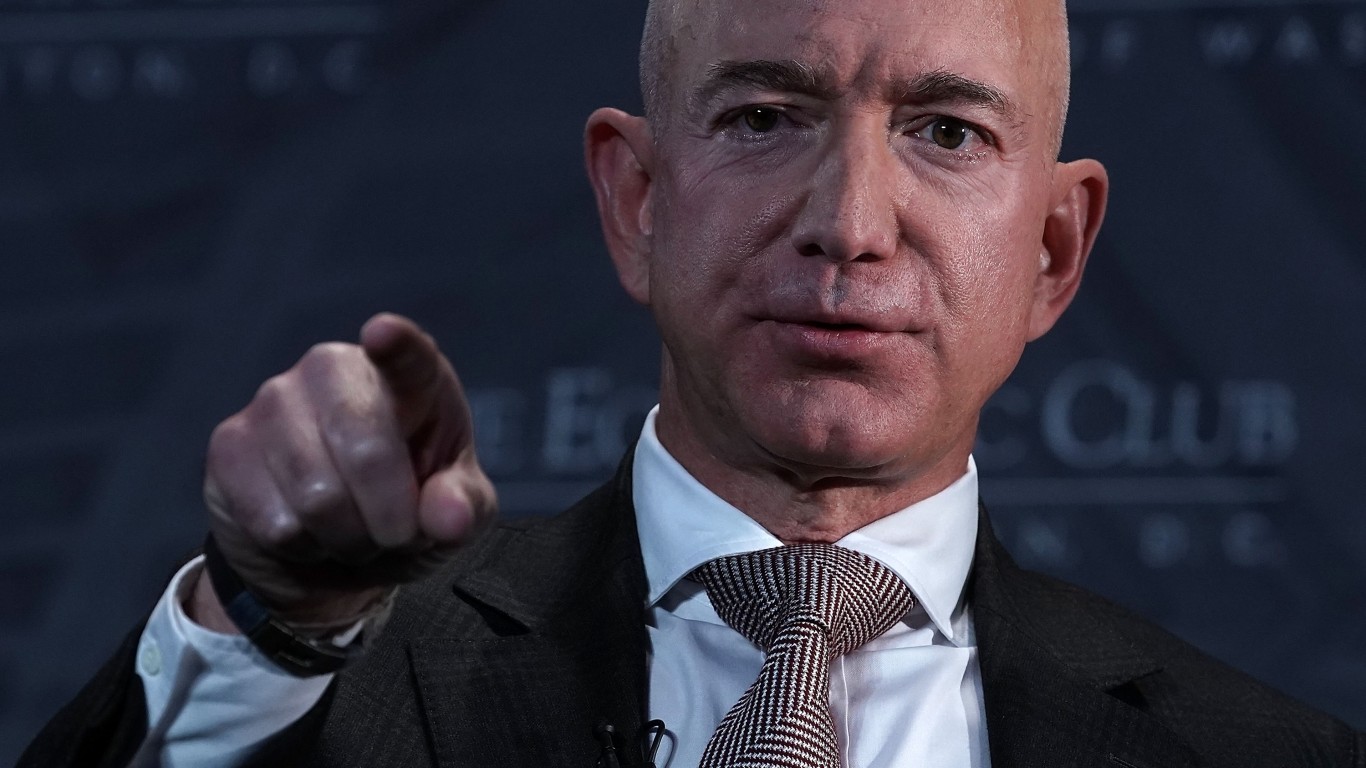
Coogan’s read on the dynamic was blunt: “People can’t really complain about the valuation, ’cause he’s a big part of setting the price.” Jeff Bezos himself is investing at this valuation and steering capital toward a fund he already backs.
Why Investors Are Valuing Capability Over Current Cash Flows
Blue Origin’s burn rate is enormous. Coogan cited that the company has burned roughly $27 billion to date and is estimated to have burned $5 billion in 2025 alone, making this $10 billion a standard 12-to-18-month runway raise. The valuation rests on capability rather than revenue or free cash flow.
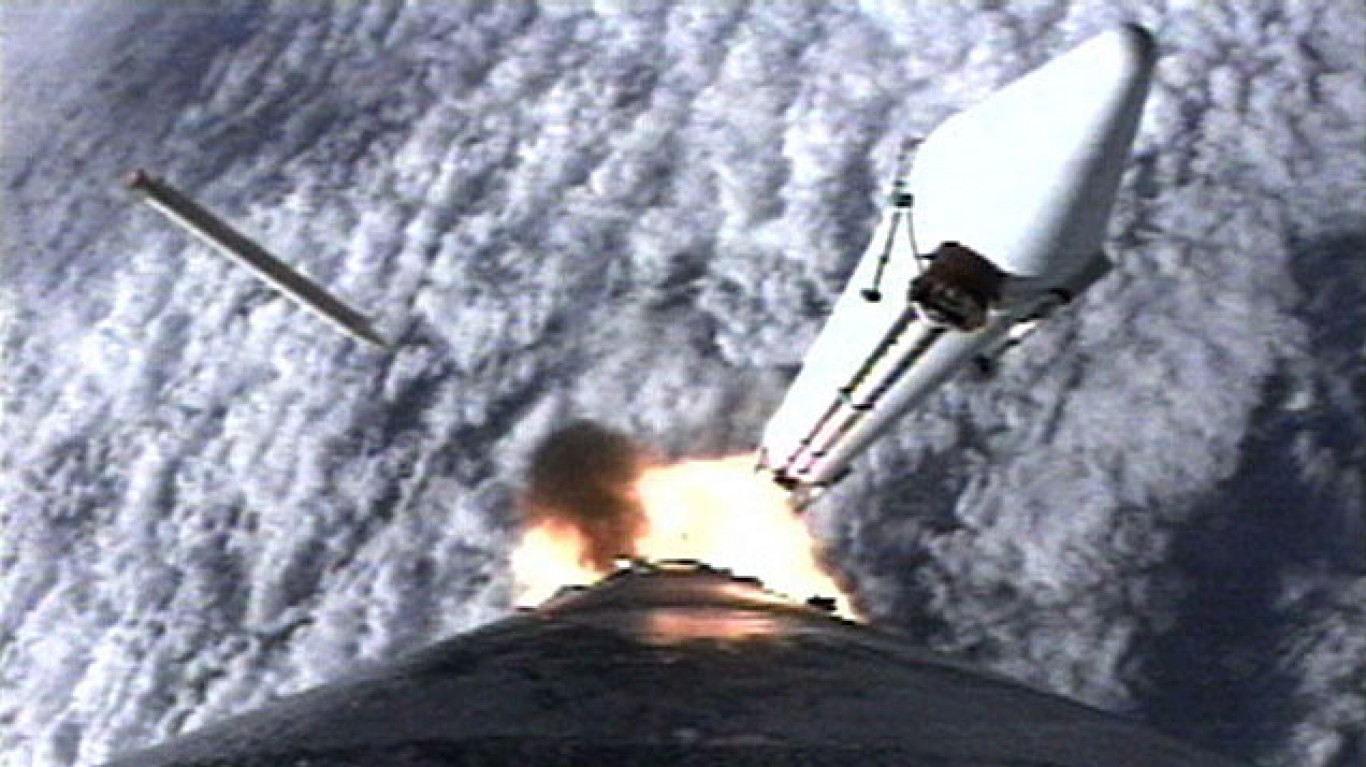
Coogan argued the $130 billion figure reflects Blue Origin’s status as the second company in the world to bring a rocket to orbit, land it successfully, and prove reusability, ahead of China. That is a strategic asset with a very short list of owners on Earth, and pricing it looks nothing like pricing a software business on ARR multiples.
For investors trying to make sense of how private markets are pricing hard-tech moats in 2026, Blue Origin sits at the extreme end of a spectrum that also includes AI infrastructure and next-generation power. For readers interested in how AI power demand and infrastructure could create new opportunities, our team’s Free Report: 7 Stocks Powering the AI Boom (That Aren’t Chipmakers) is worth reading.
The Space Comp Set
Coogan grounded the valuation in the public space comps. He noted Rocket Lab (NASDAQ:RKLB | RKLB Price Prediction) sits at just under a $50 billion market cap and AST SpaceMobile (NASDAQ:ASTS) sits at around $30 billion. Against those marks, a $130 billion tag for the second reusable-orbit operator on the planet feels aggressive but makes sense.
The historical parallel Coogan reached for was ridesharing. He compared the moment to Uber (NYSE:UBER)’s once-unprecedented $17 billion private valuation, which now “looks quaint.” Private-market ceilings for category-defining companies keep resetting higher, and what feels absurd in the moment often becomes a footnote once the business scales.
What to Watch Next
Whether Blue Origin ultimately justifies a $130 billion valuation remains an open question. What is already clear is that private investors are increasingly assigning enormous value to companies with difficult-to-replicate technological capabilities rather than near-term profits.
The next milestones will be whether additional institutions invest alongside Coatue, whether Blue Origin improves New Glenn launch cadence, and how private-market valuations for SpaceX and other space companies respond. Even without direct access to either company, those ripple effects could shape valuations across the broader space sector.
Contact [email protected] for any questions or corrections.
Thomas Richmond is a financial writer and content strategist with 5+ years of experience covering stocks and financial markets. He has published over 500 articles focused on individual stock analysis, helping investors better understand business fundamentals, stock valuations, and long-term opportunities.
Thomas previously served as a Content Lead at TIKR, a stock research platform, where he helped scale the company’s blog to hundreds of articles per month and contributed to a weekly newsletter reaching more than 100,000 investors.
Outside of work, Thomas enjoys weight lifting and soccer.