Jeff Bezos’ New Venture Just Raised $12 Billion. He’s Betting AI Will Create a Physical Labor Shortage.
Jeff Bezos is back in the headlines with a private-market raise for his industrial AI startup, Prometheus. The company just closed a $12 billion Series B at a $41 billion valuation, only about six months after emerging from stealth with…

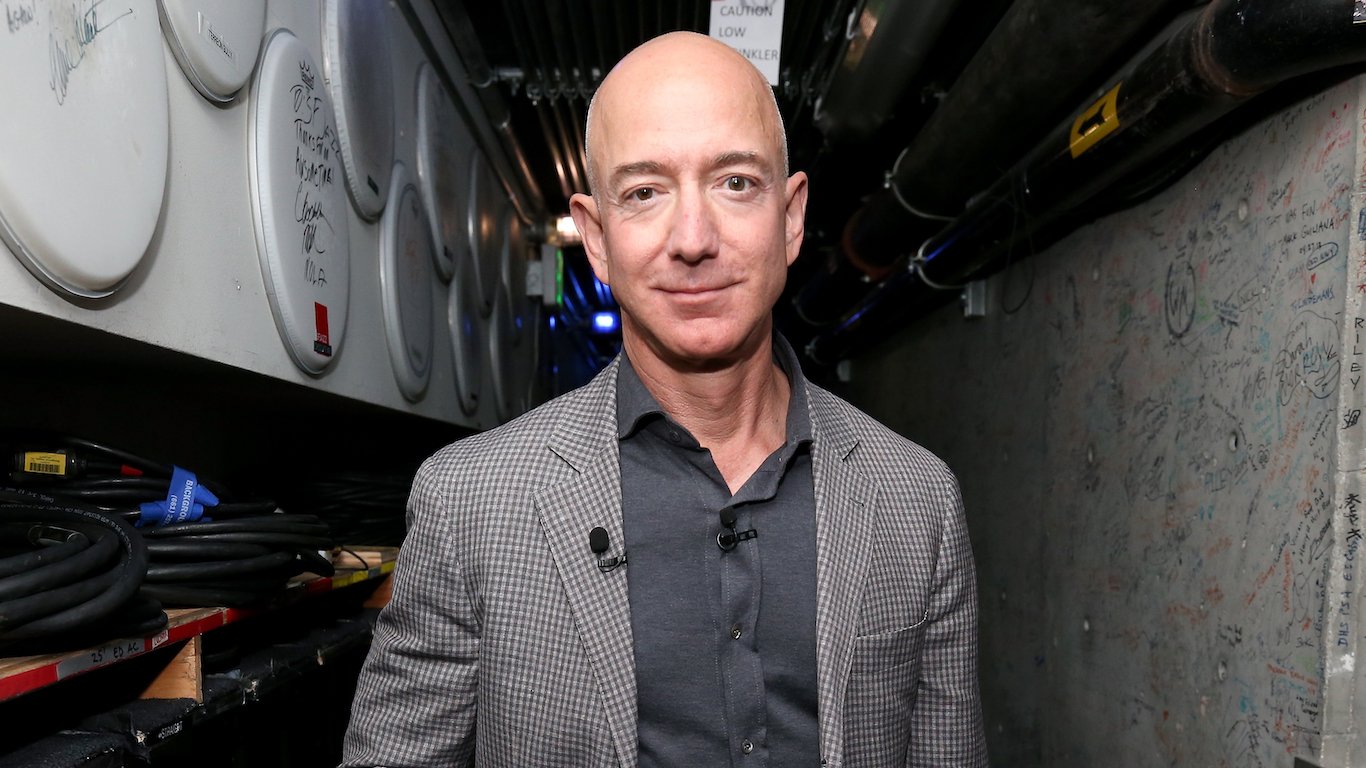
Jeff Bezos is back in the headlines with a private-market raise for his industrial AI startup, Prometheus. The company just closed a $12 billion Series B at a $41 billion valuation, only about six months after emerging from stealth with $6.2 billion in funding. The new round was led by JPMorgan Chase (NYSE:JPM | JPM Price Prediction), Goldman Sachs (NYSE:GS), and BlackRock (NYSE:BLK).
On a June 11 segment of TBPN, host John Coogan walked through the financial structure and the thesis behind Jeff Bezos’s startup. The size of the round forced Bezos to bypass traditional venture capital and go straight to the largest balance sheets on Wall Street, a path very few founders can credibly walk. As his co-host, Jordi Hays, put it, “Being able to raise that much capital to buy businesses with that little dilution is a pretty remarkable feat that pretty much only Jeff Bezos could pull off.”
What Prometheus Is Actually Building
Prometheus’s stated mission is to build what the company calls an “artificial general engineer” capable of designing and manufacturing complex physical products, like jet engines. Think something along the lines of an autonomous CAD-plus-factory floor brain that can iterate on hardware through large-scale designing and simulations, in a similar way to how large language models iterate with text.
The startup currently operates with about 150 employees across San Francisco, London, and Zurich. That is an extraordinarily small team for a $41 billion valuation, and it signals that Bezos intends to buy industrial businesses outright rather than build every capability from scratch.
The Contrarian Labor Thesis
Bezos pushed back against the dominant AI narrative. He argued AI will create a labor shortage even as it displaces specific tasks, citing Amazon‘s (NASDAQ:AMZN) own history as evidence that productivity-boosting technology expands overall opportunity rather than shrinking it. As Coogan paraphrased, Bezos said the goal is to “empower engineers and make innovation easier and faster so smaller teams can do much bigger things on much shorter time cycles.”
Bezos also floated a softer social implication: rising productivity could support more single-income households, where one earner voluntarily exits the labor force. That is a long way from the dystopian framing that has dominated AI labor commentary.
Where the Skepticism Lives
The TBPN hosts flagged the obvious counterweight to the labor-shortage thesis. NEET levels (not in employment, education, or training) have already been rising since 2021, well before the current AI wave hit the workforce. Whether that trend reflects voluntary opt-outs (Bezos’s framing) or structural displacement (the bear case) is the central macro question retirees and long-horizon investors should keep tabs on.
There is also the question of dilution-free financing at this scale. Coogan noted the round mirrors IPO-level numbers, which is why Bezos went directly to JPMorgan, Goldman, and BlackRock. Wall Street is effectively underwriting a private company at public-market size, with public-market consequences if the “artificial general engineer” thesis falls short of the hardware breakthroughs being priced in.
What to Watch
Prometheus is private, so retail investors cannot buy or track the stock directly. The company’s website, which appears to be prometheus.ai, is quite new and doesn’t offer much insight either. If Bezos is correct that AI compresses the design-to-manufacture cycle for jet engines, turbines, and other capital goods, the industrials sector could become the next AI beneficiary after semiconductors and hyperscalers. If he is wrong, $12 billion of bank-syndicated capital just got parked in a 150-person startup at a $41 billion mark.
Either way, the labor-shortage thesis is now backed by some of the biggest balance sheets on Wall Street. That alone makes it worth taking seriously.
Contact [email protected] for any questions or corrections.
Thomas Richmond is a financial writer and content strategist with 5+ years of experience covering stocks and financial markets. He has published over 500 articles focused on individual stock analysis, helping investors better understand business fundamentals, stock valuations, and long-term opportunities.
Thomas previously served as a Content Lead at TIKR, a stock research platform, where he helped scale the company’s blog to hundreds of articles per month and contributed to a weekly newsletter reaching more than 100,000 investors.
Outside of work, Thomas enjoys weight lifting and soccer.