Bestselling Author: SpaceX Holds Massive Monopoly Power in the Emerging Space Economy
Walter Isaacson, the bestselling biographer of Elon Musk, Steve Jobs, and Benjamin Franklin, reframed the SpaceX IPO on a recent appearance on CNBC’s Squawk Box. His thesis: investors are funding the launch of a brand-new economic sector, and one company sits at the center of…

Walter Isaacson, the bestselling biographer of Elon Musk, Steve Jobs, and Benjamin Franklin, reframed the SpaceX IPO on a recent appearance on CNBC’s Squawk Box. His thesis: investors are funding the launch of a brand-new economic sector, and one company sits at the center of it.
“You’re getting a whole new economy here, which is a space economy. And the interesting thing about space is that it keeps discovering new ways to make money in space,” Isaacson said. He returned to the point later: “I think what we’re seeing is the beginning of a whole new economy, a space-based economy.”
The 90% Tonnage Argument
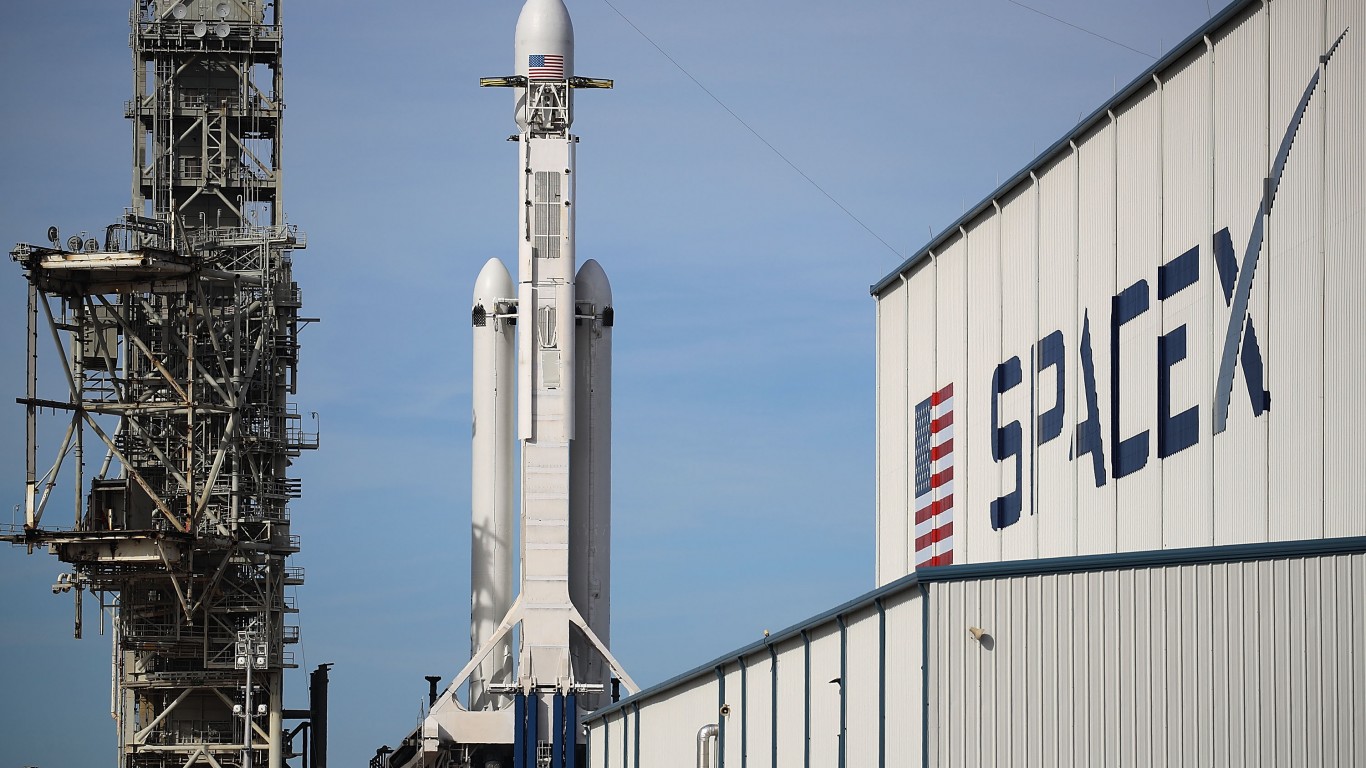
Isaacson, a Perella Weinberg advisory partner and Tulane University professor who recently visited Starbase to watch the latest Starship launch, anchored the monopoly case in physical throughput. “At least 90% of all tonnage being sent up into orbit is being sent up on SpaceX rockets, especially the workhorse Falcon 9. But you’re about to get Starship online. Nothing’s been bigger than that,” he said.
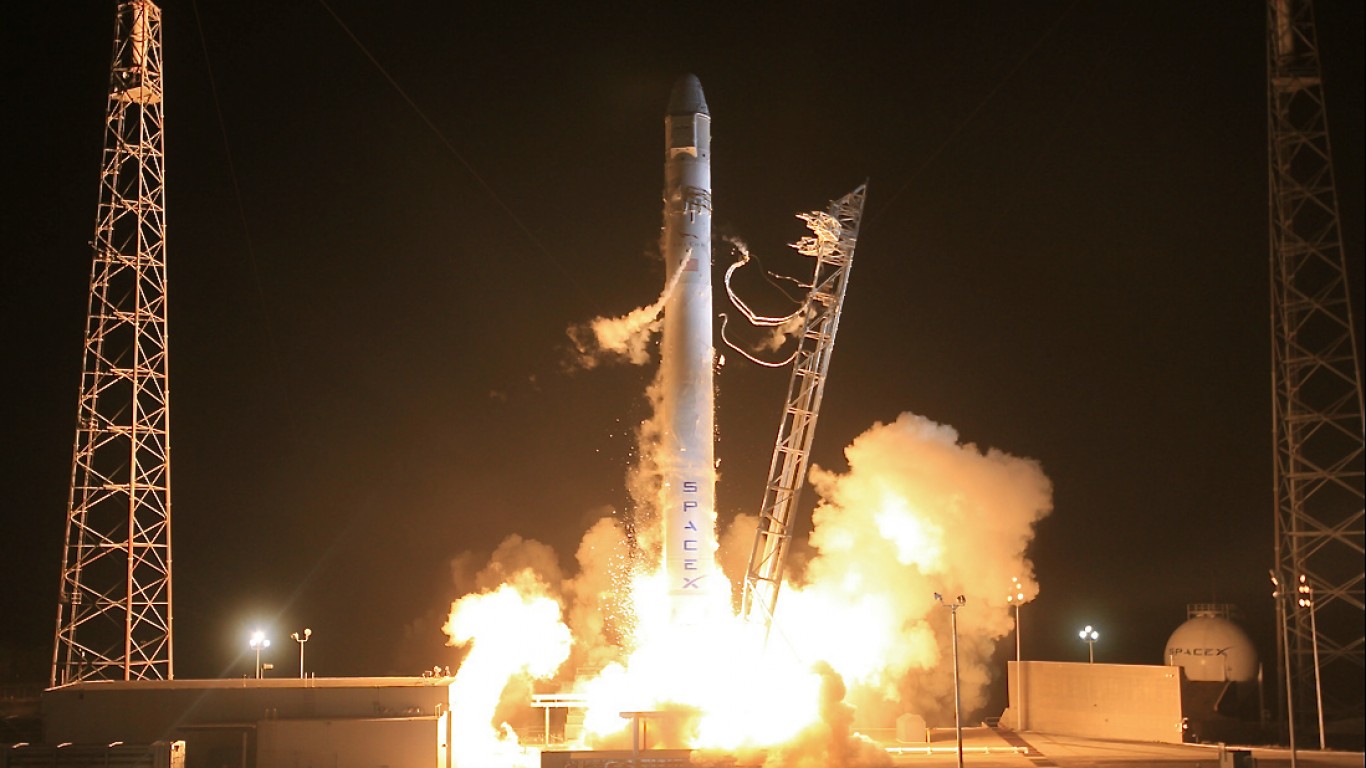
SpaceX’s own S-1 backs up the scale. Falcon 9 has completed approximately 620 orbital space launches as of March 31, 2026, with an over 99% mission success rate. In 2025 alone, the company launched 165 Falcon 9 rockets, accounting for over half of all global orbital launches in the year. Falcon 9 first-stage boosters have reflown as many as 34 times, an engineering feat that collapsed launch economics in the first place.
The cost gap explains why no one has caught up. According to NASA, the first version of Falcon 9 in 2010 reduced launch cost to approximately $2,700 per kilogram, roughly 85% below the historical average of $18,500 per kilogram. Falcon Heavy pushed that to $1,400 per kilogram in 2018. Starship is designed to cut the cost to reach orbit by 99% or more relative to the historical average, with a single launch capable of deploying up to 60 next-generation V3 Starlink satellites, a potential twenty-fold capacity increase per launch versus Falcon 9.
Why Competitors Haven’t Closed the Gap
Isaacson explained that SpaceX didn’t set out to build a space monopoly by choice: “The problem is, you do have other companies trying to do it, but Boeing is having trouble. Blue Origin, I think, will catch up, but at the moment, it doesn’t even have a launch pad at Kennedy Space Center because it blew up. So what you’re having is not somebody who illicitly figured out how to get a monopoly, but he’s the only one being able to make these things work,” he said.
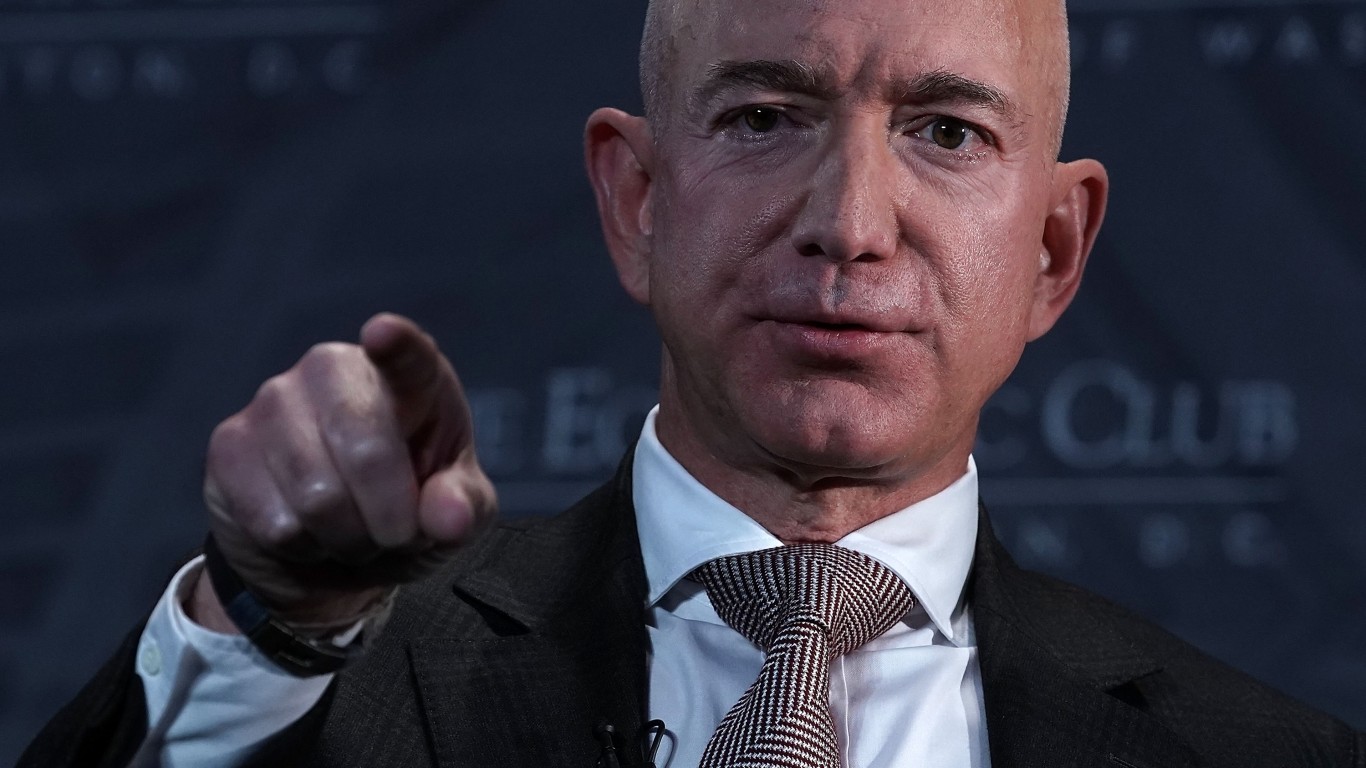
He named China, NASA, Boeing, and Blue Origin as holding roughly the remaining 10% of the launch market. Blue Origin remains privately held by Jeff Bezos, and Boeing’s space and defense unit has struggled with cost overruns on the Starliner and SLS programs. Isaacson compared the moment to Henry Ford’s rise, framing it as a once-in-a-century industrial inflection.
Multiple Revenue Streams Behind the Valuation
The space economy thesis hinges on Starlink stacking new businesses on the launch base. As of March 31, 2026, SpaceX operated over 9,600 Starlink satellites serving roughly 10.3 million subscribers across 164 countries. The Connectivity segment posted $2,087 million in adjusted EBITDA for the first quarter of 2026, up from $1,618 million a year earlier, and the full-year 2025 segment adjusted EBITDA reached $7,168 million. Direct-to-cell connectivity through mobile network operator partners and orbital AI compute is next.
The Key-Man Caveat
Isaacson’s enthusiasm came with a warning that concentration on a single founder is a significant risk to watch. “The loss of Mr. Musk, whether due to death, disability, or otherwise, or his inability or unwillingness to continue in his current roles, could significantly disrupt our management structure,” SpaceX’s S-1 filing states, adding that the company does not maintain key-person life insurance on Mr. Musk. Investors buying the IPO are betting on Musk’s record of finding new profit centers in space.
Contact [email protected] for any questions or corrections.
Thomas Richmond is a financial writer and content strategist with 5+ years of experience covering stocks and financial markets. He has published over 500 articles focused on individual stock analysis, helping investors better understand business fundamentals, stock valuations, and long-term opportunities.
Thomas previously served as a Content Lead at TIKR, a stock research platform, where he helped scale the company’s blog to hundreds of articles per month and contributed to a weekly newsletter reaching more than 100,000 investors.
Outside of work, Thomas enjoys weight lifting and soccer.