Analysts Think AI Demand Has No Ceiling And Raised AMD’s Price Target Again
Stifel just blew past Wall Street's AMD consensus with a target that would push the chipmaker into trillion-dollar territory, and the conditions required to get there are more specific than most investors realize.

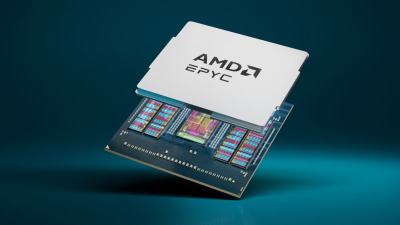
Shares of Advanced Micro Devices (NASDAQ:AMD | AMD Price Prediction) have been on a tear that few retirement portfolios have kept pace with. The stock is up 5.58% over the past week, 14.98% in the past month, 155.29% year to date, and a staggering 295% over the trailing year, closing at $548 and sitting within striking distance of its $584.73 52-week high.
Most of Wall Street holds more moderate views, with the consensus target parked at $512.27. Then came Stifel’s Ruben Roy, who lifted his AMD price target to $635 from $450 while keeping a Buy rating, pointing to a roughly 16% upside from current levels and standing well above the Street average.
But can AMD realistically reach $635 by the end of 2026?
Ruben Roy’s $635 AMD Prediction
Roy’s thesis is specific: AI infrastructure companies remain supply-constrained, not demand-constrained, and recent semiconductor softness looks like a valuation reset rather than a fundamental slowdown. He applied the same framework to Applied Materials ($650), KLA Corp ($270), Lam Research ($425), Ichor ($115), Cohu ($70), and Ceva ($50), framing a full picks-and-shovels AI trade. The data backs him: AMD’s Data Center revenue grew 57% year over year to $5.775 billion in Q1 2026.
Key Drivers of AMD Stock Performance
- Hyperscaler lock-in. The Meta partnership deploying up to 6 gigawatts of AMD Instinct GPUs plus OpenAI’s 6-gigawatt commitment create multi-year revenue visibility, exactly the kind of compounding backdrop retirement accounts want. For deeper context on this trade, see our AI infrastructure playbook.
- Cash flow acceleration. Q1 free cash flow hit $2.566 billion, up 252.96% YoY, funding buybacks and product reinvestment without dilution.
- Margin expansion. Non-GAAP gross margin climbed to 55% with Q2 guided to 56%, letting earnings compound faster than revenue.
What Will It Take for AMD to Reach $635?
With 1,630,601,000 shares outstanding, a $635 print would push market cap into trillion-dollar territory, well above today’s ~$895 billion. Three conditions must hold:
- MI450 Series and Helios shipments ramp on schedule in H2 2026 without supply bottlenecks.
- Q2 revenue lands at or above the $11.2 billion guide, sustaining 46% YoY growth.
- China export policy remains stable enough to preserve current forecasts.
The main risk remains export controls and semiconductor cyclicality. That said, Stifel’s $635 target is grounded in booked backlogs and hyperscaler capacity commitments, and AMD’s setup as a long-duration play on the AI infrastructure buildout remains intact, with the thesis anchored to backlog and capacity data rather than sentiment.
Contact [email protected] for any questions or corrections.
Joel South covers large-cap stocks, dividend investing, and major market trends, with a focus on earnings analysis, valuation, and turning complex data into actionable insights for investors.
He brings more than 15 years of experience as an investor and financial journalist, including 12 years at The Motley Fool, where he served as an investment analyst, Bureau Chief, and later led the Fool.com investing news desk. He has also co-hosted an investing podcast and appeared across TV and radio discussing market trends.