




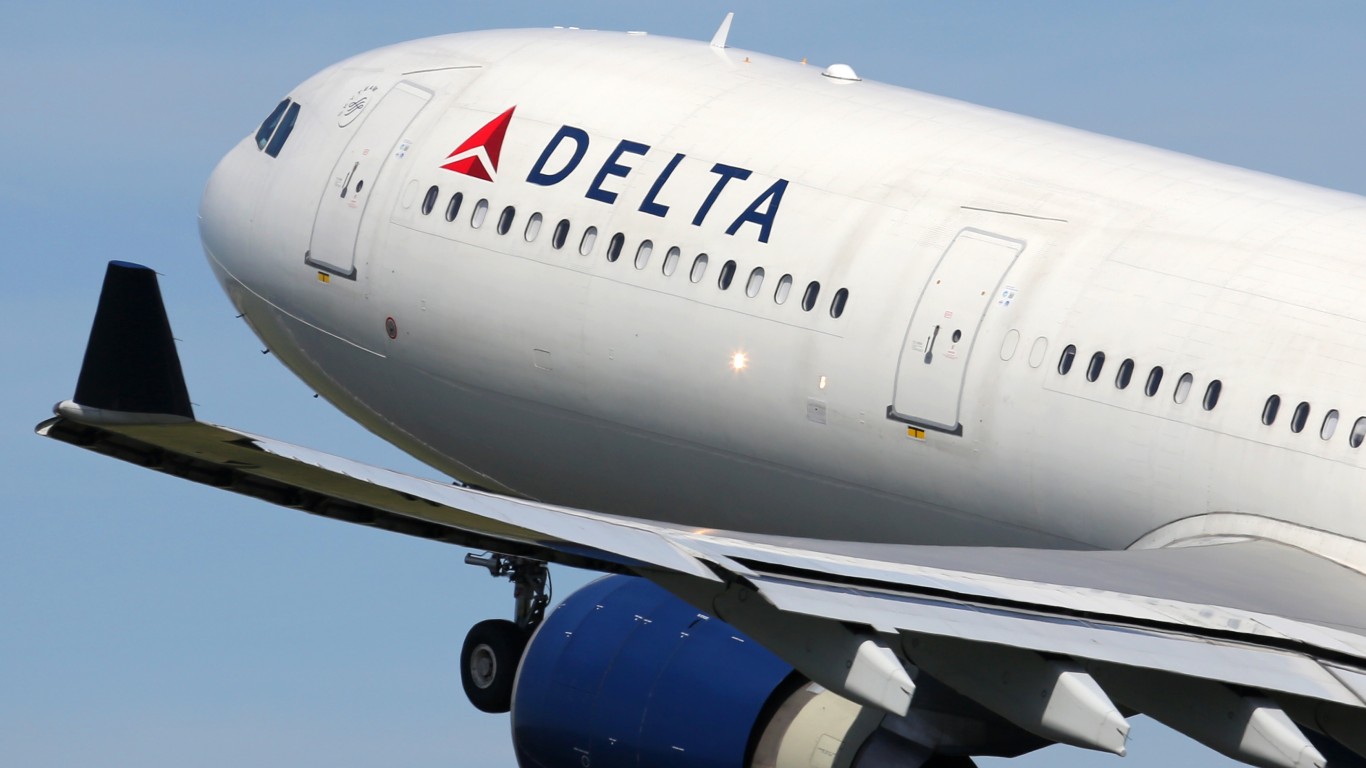
During a July 10 CNBC segment, Jefferies analyst Sheila Kahyaoglu predicted that the major U.S. carriers could sustain fare increases of 15% to 20% through the remainder of the year. Hours later, Delta Air Lines (NYSE:DAL | DAL Price Prediction) reported June quarter results with another earnings beat, double-digit domestic unit-revenue growth, and a sharp increase in premium sales, providing fresh evidence that airlines are finally regaining pricing power after years of largely deflationary fares.
Delta’s Earnings Confirm Travelers Are Paying Up
Kahyaoglu framed the setup for airlines in blunt terms. “Overall, we think all the major carriers are going to see fares up 15 to 20% for Q2, and heading into Q3. Ticket prices have been essentially deflationary, and airlines are finally getting their day, at least in the U.S.” She sees the trajectory building through the quarter: “We think unit revenue prices are up 13%. Don’t forget April incorporated lower ticket prices. So we think the exit is about high mid-teens in terms of ticket prices.”
On whether these pricing moves will stick, she was direct: “Can we see these 15 to 20% ticket prices hold? I think so for sure, at least through the rest of the year.” The structural argument rests on the three network carriers (United, Delta and American) accounting for about 60% of the U.S. market, with industry capacity roughly flattish year over year after about 5% capacity cuts, and even lower-cost operators like Southwest pushing toward premium segmentation.
Her Delta-specific view: “Delta, above all, has been able to continue to take premium demand to different levels.” The caveat was cost: “A slight negative on Delta is cost. The company is seeing some additional costs when it comes to their pilots.”
Premium Passengers Are Powering Delta’s Growth
Delta’s June Q2 earnings release delivered adjusted EPS of $1.56, beating the $1.5035 consensus. Revenue landed at $17.67 billion, up 6.11% year over year but shy of the roughly $18.85 billion Street model.
The premium-demand pillar of Kahyaoglu’s thesis clearly showed up in the numbers:
- Premium product revenue: $6.920 billion, +17% YoY
- Loyalty Program: $1.344 billion, +19% YoY
- American Express remuneration: $2.40 billion, +16% YoY
- Premium corporate sales: up more than 25%
- Domestic unit revenue: +12%; international unit revenue: +8%
Diversified, high-margin revenue streams reached 61% of total revenue, up 2 points YoY. This is the mix shift Delta has been marketing for years and should help the company price the premium curve independently of the main cabin.
Higher Pilot and Fuel Costs Threaten the Fare Windfall
Delta booked $1.4 billion in pre-tax profit while absorbing a record fuel bill of $4.41 billion at $3.93 per gallon. Adjusted operating margin compressed to 8.8%, and non-fuel unit costs rose 6.8% YoY, above the airline’s low-single-digit target. That is the pilot and structural cost pressure Kahyaoglu highlighted, and it is the reason the fare narrative matters for margins.
Delta’s CEO Ed Bastian tied the two threads together: “We delivered $1.4 billion in pre-tax profit while absorbing the highest quarterly fuel expense in our history, reflecting broad demand strength, growing brand preference and momentum across our diversified revenue base.”
Delta Is Already Building Momentum for 2027
Delta’s quarter strengthens Kahyaoglu’s argument that U.S. airlines have entered a more favorable pricing environment. Capacity remains constrained, the three network carriers control approximately 60% of the domestic market, and Delta continues to shift its business toward premium cabins, loyalty revenue, and its American Express partnership.
But higher fares alone will not guarantee stronger profits. Delta must make those pricing gains outrun elevated fuel expenses, pilot compensation, and accelerating non-fuel costs. If ticket prices remain 15% to 20% higher through year-end, Delta’s earnings momentum could carry into 2027.
Contact [email protected] for any questions or corrections.









 Top Gaining Stocks
 Top Losing Stocks