From Bankruptcy Risk to Best-in-Class: How 4 Major U.S. Airlines Stack Up in 2026
The U.S. airline industry entered 2026 with momentum from a strong 2025 travel cycle, but the first quarter has been turbulent. Benchmark West Texas Intermediate (WTI) crude oil surged 48.4% in a single month, approaching $94.65 per barrel, while consumer…


The U.S. airline industry entered 2026 with momentum from a strong 2025 travel cycle, but the first quarter has been turbulent. Benchmark West Texas Intermediate (WTI) crude oil surged 48.4% in a single month, approaching $94.65 per barrel, while consumer sentiment sits at a fragile 55.5 on the University of Michigan index, well below the 80-point threshold signaling neutral confidence. A government shutdown has disrupted TSA staffing and cost carriers hundreds of millions in lost revenue. The gap between the sector’s winners and its laggards has never been wider. Here is how the four major U.S. carriers rank heading into the rest of 2026.
4. American Airlines
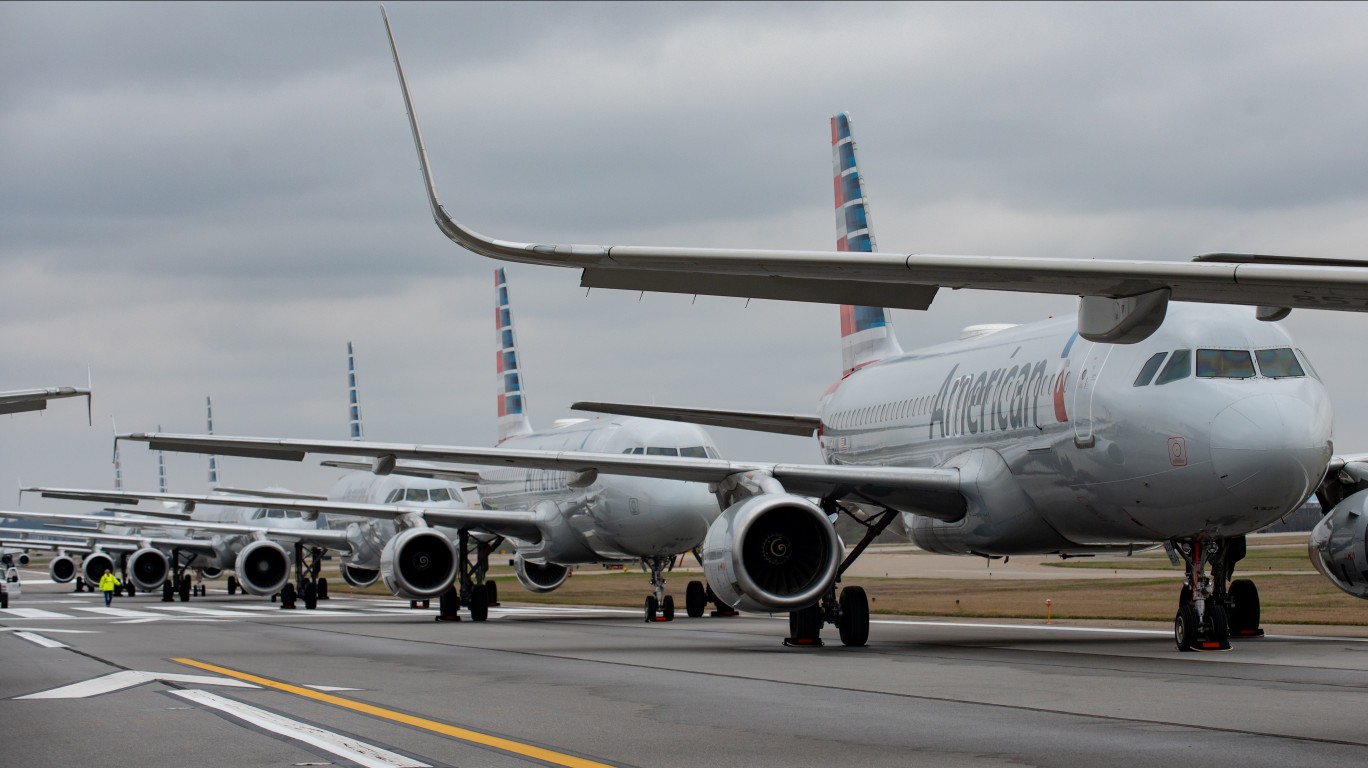
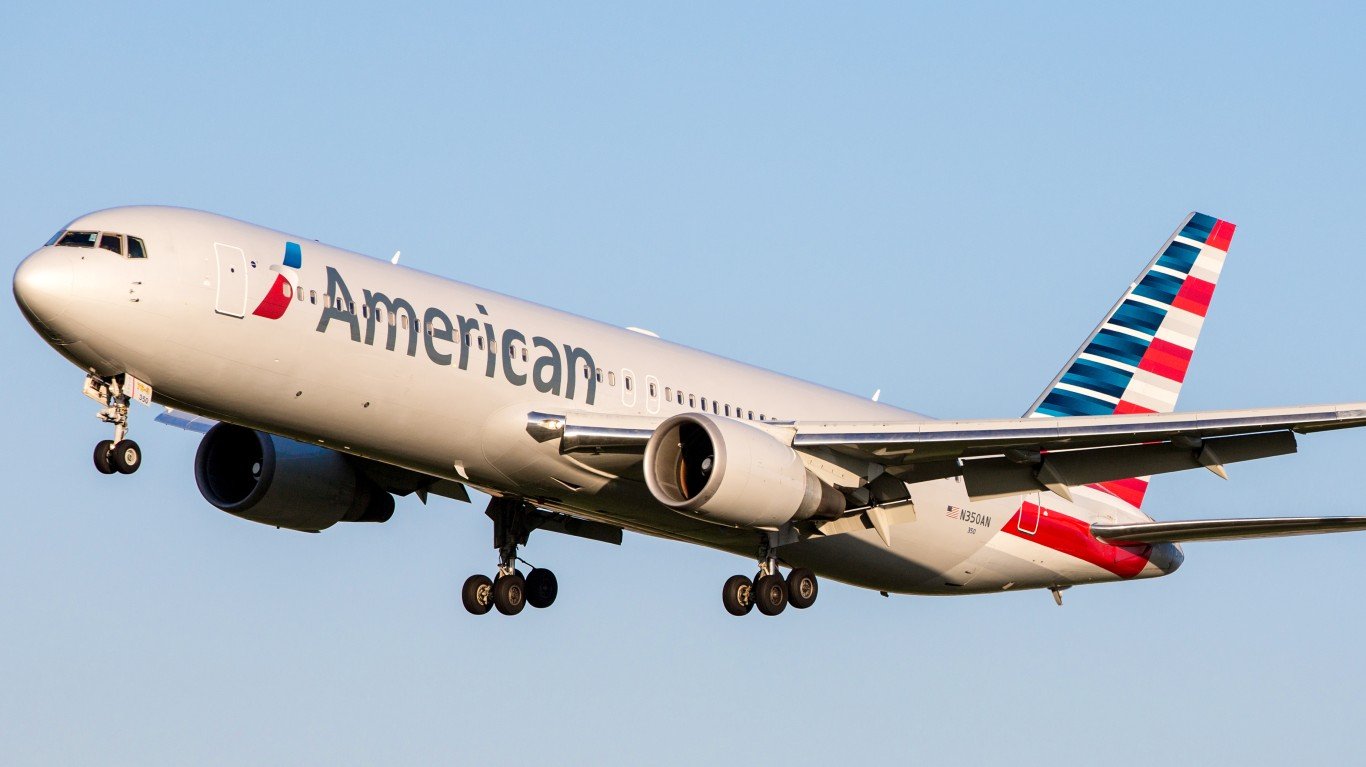
American Airlines (NASDAQ: AAL | AAL Price Prediction) is the clearest underperformer by nearly every measure. Shares are down 29.3% year-to-date and have lost 75.0% of their value over the past decade. Q4 2025 earnings confirmed why: adjusted EPS came in at $0.16 against a consensus estimate of $0.35, a miss of more than 54%. Operating income collapsed 59.73% year-over-year to $451 million, operating margin fell to 3.2% from 8.3% from a year earlier, and full-year free cash flow turned negative at −$792.5 million.
The balance sheet is the most pressing concern. Total debt stands at $36.5 billion with shareholders’ equity negative at −$3.7 billion. A flight attendant union no-confidence vote in CEO Robert Isom adds leadership uncertainty. Management is guiding for FY 2026 adjusted EPS of $1.70 to $2.70 and free cash flow exceeding $2 billion, but execution risk is high given the Q4 trajectory and surging fuel costs.
3. Southwest Airlines
Southwest Airlines (NYSE: LUV) is a turnaround story with genuine upside that requires patience. Shares are essentially flat year-to-date at −0.05%, though they have pulled back 24.9% over the past month as oil prices spiked. Q4 EPS of $0.58 against a $0.57 estimate was a narrow beat, with net income rising 23.75% year-over-year.
The transformation underway is the real story. Southwest launched assigned seating on January 27, 2026, added bag fees and basic economy fares, and exceeded its $370 million cost reduction target for 2025. The company returned $2.9 billion to shareholders through buybacks and dividends. Management is targeting adjusted EPS of at least $4.00 for 2026, representing more than 300% growth compared to 2025’s $0.93. Southwest also carries the cleanest balance sheet in the group with positive shareholders’ equity of $7.98 billion. Key risks include Boeing delivery dependency and consumer response to a fundamentally different Southwest product.
2. Delta Air Lines
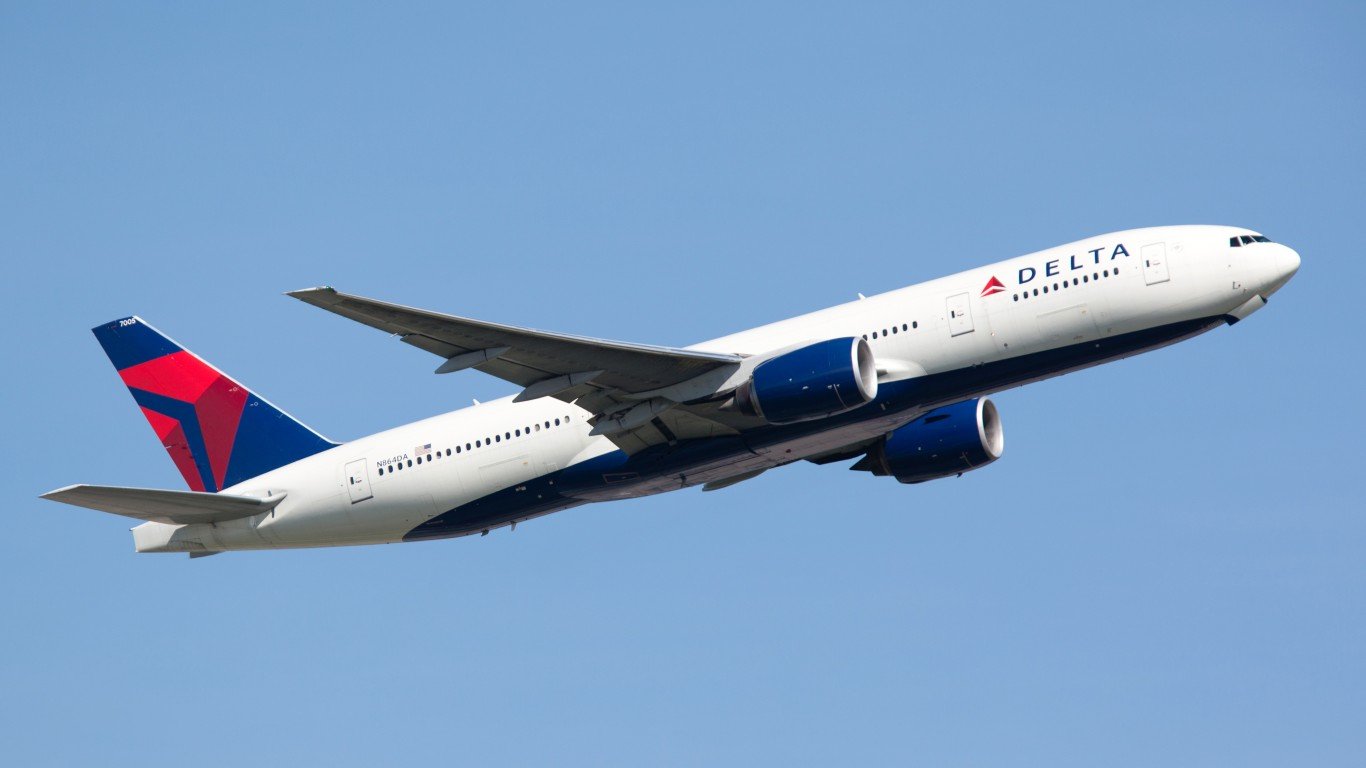
Delta Air Lines (NYSE: DAL) is the quality anchor of the sector. Shares are up 40.1% over the past year and bounced 8.8% in the most recent week as demand signals improved. Q4 2025 EPS of $1.55 beat the $1.52 estimate, and full-year free cash flow reached a record $4.643 billion, up 60.94%. Adjusted net debt fell $3.68 billion to $14.30 billion.
Delta’s premium strategy continues to differentiate it. Premium product revenue rose 9% year-over-year in Q4, while AmEx remuneration grew to $8.2 billion for the full year. Management is guiding for FY 2026 EPS of $6.50 to $7.50, implying roughly 20% growth at the midpoint. CEO Ed Bastian noted the company “generated $5 billion of pre-tax profit with a double-digit operating margin and record free cash flow of $4.6 billion.” The main cabin revenue decline of 7% in Q4 bears watching, but Delta’s diversified revenue base at roughly 60% non-ticket sources provides meaningful insulation.
1. United Airlines
United Airlines (NASDAQ: UAL) posted the strongest earnings beat among the majors. Q4 2025 EPS of $3.10 beat the $2.94 estimate by 5.44% delivered the highest quarterly revenue in company history at $15.40 billion. The carrier flew a record 181 million passengers in 2025. Atlantic revenue grew 8.7% and Pacific revenue rose 9.5% in Q4, demonstrating international network strength.
The stock has pulled back 16.2% year-to-date and 19.8% over the past month, driven by oil price anxiety and macro uncertainty rather than any deterioration in fundamentals. FY 2026 EPS guidance of $12.00 to $14.00 is the most ambitious forward earnings target in the group. CEO Scott Kirby called Q4 “the highest-revenue quarter in United’s history and the highest quarterly RASM of the year.” The $25 billion debt load is a legitimate risk if oil sustains above $90 per barrel, but the earnings trajectory and international diversification have drawn attention from analysts tracking the sector’s recovery.
What Comes Next for the Sector
The macro environment is the defining variable for the rest of 2026. WTI crude at $94.65 is approaching a threshold where fuel costs materially compress margins across all four carriers. The government shutdown has already cost American an estimated $325 million in Q4 revenue and United approximately $250 million. Consumer sentiment below 60 historically signals fragile discretionary spending, though travel demand has proven stickier than broader retail trends suggest. Q1 2026 earnings updates, oil price direction, and tariff clarity are the three variables that will determine whether the sector’s recent bounce has legs.
Contact [email protected] for any questions or corrections.
Trey has been an editor and author at 24/7 Wall St. for more than a decade, where he has published thousands of articles analyzing corporate earnings, dividend stocks, short interest, insider buying, private equity, and market trends. His comprehensive coverage spans the full spectrum of financial markets, from blue-chip stalwarts to emerging growth companies.
Beyond 24/7 Wall St., Trey has created and edited financial content for Benzinga and AOL's BloggingStocks, contributing additional hundreds of articles to the investment community.
Trey's editorial expertise extends across multiple publishing environments. He served as production editor at Dearborn Financial Publishing and development editor at Kaplan, where he helped shape financial education materials. Earlier in his career, he worked as a writer-producer at SVE. His freelance editing portfolio includes work for prestigious clients such as Sage Publications, Rand McNally, the Institute for Supply Management, the American Library Association, Eggplant Literary Productions, and Spiegel.
Outside of financial journalism, Trey writes fiction and has been an active member of the writing community for years, moderating workshop sessions at regional conventions.